Open and Accurate Air Quality Monitors
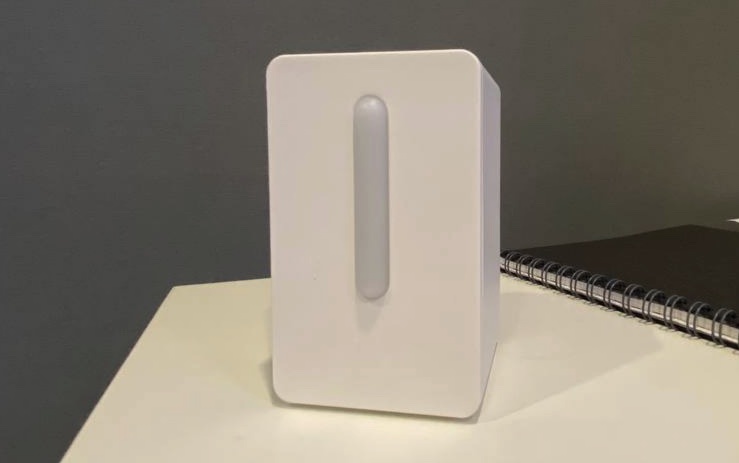
We design professional, accurate and long-lasting air quality monitors that are open-source and open-hardware so that you have full control on how you want to use the monitor.
Learn MoreTucked into a small river valley about 15 kilometers outside Nairobi, lies Kihumo village, a rural community that is home to over 7,000 residents. Most homes within the village are built from mud or metal sheets, with a few made of stone.
Many families in the community rely on biomass fuels for activities such as cooking, which produce dense smoke. Because of the way the village sits in the valley, smoke settles low instead of drifting away. Just beyond the homes, a stone quarry operates daily. Each hammer strike sends fine clouds of dust into the air. And recently, the village road was widened and tarmacked, exposing residents to bitumen fumes and debris that spread easily across the valley. With all of these activities happening simultaneously, it’s hard to imagine that village residents have room to breathe fresh air.
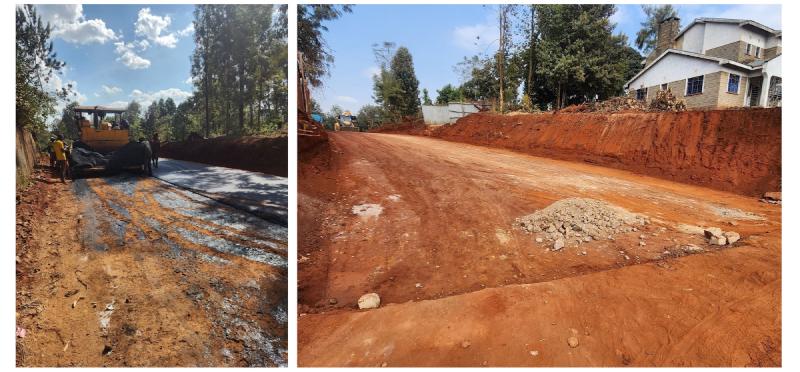
“You’ll find that a lot of dust, smoke, and other particulate matter gets kicked into our village. All this contributed to a slight awareness that there are certain times of the day that the air can get a bit heavy.” – Richard Muraya
Kihumo is the place that Richard Muraya has called home his entire life. Richard is the founder of The Demography Project, a youth-led community organization comprising over 22 young members, working at the intersection of citizen science, civic technology, and environmental journalism. Living in this village exposed him first-hand to the health risks that come with air pollution exposure.
For many residents, this heaviness in the air has always been noticeable. But when local clinic records were reviewed, the numbers confirmed what people had been sensing for years: a significant share of hospital admissions were linked to respiratory issues. The connection between air quality and health became impossible to ignore.
Richard had already been running The Demography Project since the peak of the COVID-19 pandemic, which initially focused on freshwater resource advocacy through the Maai Makwa initiative, translating to “my water” in his indigenous language, Kikuyu.
Over time, they noticed that many of the challenges communities were facing around water were tied to what was happening in the air as well. It became clear that the two were closely linked.
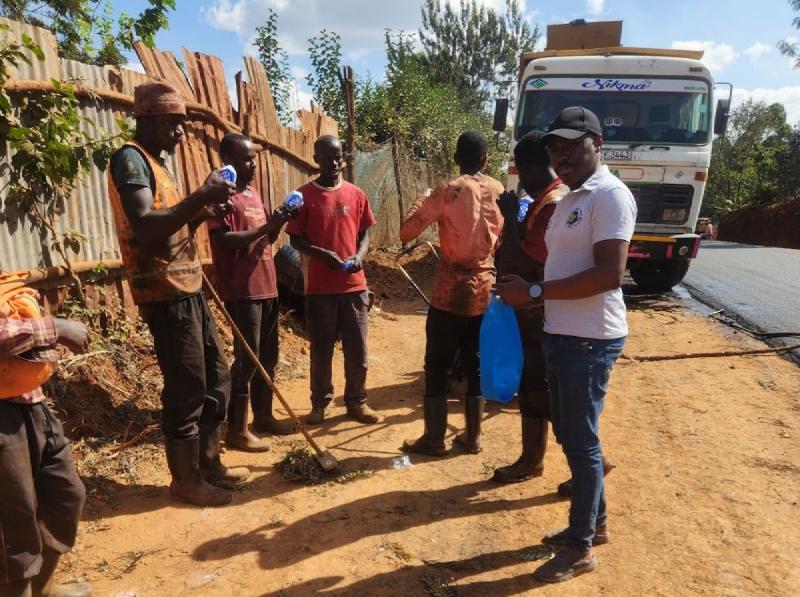

As a result of that realization, they began taking different steps to reduce people’s exposure to air pollution. One of their immediate actions was distributing face masks to road construction workers and to schoolchildren who frequently spent their time outdoors. They also encouraged families to ventilate their kitchens, since many homes still rely on charcoal, firewood, and agricultural scraps for cooking.
But even with these efforts in place, they still didn’t have a way to tell whether the changes inside the homes were working. They also needed data to support the next steps they were preparing to take, which included formal petitions to road contractors and stone quarry owners to reduce excessive particulate matter emissions.
“We did not have devices which could perhaps give us data on whether our initiatives were beneficial or not,” Richard said.
That’s when he decided to reach out to AirGradient. One of the outdoor monitors that was donated has been active in Kihumo for several months now, combined with the meteorological station they’d already installed. For the first time, they could see clearer patterns, such as how pollution moved through their valley and when it was at its worst.
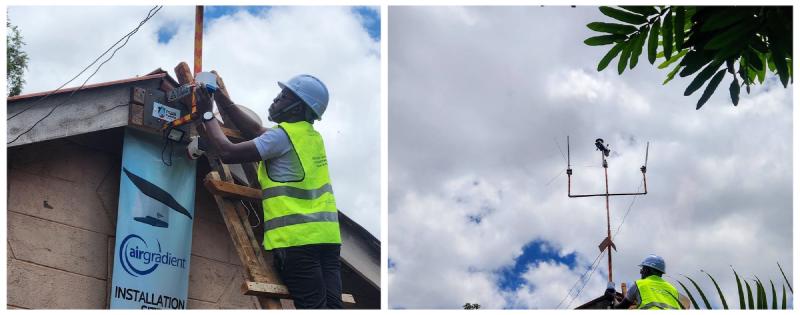
This shift toward understanding air pollution became the foundation of their Infrastracker program. The name is a portmanteau for “infrastructure” and “tracker”. It is an open-data, public-domain citizen science initiative that monitors how public infrastructure projects affect hyperlocal communities and their surrounding ecosystems. Through a mix of air quality and climate monitoring, seismic and geological observations, and assessments of residential living conditions, the program helps communities understand how nearby infrastructure projects and everyday human activity are impacting their health and environment.
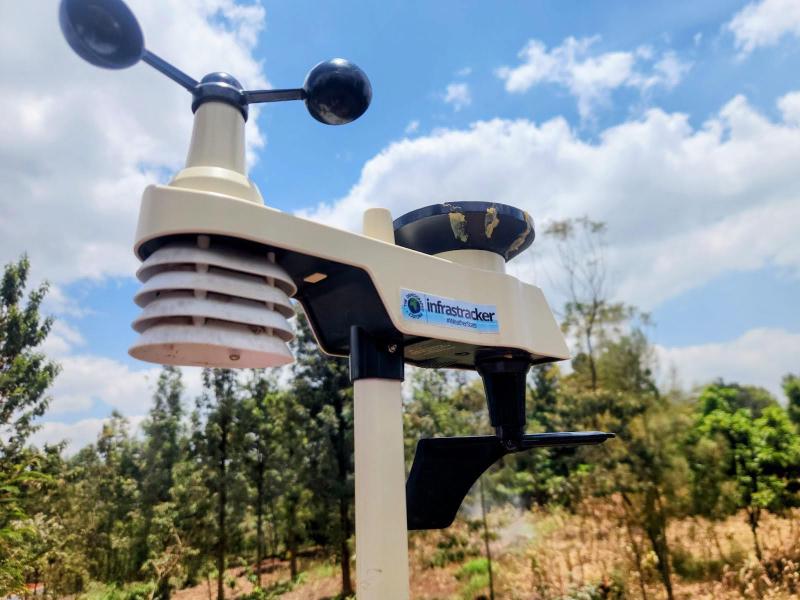
However, even with the air quality monitors installed and the data coming in, Richard understood early on that this wouldn’t be enough to move people. If the community didn’t trust the information or the messenger, it would be difficult to make an impact.
Before scaling anything further, he decided it was necessary to strengthen his own credibility as a scientist and science communicator. He went back to school and earned his certification as an Environmental Impact Auditor from Kenya’s National Environment Management Authority. He is also pursuing a Masters of Science in Climate Change Adaptation & Sustainable Development.
These certifications opened doors for significant progress. It made conversations with local leaders more straightforward and signaled that his advocacy was grounded in both lived experience and technical expertise.
Richard focused on working within existing community structures. He approached the village headman and the chief, the people with the authority to bring residents together. This has been especially helpful whenever he and his team would have to gather insights from the community or convene forums at a village level.
The Demography Project has also established itself as a key member in the air quality monitoring community, including the Africa Clean Air Network, the Environmental Protection Agency’s (EPA) Air Quality Flag Program, and the Citizen Science Africa Association, among others.
As the organization grew, so did the way they documented their work. They carried portable sensors during fieldwork outside Kihumo and recorded their findings through social media. Through this approach, community members slowly became more engaged by attending community gatherings and simply becoming more attentive to their own surroundings.
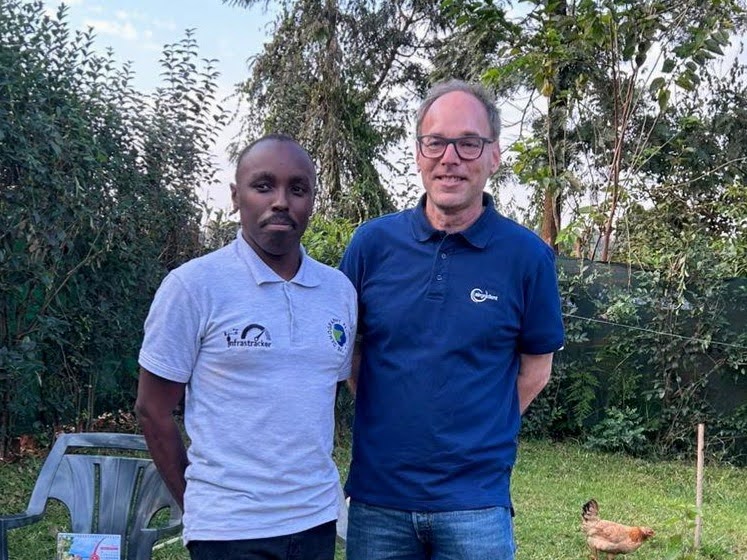
But all this progress did not come without setbacks. Although the data from the monitors was accurate, Kenya’s regulations required additional confirmation before any device could be installed. Each sensor needed a laboratory calibration test from the Kenya Medical Research Institute (KEMRI), followed by the issuance of permits. Some of the devices were even threatened with shutdown until they were calibrated or until authorities received confirmation that the required calibration had been completed.
Instead of allowing this to be a hindrance, it strengthened their resolve. Richard and his team kept pushing through despite these long processes.
The regulatory hurdles didn’t discourage them. If anything, Richard shared the organization’s next big project: a school-based air quality monitoring network involving forty-two schools across Kenya. They want this network to be as inclusive as possible, selecting a mix of public and private schools scattered across the country, with a particular interest in underserved regions where air quality data is scarce.
In line with The Demography Project’s identity, Richard wants this movement to be a youth-led, student-led one. To ensure strong involvement and commitment amongst potential participants, they made sure to select schools that already have a good awareness of environmental issues. He believes this may be the first initiative of its kind in Africa, and that having this network could help entire communities, beyond schoolchildren, understand the importance of mitigating air pollution.
“We wanted this project to be a student-led initiative where we are not just installing sensors, but are having them understand or demystify the data so they can see, for example, how cooking activities within the school creates certain effects on their health. We also want the school community – that is parents and the local administration – to be involved in reducing air pollution within the region.”
When discussing what the future would look like for The Demography Project, what stood out the most was that Richard didn’t start with any grand visions – instead, he expressed his desire to start expanding by helping Kenya’s neighbouring countries.
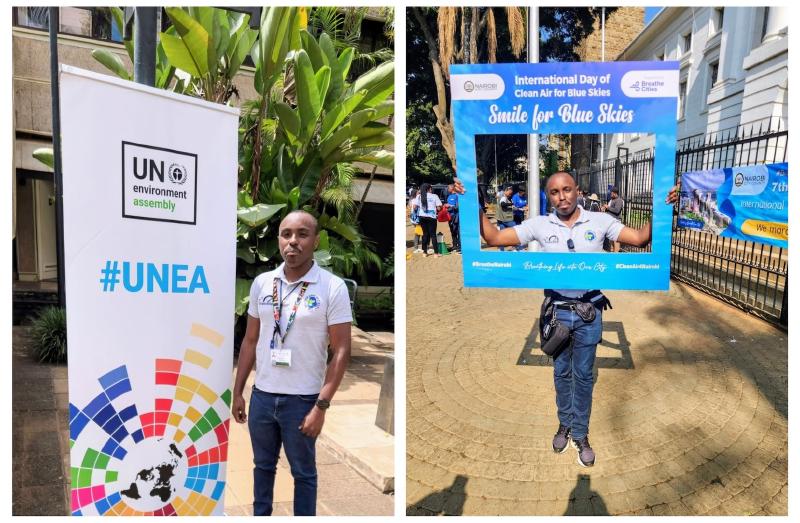
“What we are doing in the next five years is to build a network or a population that is committed to environmental stewardship and participatory action surrounding environmental awareness. In addition to installing sensors across the country, we would want to inspire similar initiatives across the continent.”
Looking further ahead, he hopes similar initiatives will take root in neighboring countries: Tanzania, Somalia, and Ethiopia. Considering that these neighbouring countries are also facing rapid urbanization and their own environmental issues, Richard hopes that their actions as an organization can help catalyze a movement across the continent and spark local initiatives to address these issues.
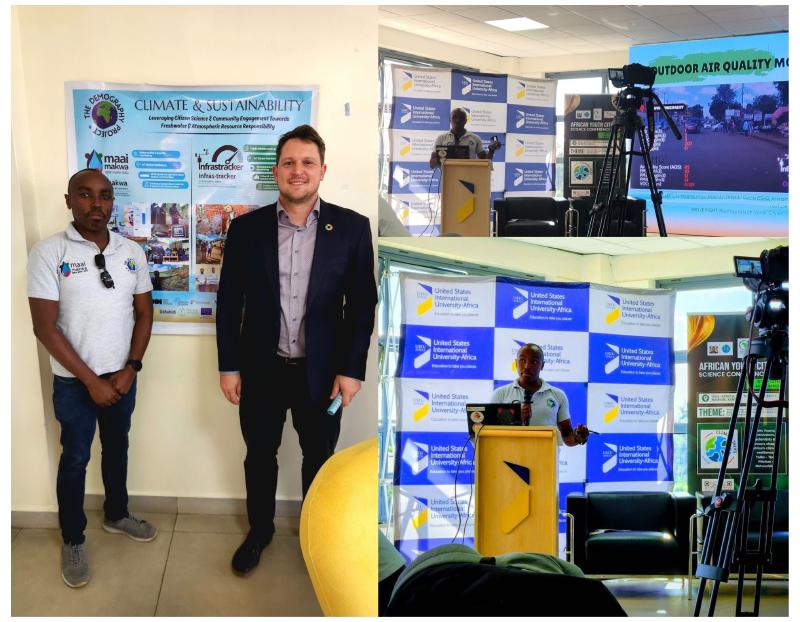
The Demography Project’s work began within Richard’s own village and eventually grew into an organization of young people committed to documenting what they saw and sharing it with those around them. Soon, it will expand into schools, neighbouring regions, and eventually across borders.
Even as their reach expands, the essence of their organization remains rooted in persistence and community effort. Richard and his team are showing that progress can grow from small steps, shared knowledge, and people willing to keep pushing forward.
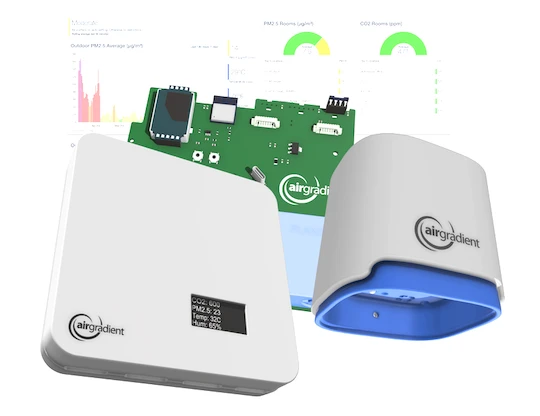
We design professional, accurate and long-lasting air quality monitors that are open-source and open-hardware so that you have full control on how you want to use the monitor.
Learn MoreCurious about upcoming webinars, company updates, and the latest air quality trends? Sign up for our weekly newsletter and get the inside scoop delivered straight to your inbox.
Join our Newsletter