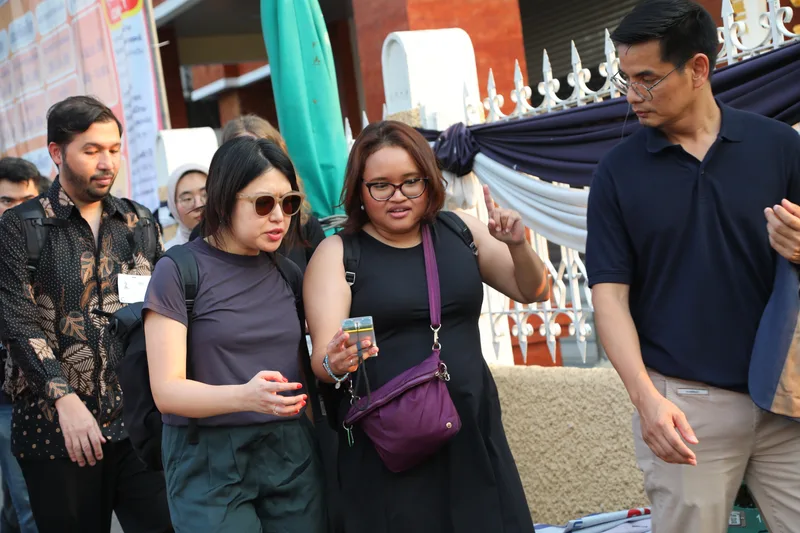
Inspired; prepared; motivated; enlightened…” are the exact words everyone wants to hear from a team of employees after a company workshop. Two weeks ago, team members of AirGradient attended a three-day training led by Imogen Martineau and Matt Whitney, the founders of Cambridge Grove Consulting, a consultancy firm specialised in advising philanthropies and non-profits.
What was the reason for this workshop? Early this year, AirGradient began the process of establishing the OpenAir Foundation, a non-profit whose guiding mission is to deliver air quality data into the hands of everyone, everywhere. To prepare us for these next steps, we decided to enlist some of Imogen and Matt’s expertise, especially since their work for the Clean Air Fund.
During the workshop, team members were guided through what sets philanthropic foundations apart from charities, how fundraising is distributed, and most importantly, how non-profits can pitch themselves and their mission to potential donors. Here are some interesting tidbits and numbers about philanthropy that we learned in only the first hour:
- Not all philanthropies are the same! Endowed foundations, which can be privately or corporate funded, donate their existing wealth to grantees. Regranting foundations gather funds and regrant them, hence the self-explanatory name.
- More than 3,000 billionaires exist as of today.
- Much of this wealth has led to the creation of over 260,000 philanthropic foundations that distributed $885 billion USD in 2023.
- In 2022, about 1.4% of the total donations were invested in addressing climate change, and a microscopic 0.008% ($70 million) were directly invested in tackling air pollution.
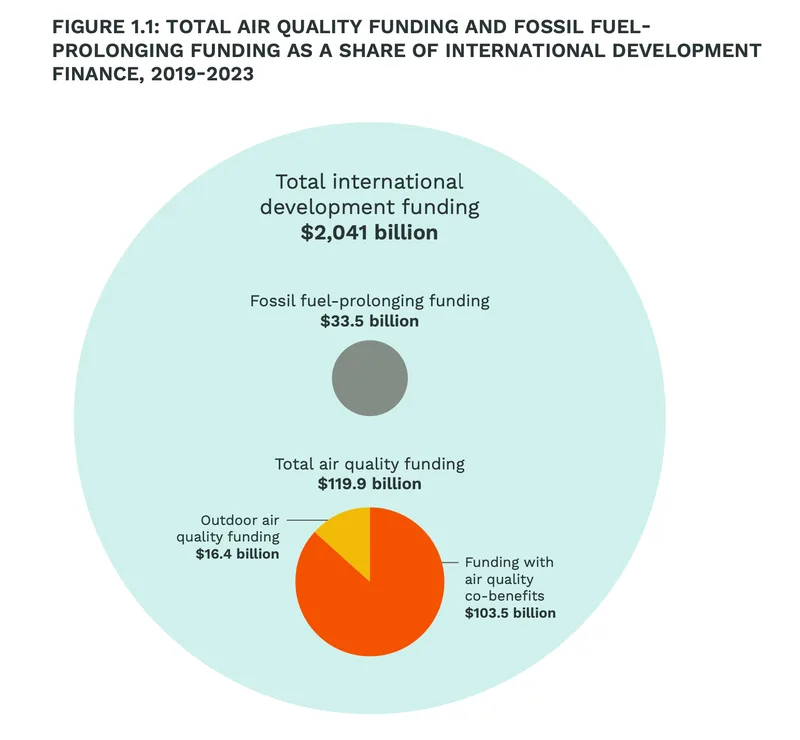
Branching out from only philanthropic funding, total international development funding also lacks focus on air pollution. In the Clean Air Fund’s State of Global Air Quality Funding Report for 2025, funding that focuses specifically on outdoor air quality, not projects that combat air pollution as an indirect consequence and co-benefit, makes up only a fraction of total air quality funding.
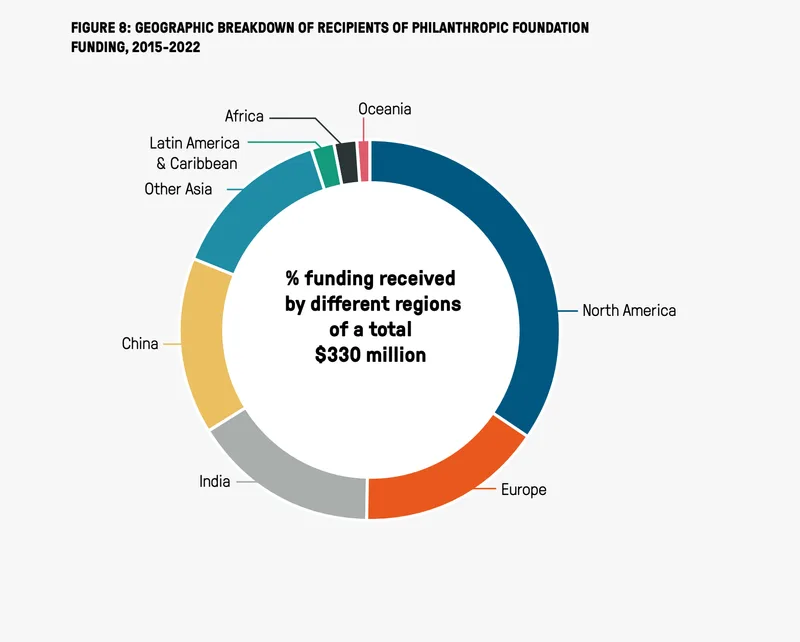
Unfortunately, the countries experiencing the worst air pollution also receive the least amount of philanthropic foundation giving, as you can see below in this infographic from the Clean Air Fund’s Philanthropic Foundation Funding Report from 2024.
Entering the world of philanthropy had my head spinning. The inconceivable sums of money spent on arts, humanitarian aid, cancer research, and climate change helped me believe that we are at least trying to move towards a brighter future—even if our newsfeeds seem to disagree.
But how do philanthropies decide which cause they donate to? This is where a Theory of Change (TOC) comes into play. Besides sounding like something to memorise for a business class exam and promptly forget, we were all pleasantly surprised that learning what a TOC is, in fact, was not boring at all.
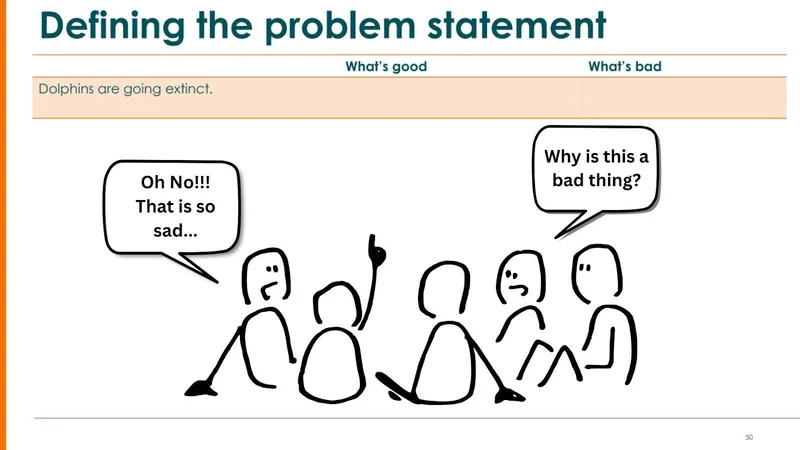
A TOC is the primary decision-making framework for a philanthropy to allocate funds, and enables organisations to articulate why they should receive funding. Ideally, the graphic explains the problem that needs to be solved (and funded), the activities one might undertake to address it, and how this action will result in positive change, ultimately solving the problem. Imogen and Matt then helped us apply our skills to some fictional TOCs, which included one debate about whether declining dolphin populations are actually something we should be concerned about in the first place (Achim and I were the only dolphin sceptics). Alongside this, our team practised creating 60-second elevator pitches, wrote a fully fledged pitch deck, and identified many future projects we want to undertake in the next months and years.
A small but accurate graphic captures our discussion of whether dolphins’ extinction is a topic that warrants a problem statement…
These three productive days—filled with many questions, helpful tips, and stimulating discussions—were not just another unique way that AirGradient wants to grow our Community and NGO Programme. They also prepared us for the next important step in our journey to address the air quality data gap in underserved communities.
We have always held the steadfast conviction that our ability to support communities must guide every step the company takes. Since its inception in 2019, we have been focused on growing this positive impact, never treating this as secondary to selling air quality monitors. In our CEO’s email signature, there is a sentence: “We will not sacrifice our values for profit.” Alongside the growth of our Community and NGO Program, which presently includes over 26 partnerships, the next question was naturally: how can we continue scaling this impact, and would others be interested in contributing to these projects?
Through the foundation, we hope to scale the positive collaboration with the NGOs, grassroots organisations, citizen science networks and local schools that we already have. In Laos, we were able to build the entire country’s air quality monitoring network with only 160 monitors and $50,000 USD. For the first time, many people who had previously had little access to information about the air they breathed had free access to this information and could protect themselves and their communities. In Kenya, the donation of 50 monitors to the youth-led non-profit Demography Project helped the Kihumo village track the dangerous air quality at construction sites and distribute protective masks.
If AirGradient can achieve this with just a few monitors and the help of UNICEF and local leadership, what can we accomplish if we collaborate with and utilise the extensive networks and skills of large philanthropic organisations like the Children’s Investment Fund Foundation or the Clean Air Fund?
A last thanks to Imogen and Matt from Cambridge Grove Consulting. Their workshop was not only intensely educational, but seemed to breathe a motivational breeze into our sails. Consider this blogpost a tiny glimpse into how we are growing as a company and stepping into the world of philanthropy. We’ll be sharing more of our progress in the coming months and are excited to properly unveil the OpenAir Foundation soon…