In December 2025, I visited Oni, a small town in the Racha region of north-western Georgia. I was invited there by the Racha Antiquities Study and Protection Fund, a local NGO running an education-focused environmental project titled Initiating Local Climate Research to Foster Adaptation Solutions in Upper Racha. The project is a grantee of Mountains ADAPT, funded by the United Nations Environment Programme (UNEP) together with the Austrian Federal Ministry of Climate Action, Environment, Energy, Mobility, Innovation and Technology (BMK).
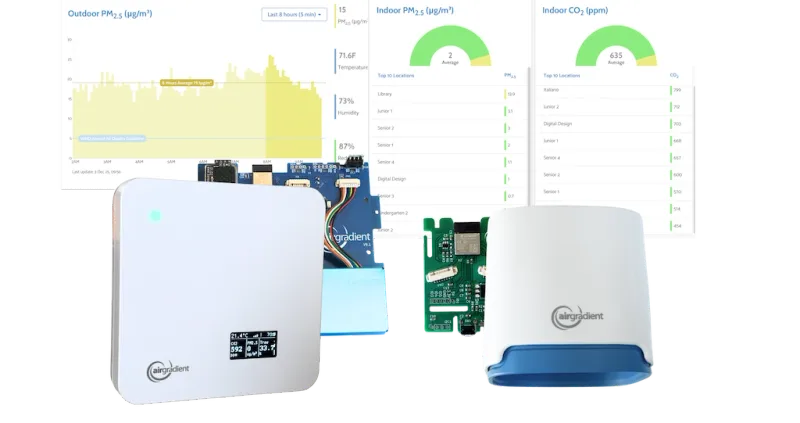
Our connection with the Racha Antiquities Study and Protection Fund started in a very unremarkable way: a support ticket. They had ordered an Open Air monitor from us that was stuck in transit, and they reached out for help. While looking into the issue, we learned more about their work and the broader project they were running. It was clear that what they were doing aligned closely with what we care about at AirGradient. We decided to donate three Open Air monitors to support their efforts.
A place with deep history and very present challenges
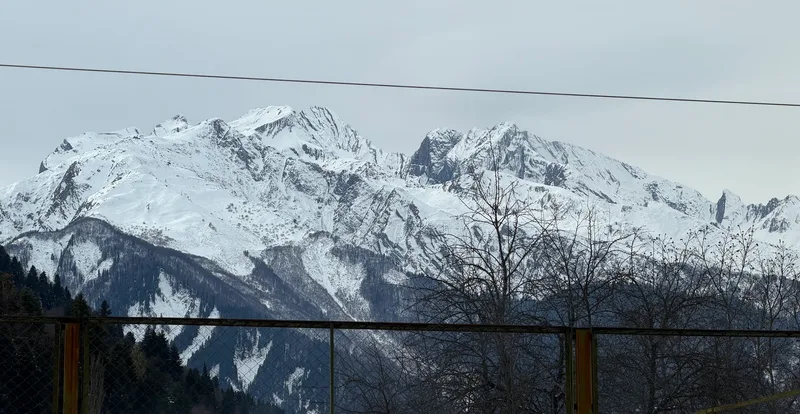
Oni is a small town at the foot of the Greater Caucasus range.
During my visit, I had the chance to see the local museum, which documents a long and surprisingly rich history. The region around modern-day Oni has been inhabited since at least the Bronze Age, with archaeological evidence pointing to trade links reaching as far as ancient Egypt.
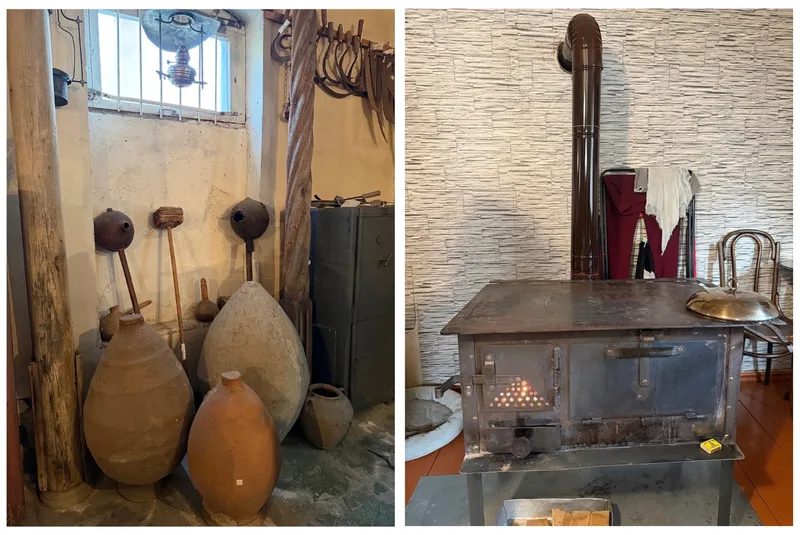
Today, life in Oni and nearby Glola is quiet and slow-paced. The majority of communities here have relied, and still rely, on wood-burning stoves to keep warm during the winter. This practice is inefficient and harmful, both for human health and the environment. Although natural gas became available in the region in the 2010s, the transition has been extremely slow. Cost, infrastructure, and habit all play a role.
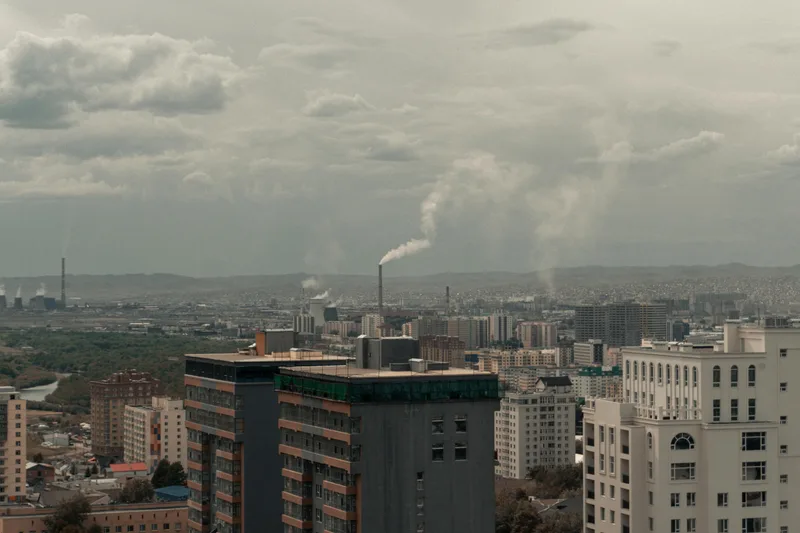
As a result, air pollution is a real issue, especially during calm weather when pollution accumulates in the valleys. This isn’t something that’s obvious by looking around; the air can feel fine. Until recently, it also wasn’t something that could be easily measured.
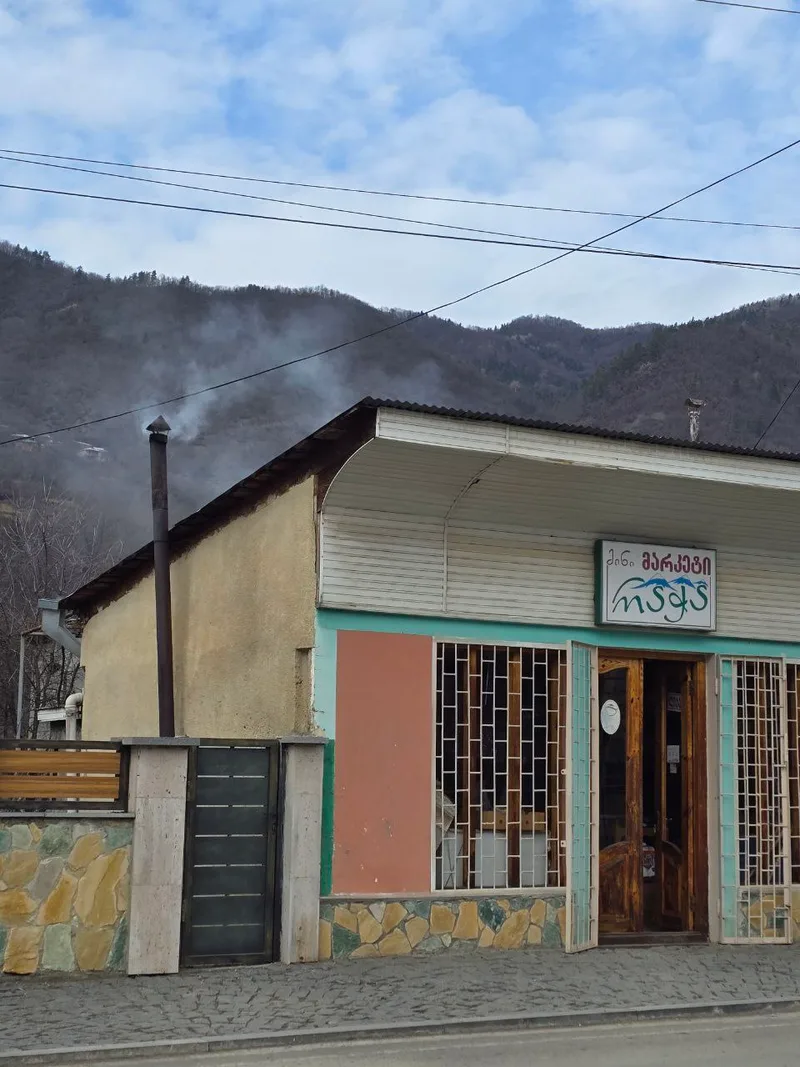
What happens when data becomes visible
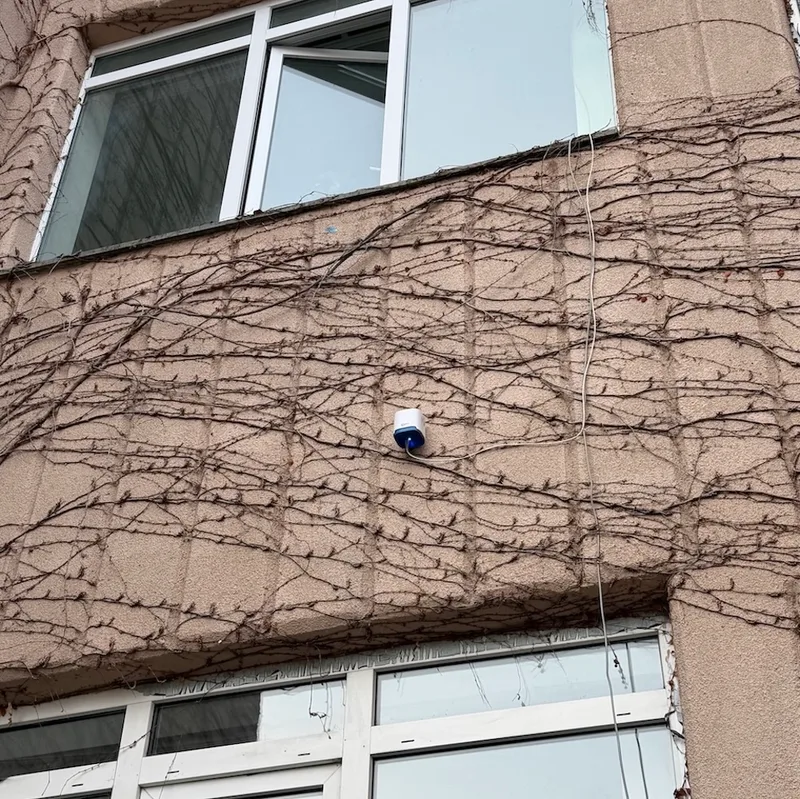
As part of the project, environmental monitoring equipment was installed at Oni Public School and Glola Public School.
Alongside weather stations and seismographs, the air quality monitors quickly became one of the most engaging tools. This was the first time air quality monitoring had been done in this region.
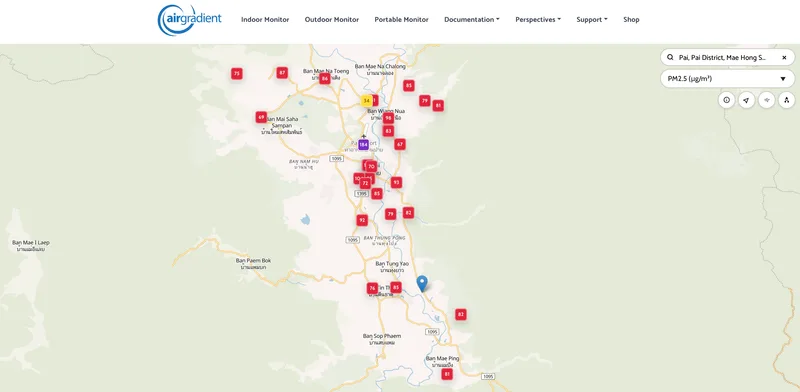
The reaction from students was immediate. Seeing data from their own towns appear on a global map sparked genuine excitement. More importantly, the numbers sparked questions.
For instance, toward the end of November, PM2.5 readings showed a sustained increase.
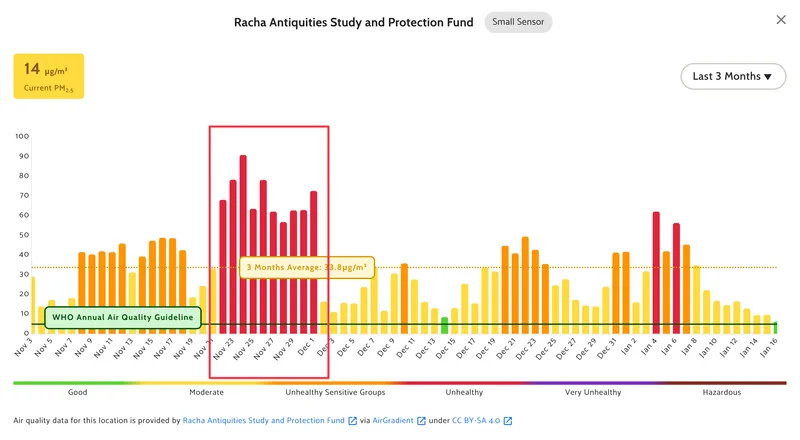
When this was discussed in class, students began analysing possible causes themselves. They connected the timing to seasonal activities, particularly burning leaves and other biomass ahead of winter. From there, the discussion moved toward possible solutions. One example that stood out to me was a suggestion around compressed fuel pellets made from leaves and agricultural waste as a potential alternative to open burning. Another more sustainable suggestion was composting. These ideas didn’t come from outside experts; they came directly from students interpreting their own data.
Without visible, local measurements, none of this would have happened. The pollution existed before, but the conversation didn’t.
Limits and long-term impact
It’s important to be honest about the limits. Many residents in Upper Racha cannot easily switch away from wood burning. Alternatives are expensive, infrastructure is limited, and government support is often missing. Immediate change isn’t realistic for everyone.
But awareness shifts perspective. Data creates a shared reference point. The longer-term value lies in education: students learning to observe, question, and explain environmental patterns.
The people behind the project
Meeting Inga and Ani, who run the Racha Antiquities Study and Protection Fund, was a highlight of the visit. Their motivation is practical and rooted in place. They’re not chasing visibility; they’re trying to build capacity where they live with focus on what can realistically be done locally, with limited resources.
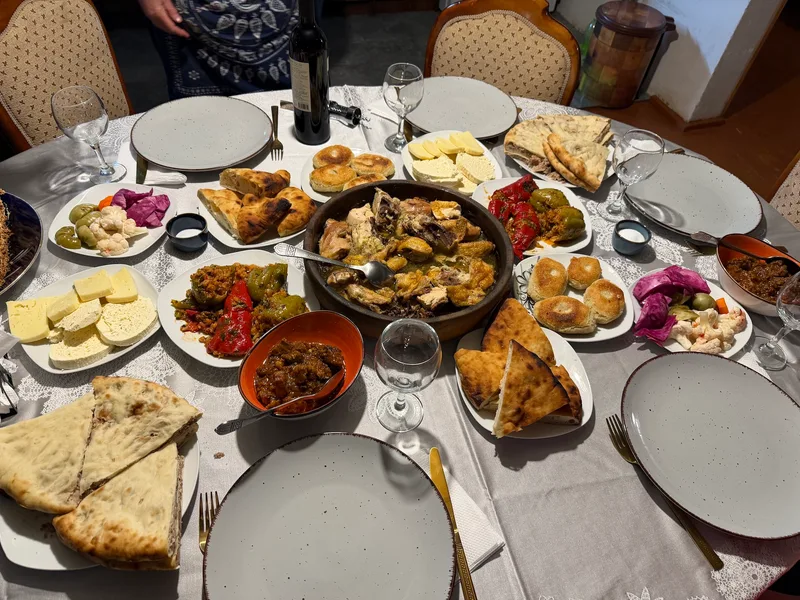
One evening, I was invited to a traditional Georgian dinner cooked by their grandmother. That moment - sitting around a table, talking about monitors, schools, history, and daily life - was probably my favourite part of the visit.
A small data point, a much bigger story
Looking back, what stayed with me most was how much impact can sit behind something very small: a few monitors, a couple of schools, two dots on a map. Those dots already triggered discussions about leaf burning, fuel choices, health, and long-term change.
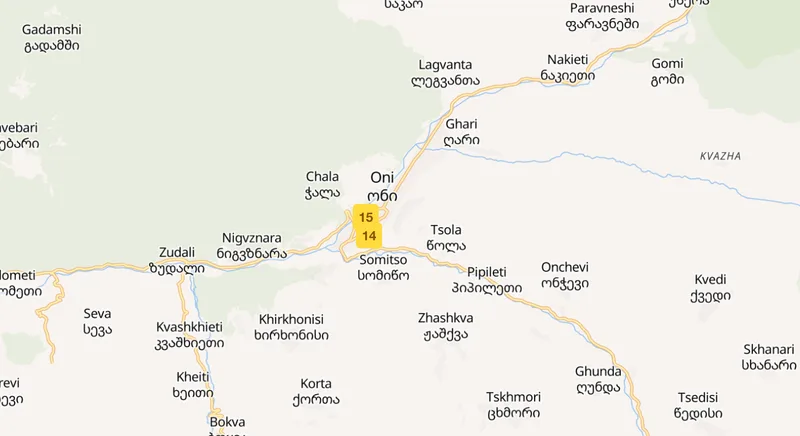
At AirGradient, we often talk about global impact, but visits like this make it concrete. A single data point can carry a much bigger story - if someone is there to listen to it.
Similar stories have come out of other parts of the world. Achim recently shared a story from Lagos that carried the same feeling. The fact that we make a point of visiting these places, not just shipping hardware, says something about how we see this work.
The long-term goal of the project in Racha is for students to present their observations and findings to their parents and the wider community, taking these discussions beyond the classroom and into households.
That may sound modest, but in places like Oni, that’s often how change actually starts.