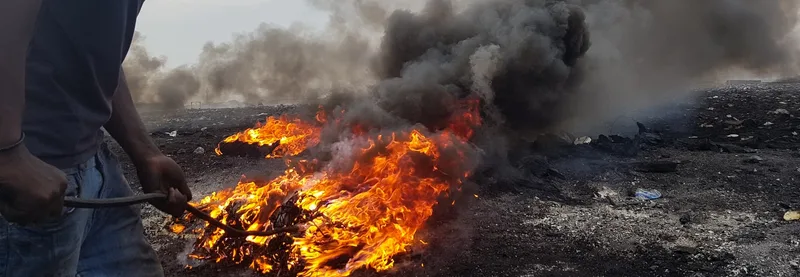
In winter, many residents of Yerevan (Armenia’s capital city) don’t need an air quality monitor to tell them something is wrong. The air feels heavier. Smog lingers between buildings. Windows stay closed. News headlines speak of landfill fires, construction dust, temperature inversions trapping pollution near the ground, and repeated “Unhealthy” readings. Surveys consistently rank air pollution among the city’s top concerns. People know there is a problem and they experience it every day.
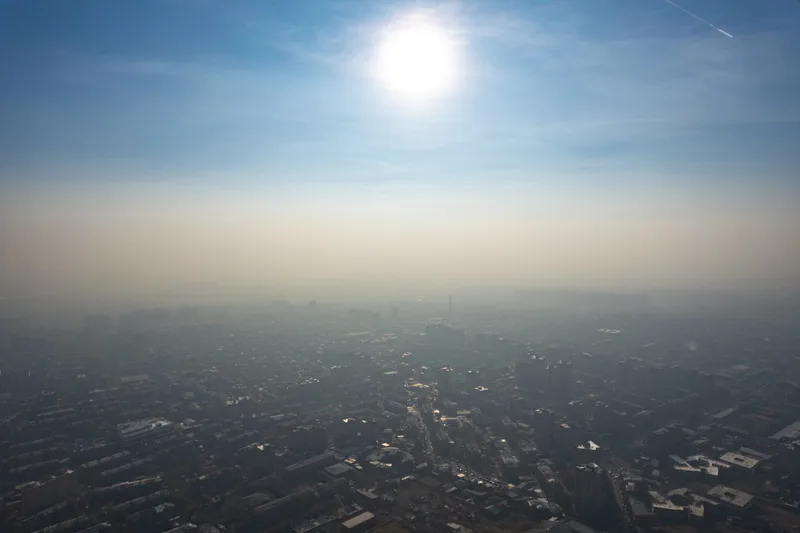
While it may feel like a modern crisis, the issue has deep roots. As early as 1985, the Los Angeles Times described Yerevan’s smog as a serious concern. Over the decades, the problem has resurfaced repeatedly, especially during the colder months when inversion layers trap pollutants near the ground. Yet despite public awareness and lived experience, visibility has often been limited. Data has existed in fragments across institutions and platforms, but there has been no unified, transparent picture that residents could easily access and interpret. Without accessible data, discussions often stalled between personal experience and official statements.
That gap is what AirQuality.am set out to address.
Refusing to Accept “That’s Just How Winter Is"
Anton Vlasov moved to Armenia in 2022 and was already deeply aware of the health impacts air pollution can cause, particularly as someone living with asthma. When he encountered winter conditions in Yerevan, he chose not to treat poor air as inevitable. Instead of accepting it, he began collecting data.
Alongside his primary job, he started building what would become AirQuality.am. He gathered air quality measurements from multiple sources: municipal sensors, volunteer DIY networks, meteorological stations, independent AQ monitoring networks, and other publicly available datasets. He compared readings, examined inconsistencies, and worked to make the information more understandable and transparent.
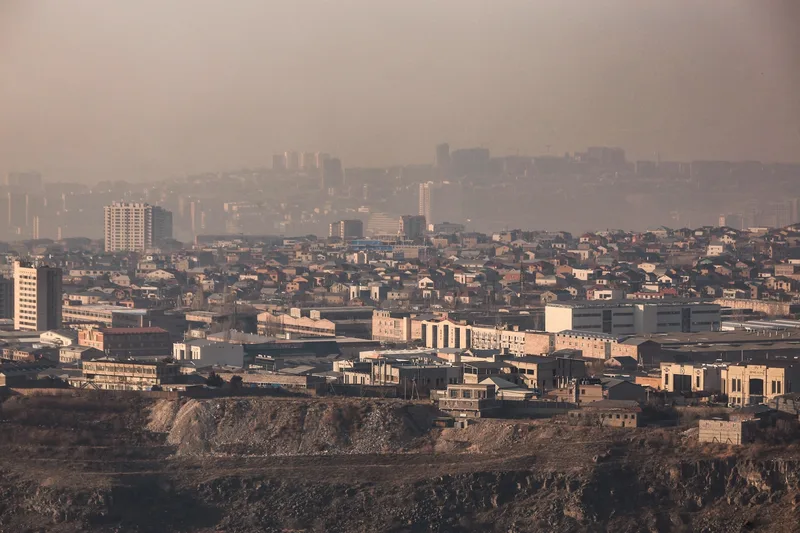
This effort builds on earlier grassroots initiatives. Volunteers had already begun installing sensors years ago. One of the largest initiatives is ArmAQI, launched in 2023, where community members build DIY sensors and deploy them across different districts of the city. These projects reflect a clear reality: residents recognize the severity of the issue.
At the same time, official responses have often been cautious. The Ministry of Environment and the Ministry of Health have tended to downplay the extent of the problem, while the Yerevan Municipality frequently attributes pollution primarily to climatic conditions and construction activity. Although modernization of monitoring infrastructure is now underway, the perceived lack of urgency in earlier years is precisely what motivated activists and technologists to take initiative themselves and to investigate more deeply and provide independent visibility into what people are breathing.
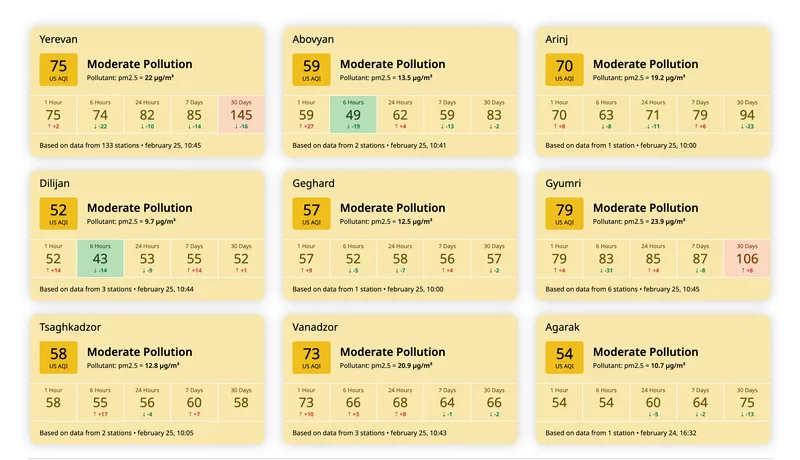
Over time, Anton’s work grew into a public platform that consolidates air quality data for Armenia with hourly updates. Both raw and processed datasets are available in an open format, accompanied by documentation so anyone can use and interpret them correctly.
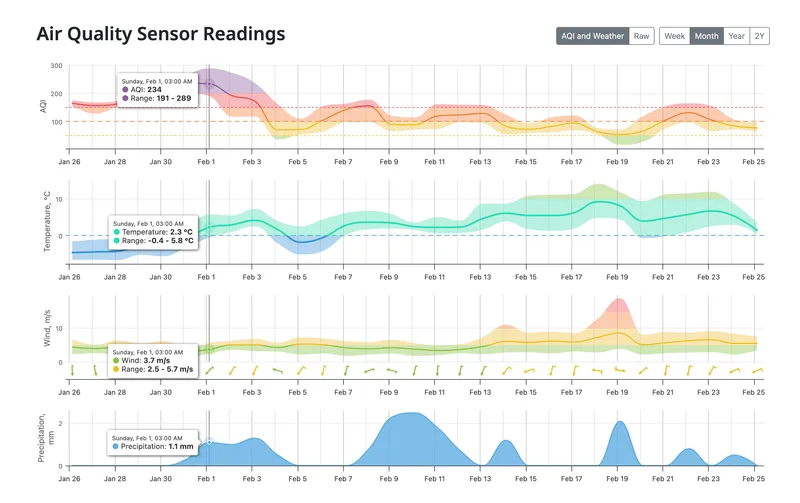
Beyond monitoring, Anton is also developing prediction models that combine sensor readings with weather data. One key observation so far is that a simple local factor – whether temperatures rise above or fall below around 5°C – significantly changes how pollution behaves in the city. This kind of insight rarely emerges from global air quality models, which often struggle when local context is missing. Heating practices, urban layout, inversion patterns, and seasonal behavior vary from place to place. Without incorporating these local realities, models can misrepresent what is actually happening on the ground.
From Data to Action
AirQuality.am is not just about numbers on a map. It is about empowering people to act.
The project encourages residents to install their own sensors to improve monitoring coverage, especially in neighborhoods where official stations are limited. It invites people to share data publicly to raise awareness of health impacts. It calls on citizens to engage with authorities, follow environmental plans, participate in public discussions, and support initiatives that expand green spaces and reduce dust and waste burning.
Journalists are encouraged to use open data responsibly to inform coverage. Community members can follow public initiatives and air quality updates. The underlying message is simple: air pollution cannot be solved by one institution alone. It requires collective effort.
How We Connected
Living in Armenia myself, I had been following the growing concern around winter pollution and the recurring debates in the news. When I came across Anton’s work, what stood out was the seriousness and openness of the approach. This was neither alarmism nor resignation. It was an attempt to make the problem measurable and visible.
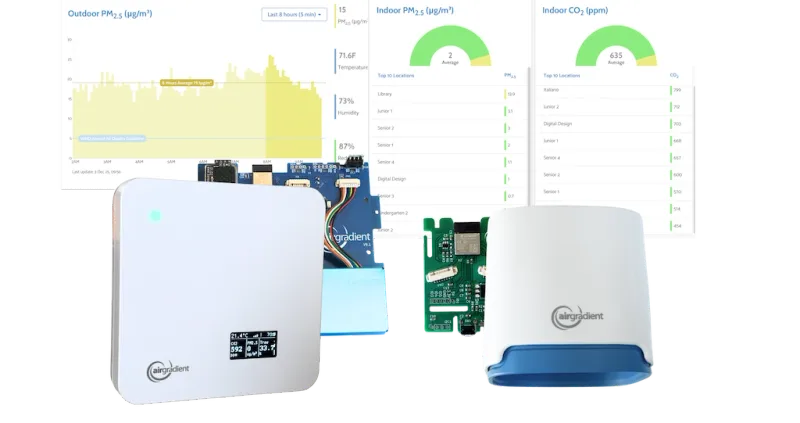
We reached out and began a conversation about how to strengthen monitoring coverage. As a first step, we introduced Armenia-specific promo codes to lower the barrier for residents who want to install their own sensors. The goal is straightforward: increase data points across the region and support a transparent, community-driven network.
When residents can see what they are breathing, conversations become grounded in evidence rather than speculation. AirQuality.am is helping turn lived experience into documented reality – and that is a powerful starting point for change!