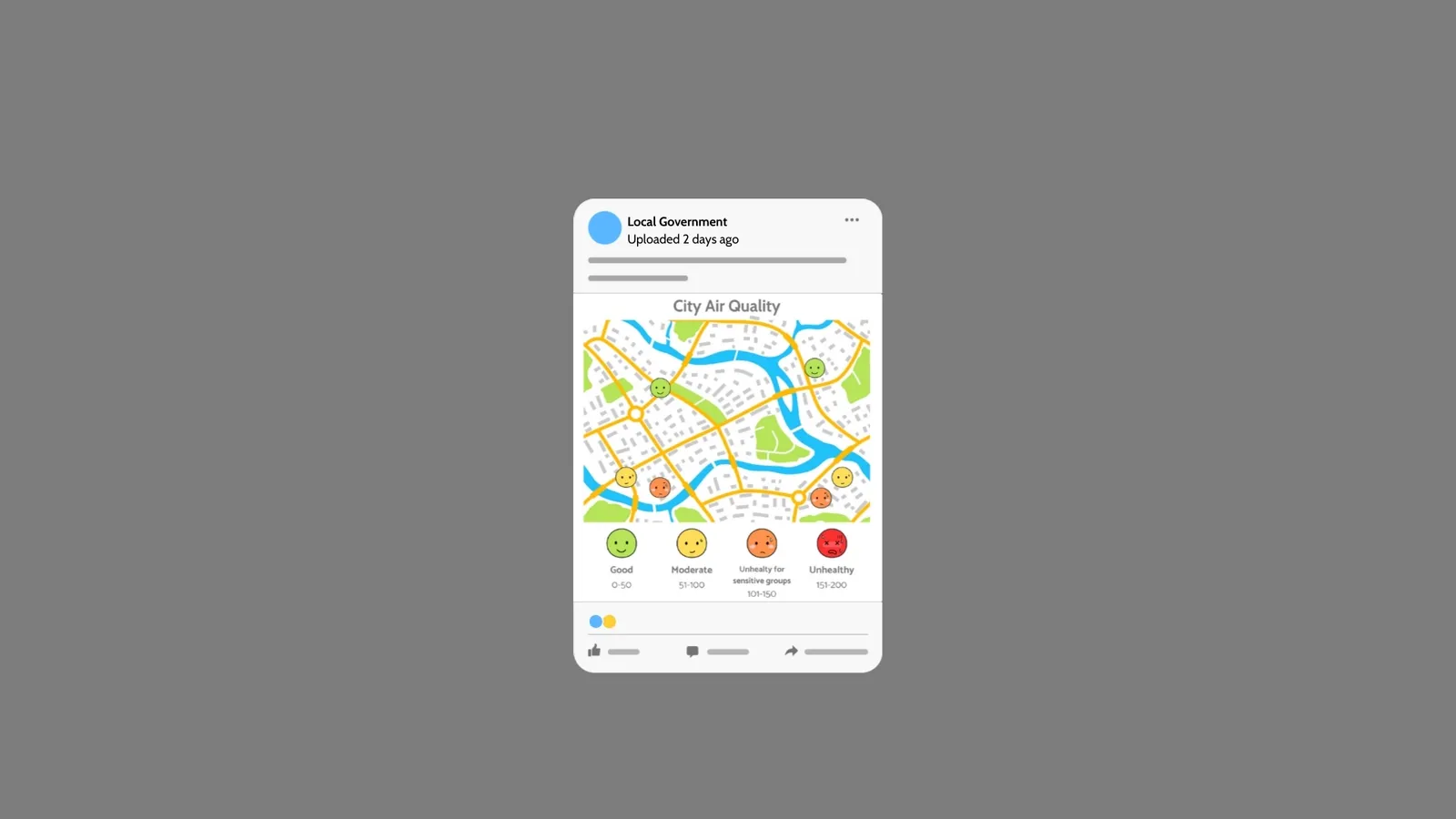
Open and Accurate Air Quality Monitors
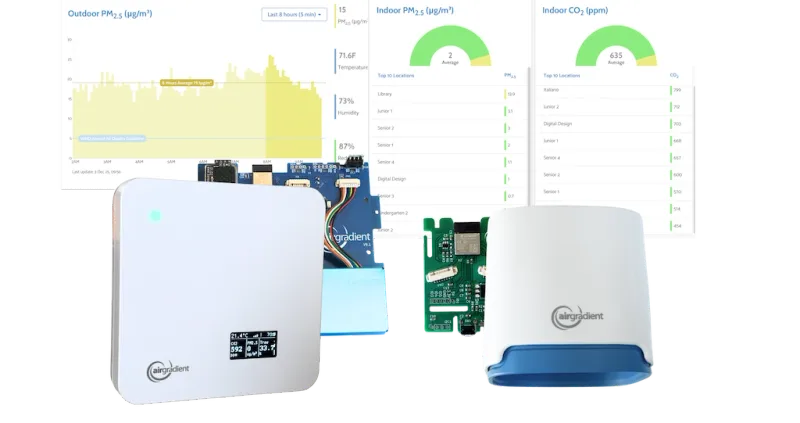
We design professional, accurate and long-lasting air quality monitors that are open-source and open-hardware so that you have full control on how you want to use the monitor.
Learn MoreWe spend a lot of time thinking about how air quality data gets used. But, just as important is how it doesn’t. Some monitors end up in boxes being unused, dashboards can go unread, and often data can fail to reach the people who could benefit from it most.
As some of you already know, we ship devices from Thailand, and processing international returns is both quite time-consuming and costly. We’ve looked into setting up warehouses to deal with these issues, but due to the uncertainty of the current international shipping situation, our plans have so far fallen through.
When Wyatt reached out to us from Glenda Dawson High School in Pearland, Texas, we began to formulate a plan. Most of the devices that people seek to return are fully functional, and are being returned merely because the customer decided they no longer want an AirGradient monitor or an air quality monitor in general. While we honour all returns within the return period, we have never liked how much waste this can create. Even if the monitor could be returned, checked, and sold to another customer, the device ends up being transported around the world, emitting a lot of carbon dioxide along the way, just to begin the same journey again.
As such, our team came up with the idea to ask U.S. customers who sought to return their working devices to instead send them to Wyatt and his team in Texas. In this way, we were able to support project CLAIRity (more on that soon!) while also ensuring that our monitors - and the data they generate - don’t go to waste. In other words, this was the perfect win-win situation.
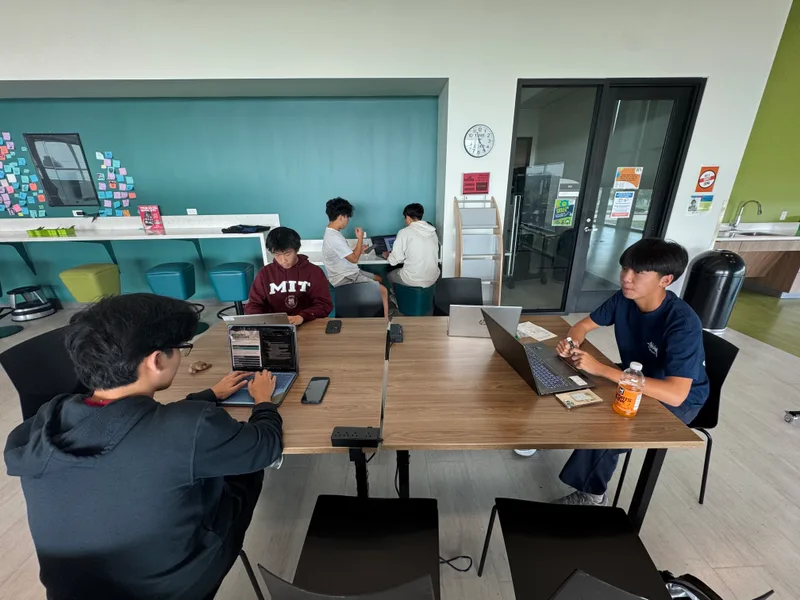
Wyatt and his team are students at Glenda Dawson High School in Pearland, Texas, working through the international Future Problem Solving program and its Community Problem Solving (CMPS) track. They’ve already proven they know what they’re doing (they advanced to the CMPS International Competition last year) and this year they wanted to build something with lasting impact in their own community. That’s when they began to look into air quality monitoring.
Their focus is the Greater Houston area, a region that regularly faces serious air quality challenges. But what really stood out to us wasn’t just that they cared about air pollution, but rather the way they framed the gap they were trying to fill.
As Wyatt conveyed to us, his team identified three problem areas:
When Wyatt first reached out to us, their initial plan was ambitious: they wanted to ultimately build a network across Brazoria County, targeting cities like Pearland, Manvel, Alvin, Rosharon, Angleton, and Freeport, with the long-term goal of placing monitors at schools, parks, libraries, and key traffic/industrial hotspots.
In their ideal end state, they imagined three monitoring sites per city, making a total of 18 sites, and then expanding beyond that as their project gained momentum.
But they were also realistic. They told us upfront they were facing two major constraints:
With these constraints in mind, rather than waiting until everything was perfect, they shifted toward a pilot. It was at this point that they identified AirGradient as a potential partner and reached out to us.
Unfortunately, we weren’t able to initially donate 18 monitors and after we explained we couldn’t donate at the scale they originally hoped for, Wyatt came back with a smaller, more feasible starting point: a five-monitor pilot to collect baseline data in their most vulnerable areas while they continued to pursue partnerships and local support (including community groups like Keep Pearland Beautiful and youth volunteering organizations).
There was also one more issue that arose - most of our returned monitors are indoor units (due to the fact that we sell many more indoor units). While these can be used outdoors, they, of course, aren’t ideal in the settings that the project CLAIRity team had planned. Once again showing their flexibility and wanting to make an impact, the team moved to focus on large public or highly trafficked indoor areas. What we really appreciate about Wyatt and his team is how you can clearly see that - despite us not being able to provide exactly what they wanted - the true goal with this project is to make a meaningful and lasting impact, and the team is willing to adjust to achieve that.
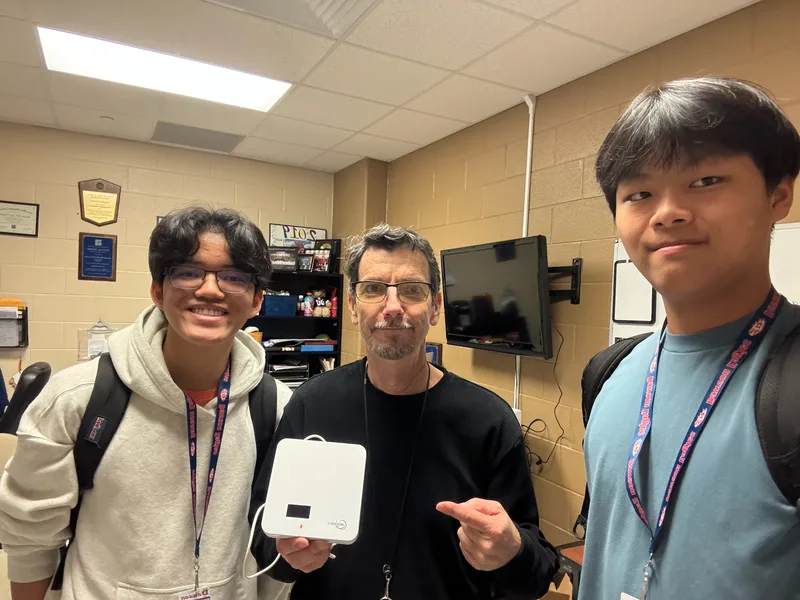
Once we agreed to start redirecting return units to Wyatt’s team, the project shifted from planning to deployment very quickly.
The first priority was simple: get monitors running in places where they could start collecting baseline data, while the team worked through permissions for longer-term public installations. That meant starting in:
That “start where you can, then expand” approach is exactly what we hope to see with community projects. It keeps momentum high, it helps teams learn quickly, and it ensures the monitors actually get used rather than waiting in a box for the perfect location.
Just as importantly, the team wasn’t limited by a single site. Their project spans a large county, and they’ve already begun building a host network that includes schools, community groups, and local organizations, meaning every additional monitor has a realistic path to deployment.
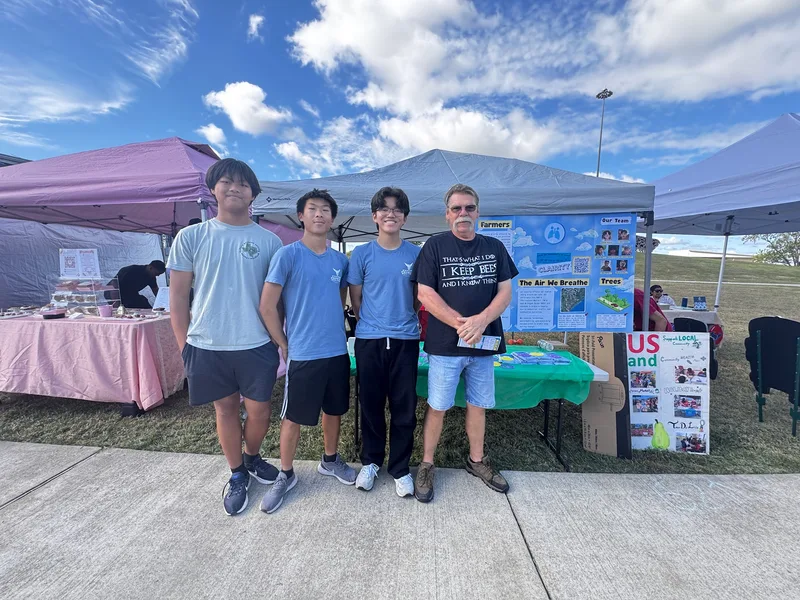
In early December, Project CLAIRity was invited to set up a booth at a local marathon event in Pearland with around 2,000 participants. Events like this are perfect for what they’re trying to do: connecting air quality to real life, in a setting where people are already thinking about health.
Instead of relying on explanations alone, they could show people the actual readings from a real monitor and explain what they mean in plain language. That real-time element plays a big role, because when the data is right there, people pay attention and they start asking questions.
That’s the core of what Project CLAIRity is building: not just monitoring, but community understanding.
As more return units become available, we’ve continued forwarding additional monitors to Wyatt’s team.
There are two reasons for this:
And from our side, it’s hard to imagine a better outcome for returned devices: instead of sitting unused or being shipped back across the world, they’re being turned into community education tools, generating data that sparks real conversations.
Project CLAIRity is still in its early stages, but the direction is already clear.
In the near term, the team is focused on expanding deployments within their existing network by placing monitors in additional schools, libraries, and public indoor spaces as permissions are finalized. They’re also continuing to build relationships with local organizations and city groups that can host monitors and help connect the data to broader community conversations.
Outreach remains a core part of the project. The team plans to continue participating in community events like local races, school programs, and public gatherings, using real-time air quality data to make pollution visible and understandable to people who might otherwise never engage with it. These events have already proven to be one of the most effective ways to spark curiosity and discussion around air quality.
As more monitors become available, the network will continue to grow. While the original vision included outdoor monitoring, the team has shown they’re willing to adapt and make meaningful progress with the tools available now - using indoor data to build awareness, establish baselines, and demonstrate impact while laying the groundwork for future expansion.
From our side, we’ll continue routing returned monitors to Project CLAIRity as they become available. Seeing these devices actively deployed (and, especially, seeing students turn them into teaching tools) reinforces why we build open, accessible monitoring systems in the first place.
We design professional, accurate and long-lasting air quality monitors that are open-source and open-hardware so that you have full control on how you want to use the monitor.
Learn MoreCurious about upcoming webinars, company updates, and the latest air quality trends? Sign up for our weekly newsletter and get the inside scoop delivered straight to your inbox.
Join our Newsletter