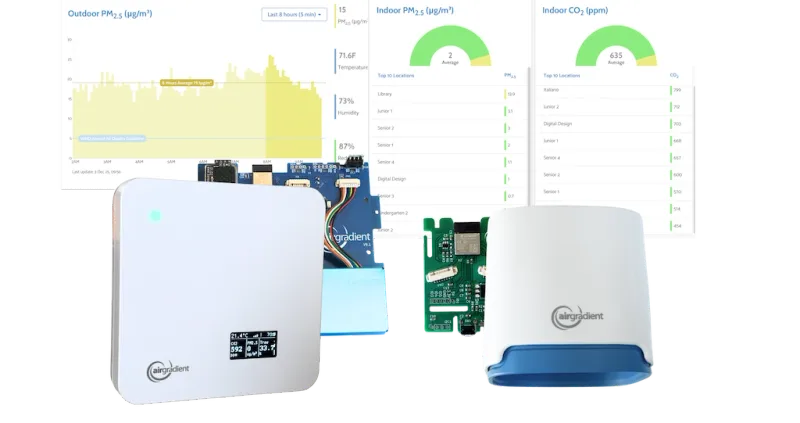
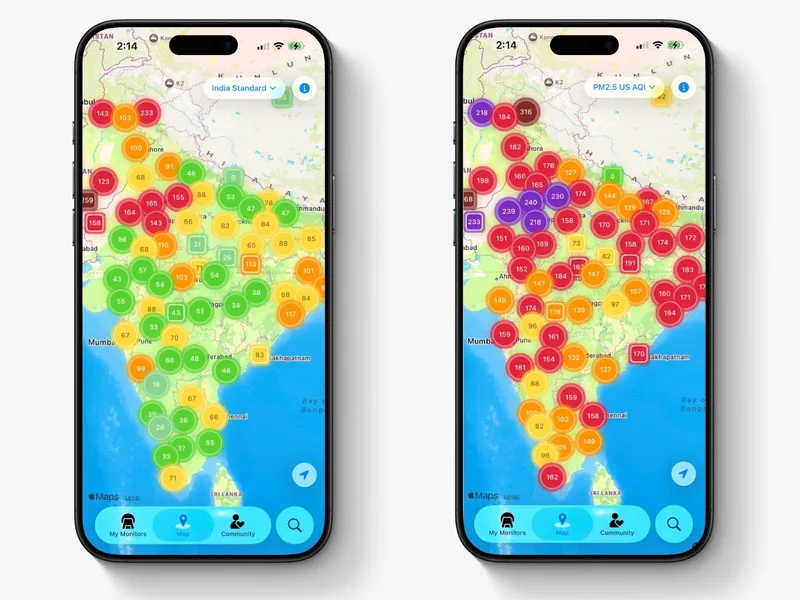
Pakistan’s air pollution challenge is often discussed through the lens of its largest cities, where visibility is lowest and headlines are loudest. What remains less visible, however, are the conditions in smaller towns, mountainous regions, and school environments where monitoring has historically been limited or absent.
The Urban Unit, under a project of the Punjab Government and with support from the Energy Policy Institute at the University of Chicago, is working to address this gap by expanding the country’s air quality monitoring capacity. Through the installation of 160 low-cost outdoor monitors across all provinces, the project has established Pakistan’s most extensive real-time monitoring networks to date.
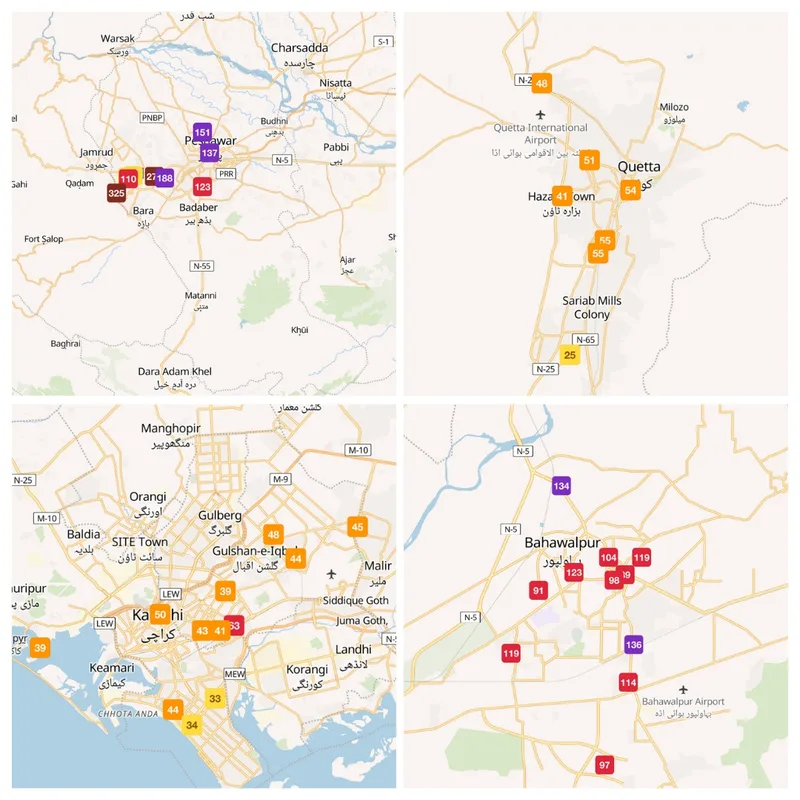
The network currently spans around 25 cities, covering provincial capitals as well as areas that previously had little or no publicly available air quality data.
Designing a network that goes beyond major cities
From the outset, the team made a deliberate decision to look beyond familiar urban centres. Sensor placement was guided by a combination of satellite data, land-use patterns, population density, and proximity to known pollution sources, alongside a recognition that many commercially and economically active areas had never been monitored before.
"We used satellite data to map hotspot cities initially, along with layers such as roads, population density, and built-up areas. Based on this, we prioritised polluted cities first, then areas adjacent to them without sensors, and finally more remote regions where no monitoring existed at all."
As a result, the network has helped shift attention away from a single-city focus toward a more national understanding of air quality trends.
All data collected through the network is made publicly accessible through an online portal developed by the Urban Unit. Residents, researchers, civil society organisations, and journalists can view real-time trends, download datasets, and use the information for analysis and advocacy. The data from this network can also be accessed through the AirGradient Map.
Establishing trust in low-cost sensors
Making data publicly available at a national scale also brought a new set of responsibilities. Once information moves beyond internal use and into the public domain, questions around accuracy and credibility become unavoidable, particularly in a regulatory environment where low-cost monitoring has historically been treated with caution.
Rolling out a network at this scale meant engaging directly with longstanding concerns around the reliability of low-cost sensors, particularly in government contexts where reference-grade monitoring has traditionally been the standard. These questions surfaced repeatedly in discussions with policymakers and regulators, especially around data quality, and how sensor-based measurements could complement existing systems rather than replace them.
To address these concerns, the team co-located the sensors with reference-grade monitoring instruments to enable direct comparison of readings. Alongside this, during broader deployment, monitors were also installed in proximity to existing government standard equipment wherever such sites were already in place.
"In the process, wherever we had the opportunity to, we installed the sensors nearby the government standard equipment. That helped us in demonstrating that the readings are acceptable in terms of the quality of measurement."
Demonstrating alignment in patterns over time helped shift the conversation from whether low-cost data could be trusted to how it could be used. In some cases, data from the expanded network has since supported public advisories, signalling a meaningful change in how sensor-based monitoring is perceived within official decision-making processes.
“For the very first time, when we showed the data to the government and we co-located our sensors with their reference-grade equipment, the results were very encouraging. So the EPA decided to use our sensors as their network for the advisory to the people.” – Hassan Ilyas, Environmental Specialist at the Urban Unit
Bringing air quality monitoring into schools
Alongside the broader rollout, a smaller but significant component of the project has focused on schools. In districts such as Murree, where the Urban Unit was already implementing rainwater harvesting and environmental education initiatives, air quality monitoring was introduced as an additional learning tool rather than a standalone technical exercise.
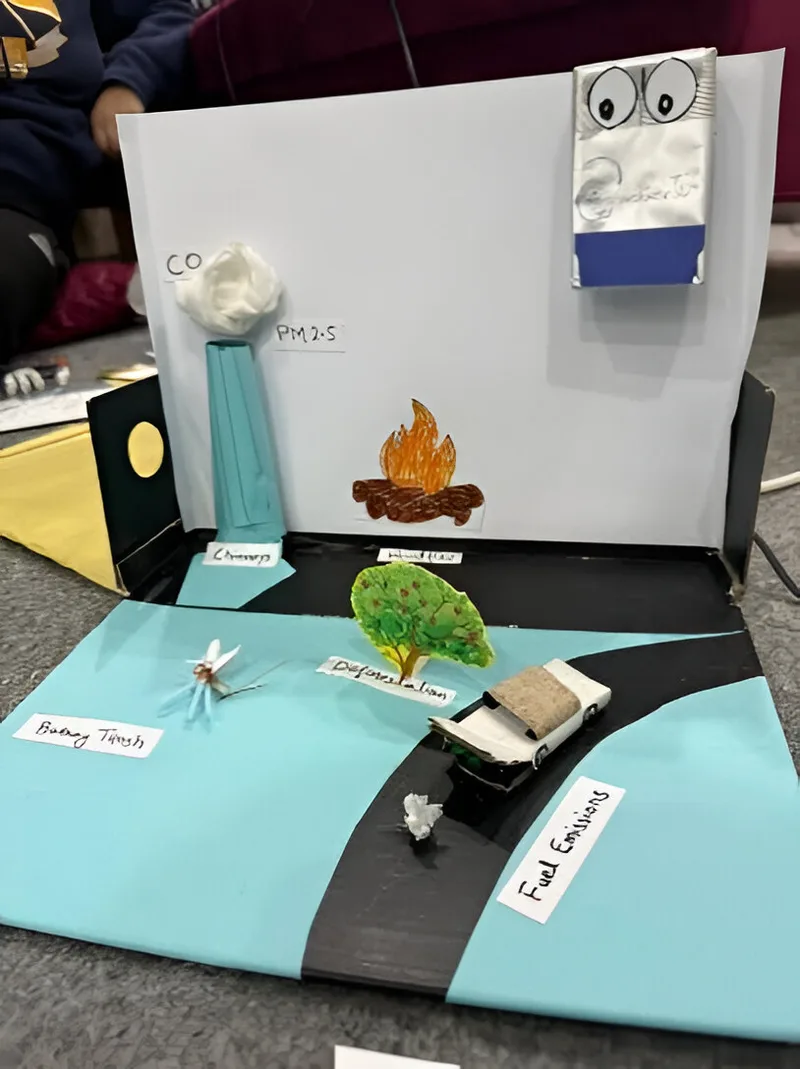
As part of these sessions, Urban Unit’s Project Officer Naveed Iqbal developed a simple, hands-on model to help students understand the main sources of air pollution, including fuel emissions, burning waste, deforestation, and smoke from industrial chimneys. The model was used to move the discussion beyond abstract indicators and toward everyday activities students could recognise in their own surroundings.
As outlined in a report developed by the Urban Unit to document the initial rollout and impacts of the initiative, these demonstrations helped students begin linking air quality readings to behaviour and local conditions. In one session, a student compared their school’s air quality to another monitored location in Murree and attributed the difference to waste management practices, noting that their school’s air was cleaner because trash and wrappers were disposed of properly.
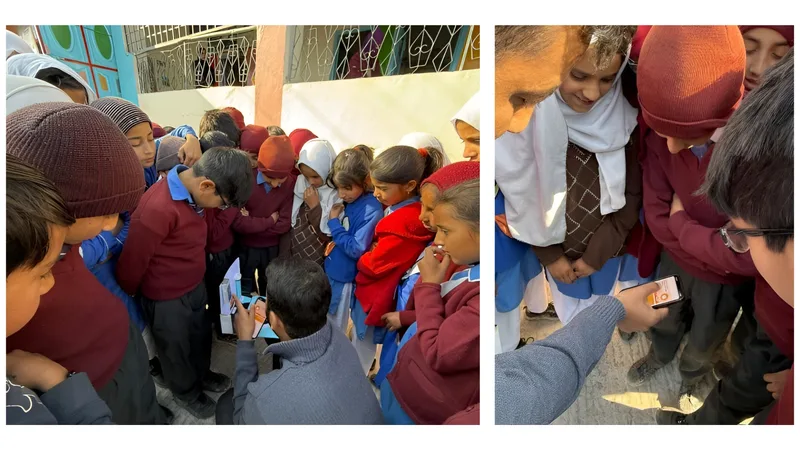
These early responses offer a glimpse into how pairing monitoring with education can shape understanding at a formative stage. The full report provides a more detailed account of the school-based activities, student reflections, and the educational outcomes observed so far, offering context on how this initiative is beginning to translate data into awareness on the ground.
Strengthening impact beyond deployment
With a national monitoring foundation now in place, the focus is shifting from deployment toward consolidation and long-term impact. The next phase of work is centred on strengthening how air quality data is understood and acted upon, particularly through education and regional collaboration.
Key priorities moving forward include:
Expanding air quality monitoring across schools and universities: Building a broader education-focused network that includes both indoor and outdoor monitoring in schools and universities across Pakistan, linking exposure data more closely to learning environments.
Pairing monitoring with education and shared learning: Developing interactive training and awareness programmes for teachers and students, while encouraging exchanges between schools in Pakistan and abroad to share experiences and practical approaches to clean air.
Strengthening digital and institutional support for education programmes: Establishing dedicated online tools and platforms to support school-based air quality initiatives, making it easier for educators and institutions to access data and learning resources.
Deepening university and regional engagement: Involving universities more closely as partners in monitoring, research, and regional collaboration.
Linking data to action in vulnerable areas: Ensuring that air quality information is paired with practical resources and pathways for improvement, particularly in communities facing higher exposure and fewer means to respond.
Together, these directions reflect a shift from individual deployments toward a more connected system, one that integrates monitoring, education, and collaboration while keeping people and institutions at the centre of the work.
Much of the progress achieved so far reflects a combination of leadership and sustained teamwork. As Abid Hussainy noted, operating at this scale has been made possible in large part by the leadership of Dr. Muhammad Omar Masud, the Urban Unit’s CEO, alongside the collective efforts of the Urban Unit’s Environment Department and field teams, including Naveed Iqbal, Ahmad Saleem, Hassan Ilyas, Saba Raffay and Dr. Ammara Habib. Partnerships with WWF Pakistan, Aga Khan University, and NED University of Engineering & Technology have further helped embed the network within research, education, and policy discussions.