What the EPIC Air Quality Fund Is For
EPIC’s Air Quality Fund supports teams that want to expand access to air quality data where reliable monitoring has historically been limited or unavailable. Successful projects typically combine three things: (1) a monitoring network that produces trustworthy data, (2) local capacity to operate and maintain the system, and (3) public data access that enables research, policy, and community action.
This page is written for EPIC applicants and awardees considering AirGradient for their project. If you have questions about network design, budgeting, calibration, or operations, we are happy to help.
2026 Applications
The EPIC Air Quality Fund’s 2026 application cycle opens on March 12, 2026. For definitive dates, eligibility rules, required documents, and the submission portal, start with EPIC’s official Call for Proposals.
We’ve collected the most important EPIC links at the bottom of this page so you can quickly confirm fit and pull the latest official materials when you need them.
This page focuses on the practical side: Planning and deploying a durable open-data monitoring network with AirGradient.
What EPIC-Funded Teams Usually Need
We work closely with many EPIC awardees, so we know the practical needs they often share: A durable monitoring network, strong local ownership, and an open-data strategy that can be sustained.

Network design that makes sense
Site selection, coverage strategy, connectivity, and a realistic rollout plan.

Local capacity and training
Practical documentation, training resources, and a system that can be maintained locally.

Open, accessible data
Easy export, clear data ownership, and the ability to publish data for public use.

Credible measurements over time
A plan for co-location, calibration discussions, QA checks, and ongoing reliability.
The AirGradient Advantage
Each organisation selects its own monitor manufacturer based on goals, budget, and technical needs. In recent EPIC funding cycles, AirGradient has been the most popular choice for teams that prioritise accuracy, affordability, open design, and long-term operability.
Accurate and field-tested
A network is only useful if the measurements hold up in the field and remain interpretable over time. All units are factory calibrated.
Open-source hardware and firmware
Teams can understand how the system works, adapt it if needed, and avoid vendor lock-in.
No mandatory platform fees
Use our optional dashboard, self-host, or integrate into your own stack. The network stays yours.
Long-term support mindset
We help teams think through planning, deployment, calibration questions, and operations.
2024/2025 EPIC Awardees That Chose AirGradient Monitors
AirGradient has been the most popular monitor choice among EPIC Air Quality Fund awardees in 2024/2025. Among the awardees that chose AirGradient, most selected the AirGradient Open Air as their primary monitor, often complemented by the Open Air Max model for locations that benefit from cellular connectivity and solar power.
We build for challenging environments and real-world constraints: Intermittent power, unreliable internet, and remote deployment sites. That practical focus helps teams keep networks running and data flowing long after launch.
Clean Energy Nepal
Deploys 21 low-cost monitors across major cities in Nepal, publishes open data, and mobilizes youth to amplify awareness and policy advocacy.
learn moreThe Urban Unit
Installs 160 low-cost monitors across 10 cities to strengthen Pakistan’s network, publish open data through a portal, and support health advisories and city-level action plans.
learn moreEnvironmental Protection Authority, Ghana
Builds a long-term hybrid monitoring network in Tema (reference-grade plus low-cost monitors) to provide real-time public information and support evidence-based interventions.
learn moreLagos Metropolitan Area Transport Authority (LAMATA)
Installs 30 low-cost monitors across key urban and traffic corridors in Lagos to expand real-time PM2.5 coverage and support stronger emissions and air quality regulations.
learn moreUnited Methodist University and Kigali Collaborative Research Centre
Establishes Liberia’s first long-term PM2.5 monitoring network (20 low-cost monitors and one reference-grade monitor) to build capacity, enable transparent data sharing, and inform policy and public awareness.
learn moreMalawi University of Business and Applied Sciences
Deploys 20 PM2.5 monitors across five districts (Blantyre, Salima, Lilongwe, Mzuzu, Zomba) to expand nationwide real-time PM2.5 coverage in Malawi.
learn moreAire Limpio Honduras
Supports drafting Honduras’ first comprehensive Clean Air Law while deploying 50 affordable PM2.5 monitors to build public awareness and strengthen evidence for action.
learn moreWASARU (Project Kinshasa Air Quality- KINAQ)
Creates the DRC’s first long-term PM2.5 monitoring network with fully open data, partnering with health and academic stakeholders to deliver actionable information and community engagement.
learn moreMalawi Initiative for Clean Air Solutions
Establishes a sustainable monitoring network with Malawi government agencies and local research institutions to expand long-term access to air quality data.
learn moreAirGradient Outdoor Monitors
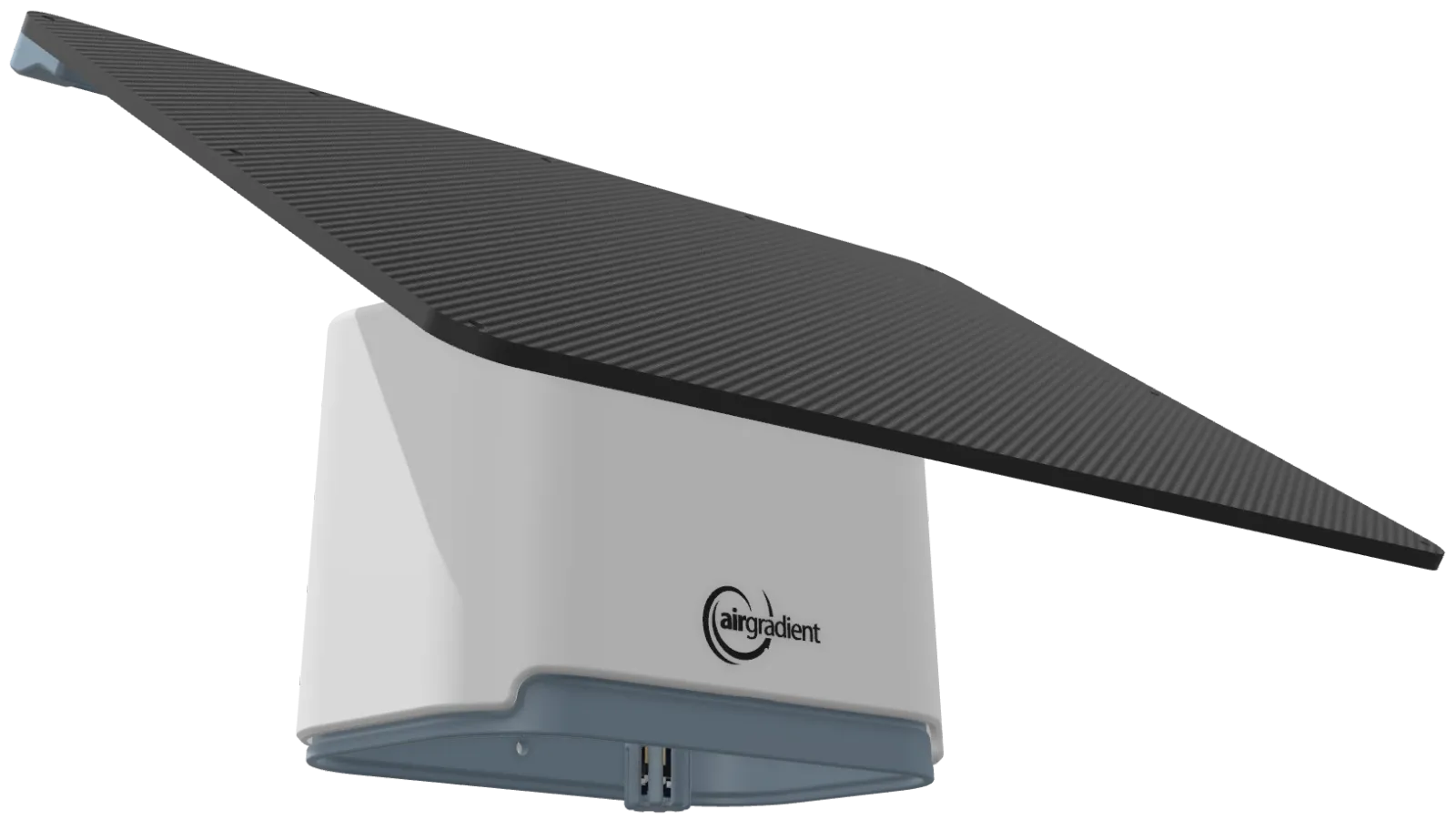
Two outdoor monitors used across EPIC projects: Open Air for core coverage, and Open Air Max for deployments that benefit from cellular connectivity and solar power.
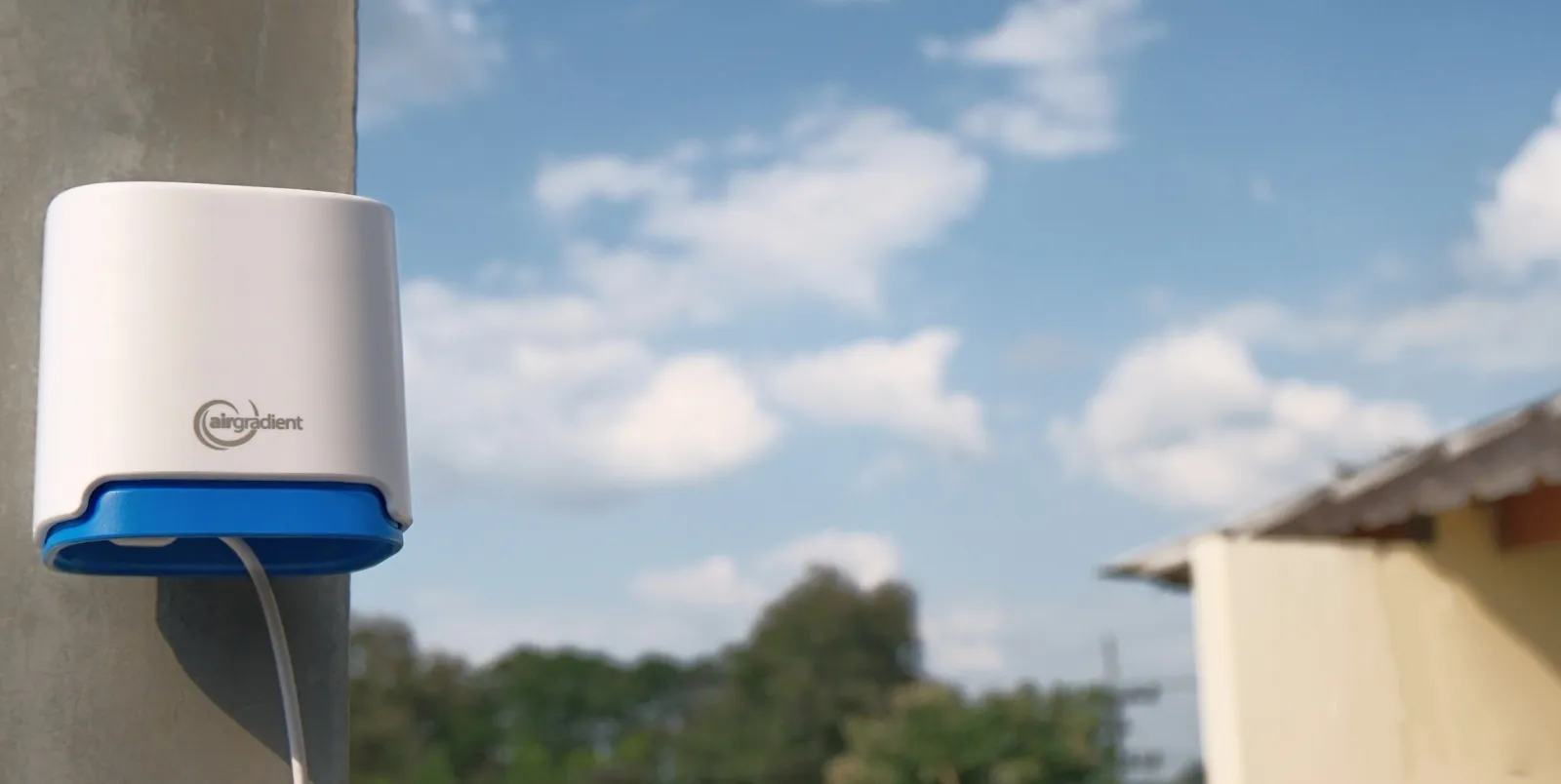
Open Air
Outdoor Air Quality Monitor (WiFi)
A robust, cost-effective monitor for dense coverage when power and WiFi are available.
- Measures PM, CO2, TVOC/NOX, temperature and humidity
- Open-source, repairable, no cartridge lock-in
- Ideal for multi-site coverage with a consistent rollout model
- No subscription costs
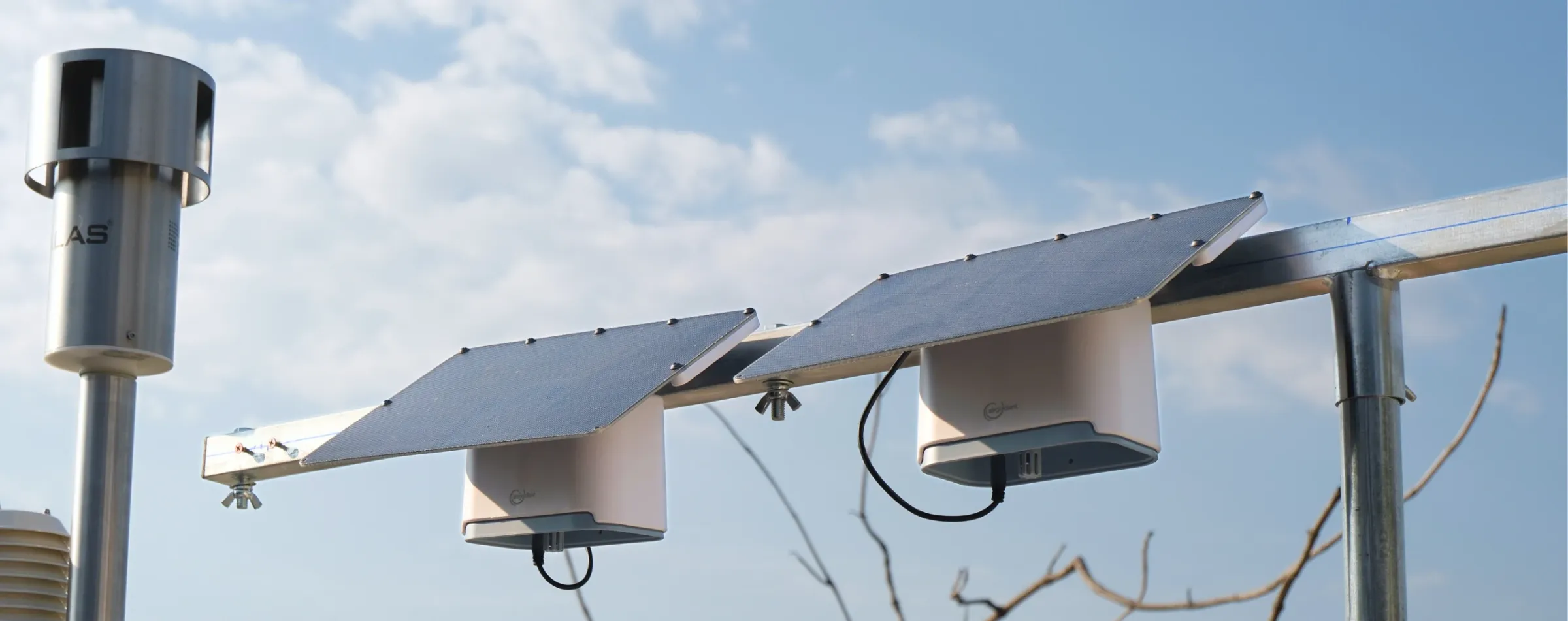
Open Air Max
Professional Outdoor Monitor (Cellular + Solar)
A self-sufficient monitor designed for professional deployments in challenging infrastructure conditions.
- Measures PM2.5, CO2, TVOC/NOX, temperature and humidity (optionally with NO2, O3)
- Cellular + solar for remote sites and unreliable infrastructure
- Open-source, repairable, no cartridge lock-in
- No subscription costs
EPIC Awardee Success Support
We are happy to support EPIC awardees with important services that are included with the monitor purchase.
Network Design & Rollout Plan
We turn goals and constraints into a monitor mix, site plan, and phased rollout you can execute.
Outputs: Monitor count and budget-ready bill of materials and a deployment timeline (including connectivity and power assumptions).

QA, Calibration & Interpretation Support
We help you set up a QA routine and interpret early anomalies and seasonality so the data stays defensible.
Outputs: QA checklist and anomaly triage steps and stakeholder-ready guidance for explaining results.

Co-Location & Validation Plan
If you have reference-grade instruments, we help plan co-location and comparisons to build credibility.
Outputs: Co-location schedule and comparison approach and a simple reporting template.

Onboarding & Local Capacity Training
Training for technicians and project leads on setup, maintenance, and data access/publishing workflows.
Outputs: Training session and SOPs/checklists and handover notes for local operators.
Troubleshooting & Continuity Support
When sites go offline, we help diagnose remotely and keep the network stable.
Outputs: Escalation path and incident checklist and recommended monitoring to protect uptime/data completeness.

Maintenance & Spares Plan
Plan what fails, what to stock, and how to budget replacements over the project life.
Outputs: Spares list (with quantities) and replacement cadence and a maintenance calendar.
We Don’t Want to Be Just a Supplier
EPIC projects bring real-world questions that do not fit neatly into a spec sheet: Where to deploy for the most meaningful coverage, how to handle co-location, what the data is showing once readings stabilise, and how to communicate results so communities can use them.
AirGradient began as a volunteer-led community project. That perspective still shapes how we operate: When EPIC teams choose our monitors, we stay available for practical troubleshooting, calibration discussions, and guidance on interpreting data. Support is not a subscription add-on. It is how we operate.
Your Dedicated EPIC Team
A small cross-functional group spanning science, engineering, product success, and community partnerships. This team has extensive experience supporting EPIC projects, and can draw on our broader AirGradient team of around 30 people when deeper expertise is needed (from hardware and firmware to data, operations, and customer support).

Dr. Anika Krause
Science

Achim Haug
Founder & CEO

Anastasia Svechnikova
Software Development

Altair Irfan
Technical Support

Ethan Brooke
Product Success

Nathalie van Duijvenbode
Community Partnerships
What Makes AirGradient Different
Monitoring networks should strengthen local capacity, not create long-term dependency.
Open by design
Open-source hardware and firmware. No locked components and no closed calibration black boxes.
Freedom to export and use data
Data stays with the project team. Export and publish without platform restrictions.
Built for maintainability
A system that can be kept running locally with practical documentation and repairable components.
No mandatory subscriptions
No platform fees required to keep a network operating. Optional tools are available when helpful.
Support when teams want it
Engineering and science guidance on deployment, calibration questions, and interpretation.
Designed to scale
From small pilots to multi-city networks, the same operating model applies.
Official EPIC Resources
- Call for Proposals (dates, required documents, submission portal)
- Frequently Asked Questions (eligibility, open-data definition, process)
- Priority-country list (PDF)
- Preview the 2026 application (PDF)
- Open data sharing requirements (PDF)
- Awardees (examples of past projects)
The AirGradient Manifesto
This manifesto reflects our core values and the principles we stand for:

Positive Disruptor
We must be bold. We always follow our convictions and call out the issues that matter, sharing our views on topics surrounding air quality and environmental responsibility. We will not compromise for profit. We believe that open, informed, and candid discussions are the catalysts for meaningful change. We will lead by example and become a driving force for environmental monitoring.

Community Building
We want to raise awareness about air pollution through active community building with a strong focus on informing about the dangers of air pollution. We actively support environmental justice organisations and educational institutions in their missions to provide healthier environments for everyone.

Responsible Products
We will deliver benefits for both people and the planet. This is why we prioritise creating high-quality air quality monitors with designs that enable easy repairs and recycling, thereby extending the product's lifespan and reducing its environmental footprint.

Profit Follows Impact
To deliver positive impacts on the communities, and the environment, we must sustain our business model. However we will not prioritise profits above our convictions. We embed this rationale into our everyday decision-making processes throughout all layers of our company. (e.g. by joining 1% for the Planet).

Open Science and Research
Our research is driven by a commitment to environmental protection, not by profits. This is why we don't patent our air quality monitor designs but on the contrary, share them openly, allowing everyone to build them and to contribute to positive change. We do not lock users into proprietary eco-systems and we encourage sharing of air quality data and algorithms as a public good.

Transparency and Accessibility
AirGradient is built on a foundation of openness and inclusivity. We aim to make our products and services available to a wide range of users with a special focus on underrepresented communities. We strive to work with all organisations that want to make a positive contribution independent of their financial means.