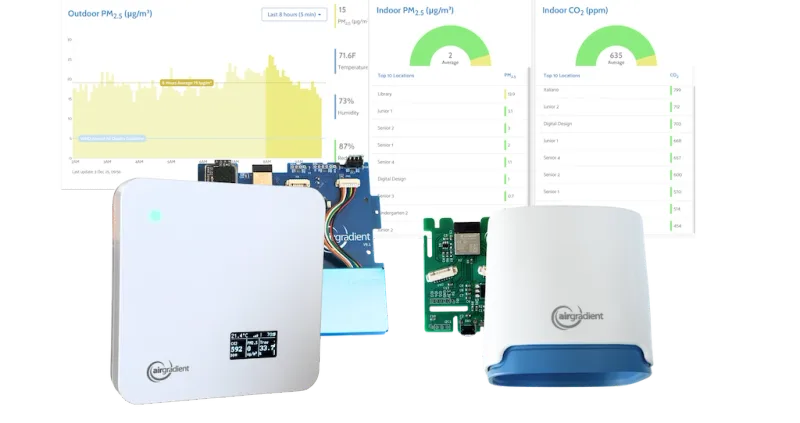
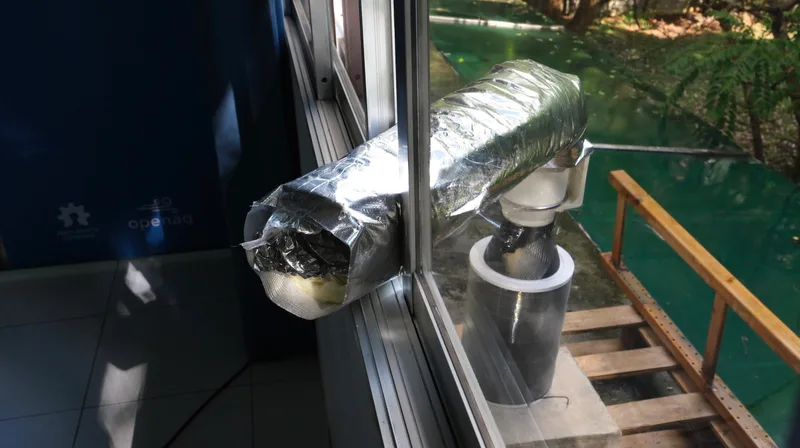
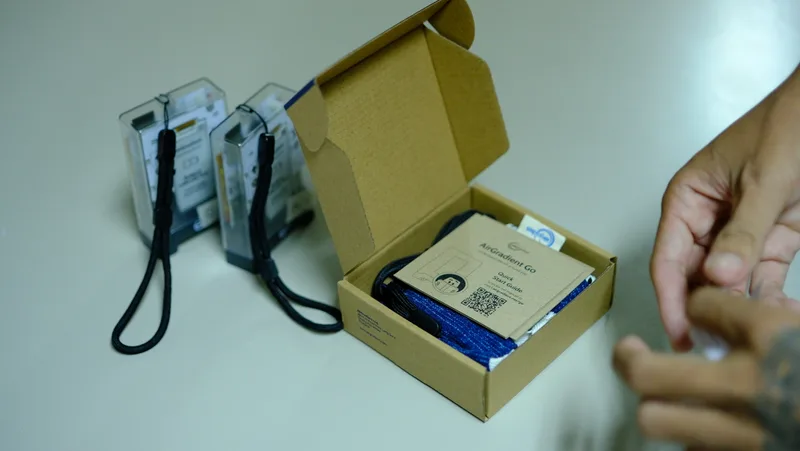
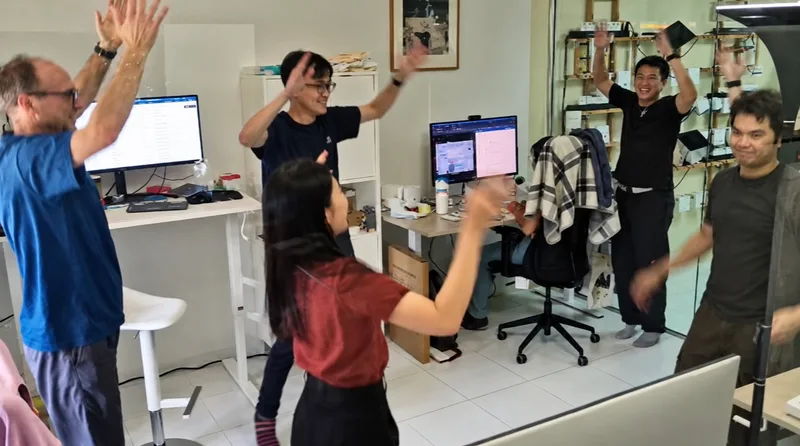
At Methodist Girls’ Senior High School in Mamfe, Eastern Region, Ghana, students examined air quality sensor readings to understand the air pollution around them. As they observed air pollution levels rising and falling, they began connecting peaks in the data to activities within their school environment, including waste burning, cooking and sweeping. Discussions moved beyond identifying air pollution to considering practical responses, including waste segregation which is currently being practiced in the school. The experience showed how air quality monitoring can help students understand their environment, recognise the relationship between human activities and air pollution, and participate in finding solutions.

This is the kind of change Dr. Collins Gameli Hodoli, founder of Clean Air One Atmosphere (CAOA), hopes to see across Africa. CAOA is a non-profit grassroots organization founded in 2017 that uses citizen science and micro air sensor technologies to monitor air quality, tackle air pollution, and promote clean air solutions across Africa.
When the Data Is Missing, the Problem Can Be Difficult to See
Air pollution can be difficult to address when there is little data to show what is happening. Communities living near factories, mining operations, busy roads or places where waste is frequently burned may have concerns about the air they breathe.
For CAOA, closing these information gaps became an important starting point. The organisation began exploring how low-cost sensors could help communities collect local evidence without relying solely on established monitoring infrastructure which are often sporadically distributed.
Some of its early work also involved developing the first-ever mobile application (Yakokoe) that made air quality information from across Africa available to users and helped identify areas experiencing high pollution levels using the open-source PurpleAir data. The application eventually became inactive because of funding constraints, but the need it sought to address remained: communities need accessible information about the air around them.
Dr. Hodoli explained this also became the foundation for collaborations with organisations and researchers including Columbia University, AirGradient and OpenAQ to mention but a few.
These early efforts reflect an important principle behind CAOA’s work: collecting measurements is only the beginning. Data becomes more useful when it can support research, help communities understand local air pollution and inform discussions about environmental policy. That principle has guided the organisation’s work as it has expanded its monitoring activities across several African countries.
From One Sensor to a Regional Network in African Cities
CAOA’s approach has developed through collaborations that respond to different countries’ air quality monitoring needs. Although the projects vary in scope, they share a common purpose: building the evidence and relationships needed to understand air pollution and support action.
In Togo, collaborative work contributed to the establishment of the country’s first ground-based PM2.5 monitoring, helping create a foundation for understanding particulate pollution through local measurements.
In the West Coast of Africa, CAOA has co-led a number of air quality monitoring initiatives in a number of countries previously not monitored. The first-ever ground-based PM2.5 station was established at the University of Lome in collaboration with its experts (Prof. Koku Sabi) and Columbia University’s Prof. Daniel M Westervelt. Similarly, Benin’s air monitoring network was established with experts at the University of Abomey Calavi, and Columbia University. Also, in The Gambia, CAOA helped establish monitoring infrastructure and contributed to the first air quality conference that brought together local and international experts. Alongside expanding the availability of measurements, these efforts helped create opportunities for knowledge-sharing and collaboration around the longer-term goal of moving from monitoring towards regulation.
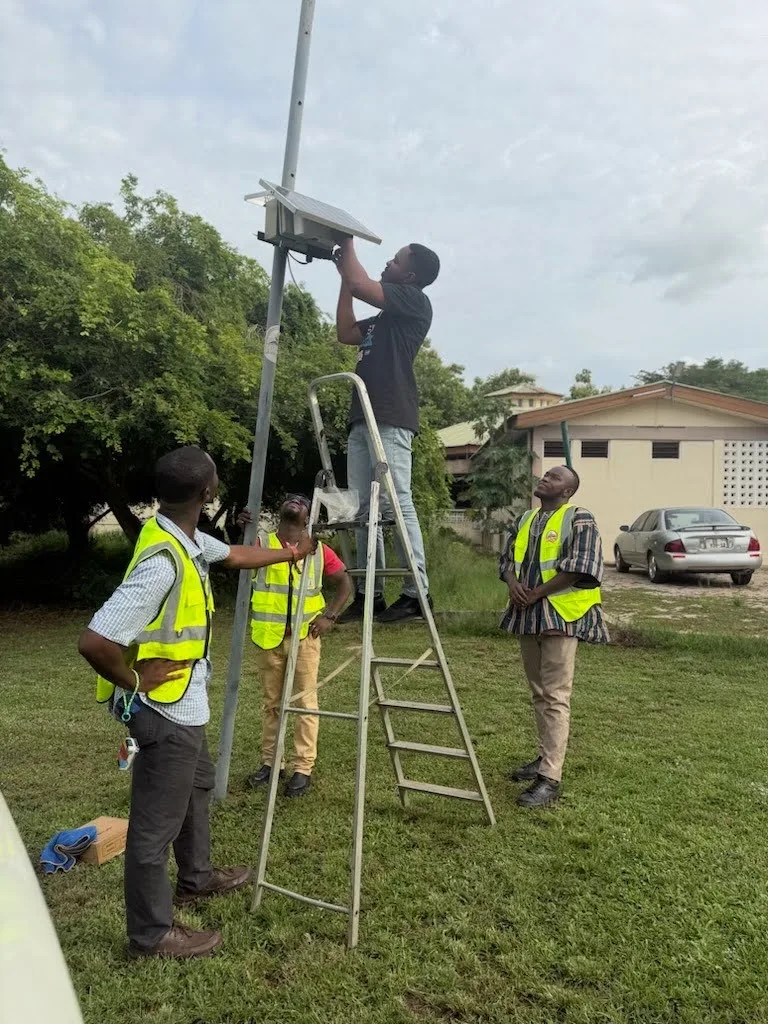
In Malawi, CAOA supported a more extensive monitoring approach through a project funded by the Energy Policy Institute at the University of Chicago (EPIC). The project combined a reference-grade instrument with air sensors, while mobile monitoring equipment was donated to map air pollution hotspots in the country. A pilot mobile application called AirMW was also developed with the Malawi Environmental Protection Authority (MEPA) to encourage broader citizen engagement.
At the district level, monitoring has been used to establish a relative baseline (to be validated with well calibrated data/ reference data) and support the development of a draft Air Quality Management Plan for Karonga in collaboration with experts at the MEPA, and Mzuzu University. Together, these activities demonstrate how monitoring can contribute to a wider process that includes technical capacity, public engagement and planning.
The monitoring project was co-designed by a team of experts and partners, including Dr Brighton Austin Chunga (Mzuzu University, Malawi); Dr Isaac Tchuwa (Malawi University of Science and Technology, Malawi); Mr Patrick Nyiranda (Ministry of Natural Resources and Climate Change and Environmental Protection Authority, Malawi); Mr Steve Kuyeli (Malawi Bureau of Standards) and Mr Victor Dzidefo Ablo (Clean Air One Atmosphere and Salvation Army Senior High School, Ghana)
The work in Malawi has also extended into the development of draft clean air regulation. Dr. Hodoli reflected on CAOA’s involvement in drafting the regulation and the progress made so far:
CAOA co-led the development of Malawi’s first-ever clean air regulation. The draft has been reviewed extensively by external bodies and within the country, and we are now at the final stage of polishing it. The Director General of the MEPA (Dr. Wilfred Kadewa at the time) is actually going to push it to the Minister for a review and make provision for passing it. That will be the country’s first-ever regulation on air quality.
At the time described, the draft was still undergoing final preparation and awaiting further review. The work illustrates how air quality monitoring and collaboration can contribute to the evidence and institutional processes needed to advance regulation, while also showing that translating data into policy takes time and sustained engagement.
Working With Communities, Not Just on Communities
Building monitoring infrastructure is one part of CAOA’s work. Ensuring that the information is understood, trusted and useful to the people it concerns is another.
Air quality initiatives can become externally driven when equipment, funding or technical expertise comes from outside a community. CAOA’s approach places importance on local ownership, working with people who understand the conditions on the ground and are willing to engage with the evidence.
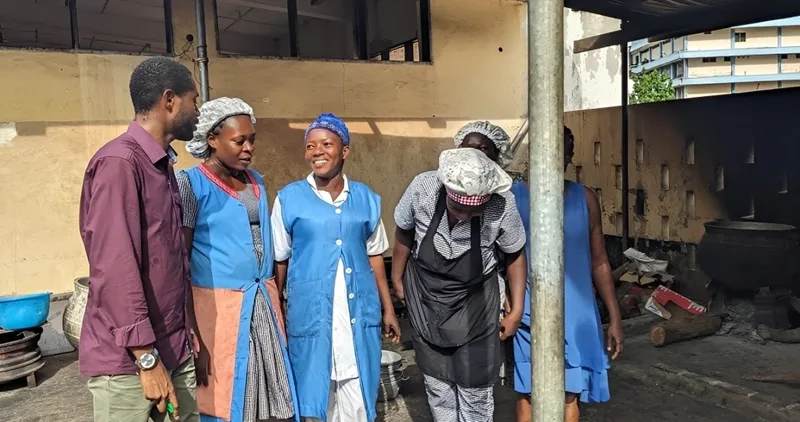
These local champions may include pupils (and/or children), teachers, community leaders, legislators, district officials and regulators including those who are exposed to both indoor and outdoor air pollution. At Accra High School in Ghana, for example, CAOA and its research partners worked to better understand the air pollution experienced by kitchen staff, many of whom rely on solid fuels for cooking. Using air quality sensors, the team measured elevated PM2.5 levels around the school's cooking facilities, particularly during cooking hours. The findings highlighted potential health risks and the importance of monitoring air quality to support cleaner cooking practices.
Beyond understanding local pollution concerns, community involvement also plays an important role in ensuring that these concerns are heard. Local leadership is particularly important in places where formal titles and institutional structures influence who gets access to decision-makers and whose concerns are heard. The school-based work in Ghana mentioned in the beginning of this article offers one example of how this approach can begin with understanding. When students examine pollution patterns and connect them with activities around them, monitoring creates an opportunity for people to ask questions about their surroundings and consider how their own actions might contribute to cleaner air.
Dr. Hodoli emphasised the importance of introducing sustainability education from an early age, highlighting the role it can play in helping children understand how the environment affects their health and everyday lives.
This kind of education needs to start early. Sustainability science should be integrated into education from primary school so that children grow up understanding the connection between everyday activities, environmental conditions and health.
The broader principle extends beyond schools: communities should not simply receive information about air pollution. They should have opportunities to understand the evidence, contribute their knowledge and participate in deciding what happens next.
The Work Is Not Without Its Challenges
Building and maintaining air quality monitoring networks across different countries comes with financial and practical challenges. Funding remains a major constraint, with projects often depending on grants, partnerships, donated equipment and volunteers. Equipment must also be maintained in the field, where battery failures and theft can disrupt monitoring activities.
Coordination presents another challenge. Working across countries and time zones, gaining access to government stakeholders and maintaining relationships with different institutions all require time and persistence. Even when data is available, communicating the findings can be difficult if they challenge how a city or community understands its environmental conditions.
Ho, in the Volta Region of Ghana illustrates this tension. The city is known as “Oxygen City,” a nickname associated with its reputation for clean air and green surroundings. If monitoring data raises concerns about air pollution, communicating those findings requires care, particularly when they appear to conflict with an established public image.
These situations make clear communication, strong documentation and collaboration with regulators especially important. Evidence must be presented in ways that allow people to engage with the findings, ask questions and understand what they mean for their communities.
Building an Africa-Led Future for Clean Air
Despite these challenges, interest in air quality monitoring continues to grow. Mining communities, for example, have requested monitoring equipment to better understand their exposure to air pollution and support conversations around accountability. Access to open and understandable data can give communities a stronger basis for asking questions, engaging policymakers and considering what action is possible locally.
Building on this growing demand requires more than individual monitoring projects. CAOA’s longer-term ambition is to build stronger African networks through which researchers, communities, young professionals, schools, civil society organisations and governments can share knowledge and resources.
This vision includes initiatives such as the Africa Clean Air Network and wider collaboration through clean-air forums. CAOA also hopes to create more opportunities for early-career researchers and practitioners to contribute to air quality research and action across the continent.
Through these efforts, CAOA is working towards a future where African communities and institutions have stronger networks, knowledge and capacity to address their own air quality challenges. By building on its work in citizen science, accessible monitoring and local partnerships, the organisation hopes to help shape a stronger, more connected clean-air movement across Africa.