Dr. Chikumbusko Kaonga, an associate professor at the Malawi University of Business and Applied Sciences (MUBAS), stated that for a long time, there has been a general misconception that air quality is not a problem in Malawi. All the efforts targeting pollution used to prioritize water pollution as the main issue. There was no data available to support the sweeping claims about Malawi’s air quality, so Dr. Kaonga and his team at MUBAS have decided to change that.

A Small Team of Scientists Tipping the Scale
Dr. Kaonga comes from a background in environmental science, with his research originally focused on water quality and pollution related to pesticides. Thanks to a colleague during his postgraduate studies at the University of Hiroshima, he got intrigued by the study of air quality.
Upon returning to Malawi after finishing his studies, Dr. Kaonga decided to build a team and invite some of his students to take part in an air quality monitoring project to see what the air in the country actually is like.
The initial air quality monitoring began to take shape in Malawi with the team originally using cheap mobile sensors imported from China. However, these sensors relied on a manual, in-person data collection. Someone had to stand with the sensor in a given location and record the readings into a notebook. This was rather inconvenient and limiting for their research, and meant that the team members themselves were repeatedly exposed to the pollution they were trying to measure.
In other cases, many researchers in developing countries use satellite imagery to study ambient air quality in the absence of reference grade monitoring stations. However, this still poses limitations on reliability and accuracy of gathered data.
Receiving funding from the Energy Policy Institute at the University of Chicago (EPIC) helped the MUBAS team to implement a bigger project using low-cost sensors deployed on the ground to measure and analyse air quality. After evaluating possible suppliers, they concluded that the best option should not be dependent on a stable electricity supply, as Malawi has energy problems, where connecting to the power grid is not possible in some areas.
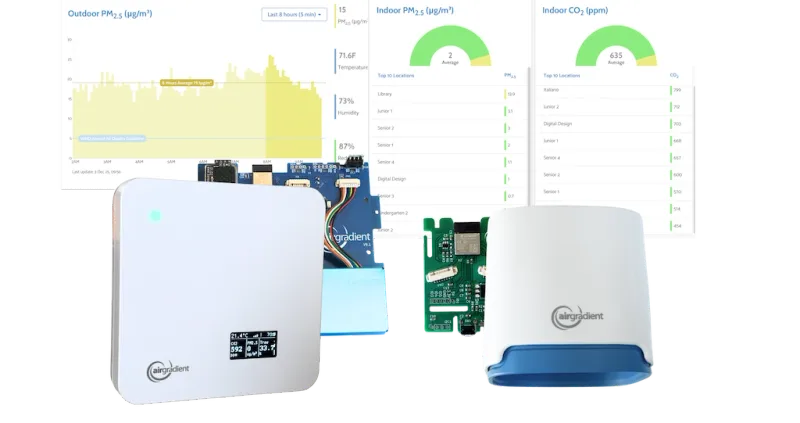
Eventually, they have chosen AirGradient’s Open Air Max, as it runs on solar power and can be set up with SIM cards. This becomes a turning point for them to send data remotely without being necessarily connected to electricity.
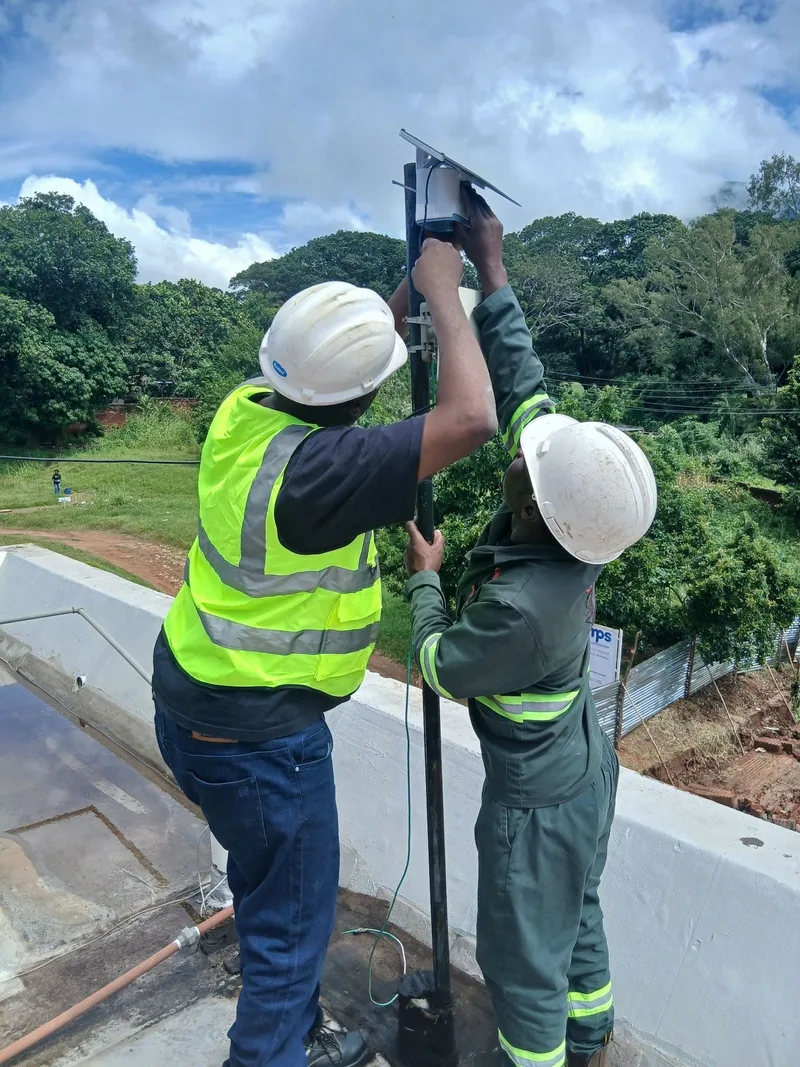
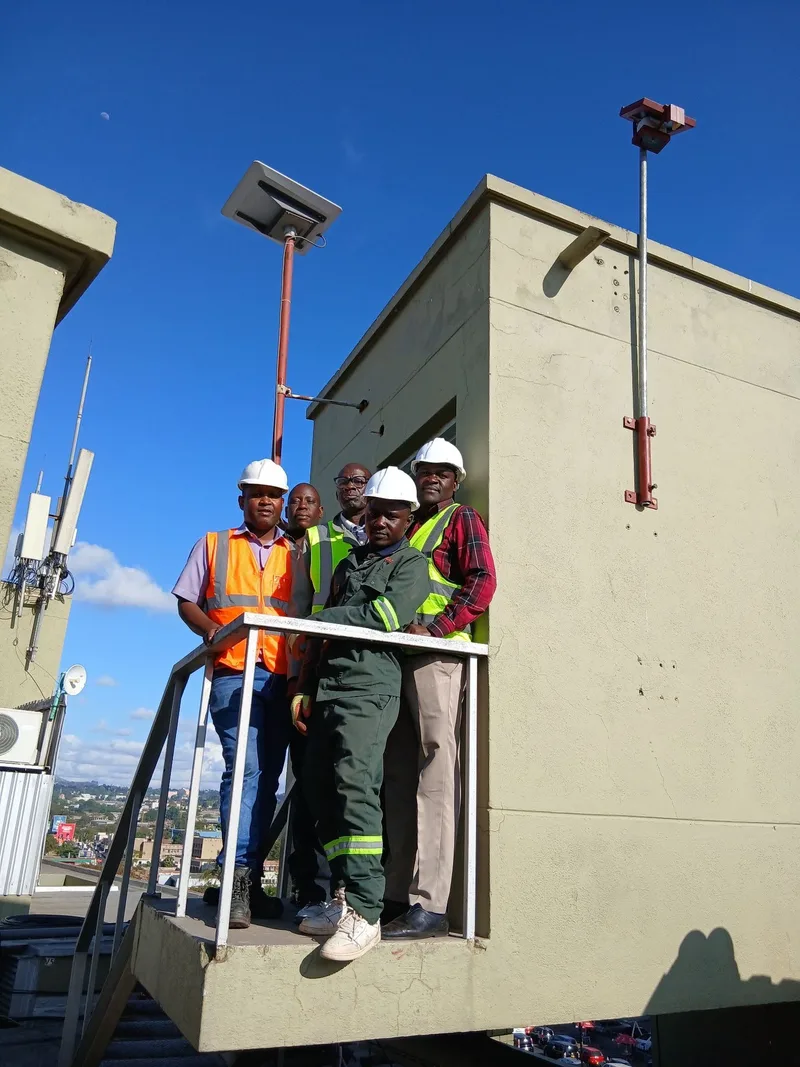
They installed a total of 21 monitors in distinguished locations across five districts, from busy urban areas or important transport nodes to a district along the shore of lake Malawi. The goal was to compare air quality in locations used for different purposes and a variety of activities.
When Air Quality Data Points to a Hazard
The MUBAS science team has observed some trends since they began monitoring air quality. After analyzing the acquired data, it was clear that levels of PM2.5, fine particulate matter that can enter our lungs and bloodstream, spiked in the morning and evening hours. These are the same periods when most people commute to and from work, as well as when home combustion is the highest.
Their ambient air quality assessment showed that the averaged hourly PM2.5 levels could rise up to around 60 µg/m³ at the MUBAS measuring location, and up to around 75 µg/m³ at Chichiri, the second measuring location in a more industrial area in Blantyre district. PM2.5 recorded during peak traffic and cooking hours at both locations were 12 times to 15 times higher than 5µg/m³, which is what’s considered safe according to the WHO guidelines.
While average levels fall into the “Unhealthy” category, the Chichiri site recorded the most extreme PM2.5 spikes, reaching 323 µg/m³. Exposure to hours of unhealthy conditions and occasional hazardous concentrations poses serious health risks, making the data impossible to ignore, and demanding an end to the denial surrounding air quality in Malawi.
Using the data they gathered and analyzing its trends, the MUBAS team could also push for efforts to identify sources of air pollution. This led the team to start looking into guidelines for vehicle emissions and national emission standards.
Turning Proof into Policy
After the MUBAS team’s first air quality monitoring at their university went public, the Malawi Department of Climate Change and Meteorological Services (DCCMS) reached out to them on how to best use the newly acquired air quality data.
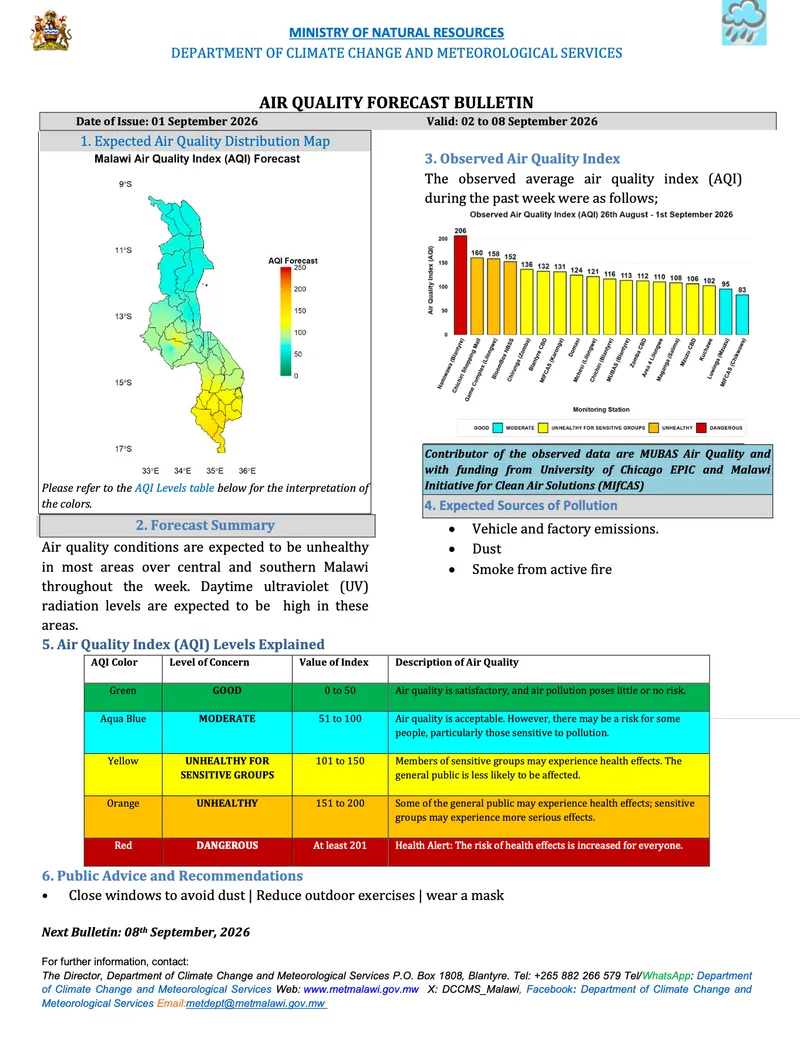
This has led to the creation of weekly air quality bulletins that are posted on the Department’s website, as well as in an active WhatsApp forum of weather chasers. These bulletins help citizens adapt their activities to current and expected air quality indices, and accordingly protect their health.
Below, you can see an example of the bulletin from the first week of September 2026.
We think that the impact should start small. But then, although it starts small, we build up on that to make it big. So far, most members in our university community are aware of the problems that air quality can cause, and also through the air quality bulletins that are produced, a lot of people now have knowledge on what PM2.5 can do.
Aside from this first policy collaboration, the data from the MUBAS monitoring project is being referenced in other various initiatives.
The MUBAS monitoring project created a ripple effect where the data they’re collecting is also used as reference for:
- National Ambient Air Quality Standards
- Policy Development
- Vehicle Emissions Regulations
- Collaborations with the Private Sector
All these efforts have a shared goal of increasing awareness and understanding of air quality among the large public and other sectors to catalyze actions for cleaner air.
National Ambient Air Quality Standards
The team is working with the Malawi Bureau of Standards and the Malawi Environmental Protection Authority on revising the national ambient air quality standards. Building on real-time air quality data, this collaboration will translate academic research into a national standard, which will help strengthen regulatory accountability and provide a tool to better protect public health.
Policy Development
They also began a collaboration with the Malawi Environmental Protection Authority (MEPA) and the DCCMS to work on a policy brief. Its purpose is to collect the findings and create a comprehensive briefing document that can be referred to for the purposes of policy development. One of those future policies can be about a new regulation on vehicle emissions as discussed below.
We are also in the process of developing a policy belief where we have summarized what we have found and what we anticipate to happen in the future.
Vehicle Emissions Regulations
As the results of their study highlighted the importance of looking into air pollution sources, the MUBAS team is in the process of gathering evidence and recommendations on the national vehicle emissions standards. This will strengthen the regulation of vehicle emissions, since the current examination for Certificate of Fitness (COF) of each vehicle does not check emissions.
Collaborations with the Private Sector
What the MUBAS team hadn’t anticipated was the private sector interest their work has generated. Several companies have contacted them asking for help with their boiler emissions reporting. They help these companies measure and report the amount of emitted SO₂, NOx , CO, PM2.5, PM10 and VOCs, in order to meet the emission standards and obtain the required licenses to operate. The team has also been helping factories and businesses with air quality monitoring needed for hygiene reports.
Data to Drive Nationwide Action
The momentum generated by Dr. Kaonga and the team at MUBAS only marks the beginning of advocating for cleaner air in the country. Their vision is to bring the benefits of air quality monitoring more comprehensively to the national level, including creating the opportunity to collaborate with District Commissioners’ offices on further regulation.
With EPIC renewing their funding support, the team is planning to extend the monitoring into all 28 districts of Malawi. The additional budget would also help them acquire a reference-grade monitor in order to calibrate their other low-cost devices and enhance data accuracy.
They have also partnered with Mzuzu University, covering a total of 6 districts for both institutions – another step closer to achieving a nationwide coverage. They intend to expand the work outside the major cities and target more rural communities by engaging with local leaders and involving students as community advocates.
As Dr. Kaonga puts it, “We can’t keep this good news to ourselves. So we need to keep on sharing this data, so we make as many people as possible aware of what is happening out there.”
The impact of the MUBAS project is not only technical; it is also cultural.
The project has not only shown that air quality needs to be looked at and taken into account in Malawi, it also proves that data collection and its open, transparent sharing can go a long way, driving change among communities and on a national scale.