If you've been following along, you'll know we recently put together a guide on how to write a strong EPIC Air Quality Fund application. While getting that application right matters, it's only the first step. For the teams that win funding and move into the real work of deploying monitors, collecting data, and turning that data into something meaningful for their communities, a whole new set of challenges tends to emerge.
To get a clearer picture of what those challenges actually look like in practice (and to help future potential awardees plan their projects) we reached out to some past EPIC awardees and asked them to share their experiences honestly. We wanted to hear what tripped them up, what cost more than expected, and what they'd do differently given a second chance. Of course, it’s important to note that these weren't failed projects by any stretch. The awardees we heard from rated their own projects as highly successful, and rightly so. But even successful projects run into difficulties, and that is what we want to talk about today.
So if you're thinking about applying, or are already putting your application together, this article is worth reading. Being aware of the challenges that tend to come up won't just help you run a better project if you win, but it'll likely make for a stronger application too, because proposals that show a realistic understanding of what deployment actually involves tend to be more convincing than ones that don't.
Getting your hardware online can be harder than it looks
One of the most consistent themes that came up was how difficult it can be just to get your monitors online in the first place. It sounds straightforward: you receive your hardware, follow the setup instructions, and start collecting data. However, in practice, it rarely goes that smoothly, particularly if you're deploying in a region where local network conditions weren't factored into the device configuration.
One project team spent nearly two weeks trying to get their first monitor working before raising the issue with their hardware provider. It turned out the devices had APNs configured for SIM cards that simply don't work in their country. The fix required new software and switching to a different local network provider, and it was only after that change that they could see real-time data for the first time.
Before your hardware arrives, it’s important to find out which network providers offer reliable coverage in your deployment areas (if you’re not using WiFi-based monitors). Don't assume the configuration that ships with your devices will work where you are, and check with your provider early about firmware versions. These are far from insurmountable problems, but they're much easier to deal with before deployment than after.
Budgeting for the real costs
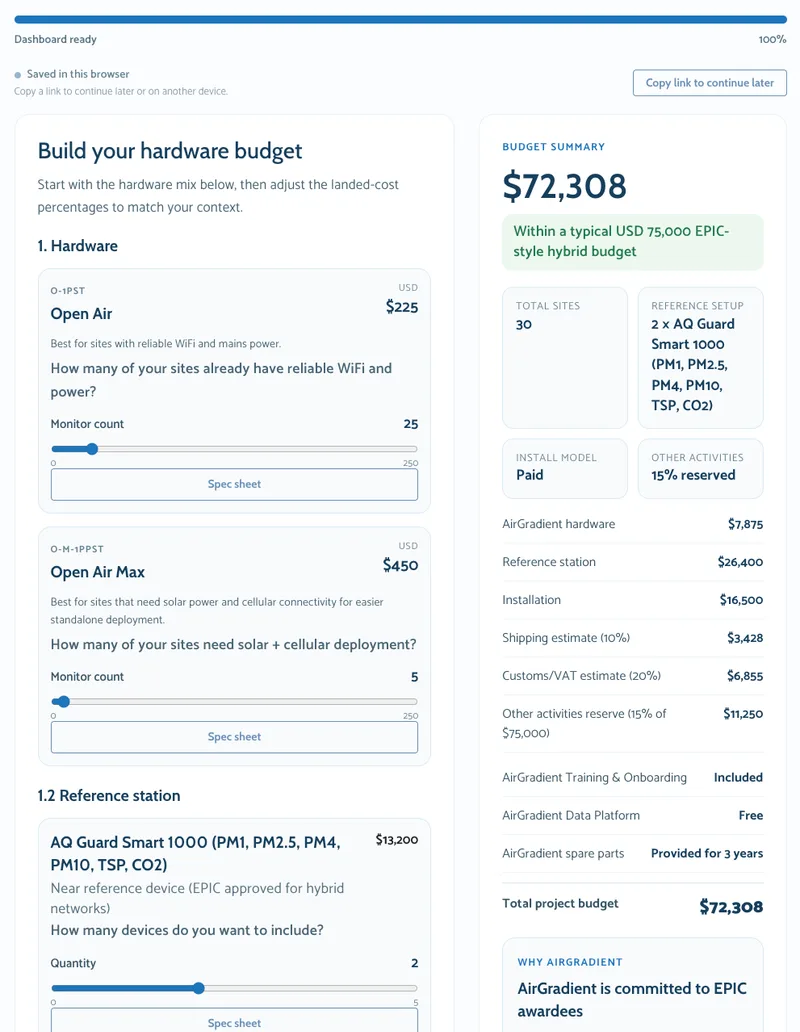
Something almost every team underestimated was how much of the budget gets absorbed by costs that have nothing to do with hardware. Transport, data subscriptions, batteries, and routine site visits all add up faster than most people expect when putting together an initial budget.
One team had planned to spend around 88% of their fund on non-hardware costs, but unexpected fuel price increases pushed everything upward, and a last-minute hardware upgrade compressed the remaining budget further. Another team flagged batteries, data subscriptions, and maintenance as costs they hadn't fully accounted for.
The honest advice is to plan for non-hardware costs to be higher than feels necessary, and then add a contingency on top of that. It’s important to have a budget that covers everything - even when things aren’t going to plan.
If you're wondering how to budget your EPIC project, we've created a handy budget calculator that's free to use.
Keeping your monitors running in the field
Budget pressure connects naturally to the next challenge, which is keeping your monitors running once they're in the field. Getting devices online is one hurdle, but maintaining them over months of real-world deployment is another thing entirely.
One example is dust, which is a more serious issue than it might sound. Solar panels can become heavily coated in dry or unpaved conditions, reducing power and eventually affecting performance. For this reason, regular site visits to wipe down panels and check equipment are essential. Rain damage is another risk worth taking seriously, with at least one team losing a monitor to water getting into internal components.
One of our instruments no longer works as rain water seems to have damaged some of the internal components. We also have situations where some instruments are completely covered in dust (especially the solar panel).
The takeaway here is that maintaining monitors is just as, if not more, important than deploying them in the first place. It’s also worth budgeting and planning for some monitor failures. When you’re deploying a large number of devices, the chances are that at least some will encounter issues.
Connecting data to the people who can act on it
Raw data alone rarely moves decision-makers, and this is something worth thinking about before your project starts rather than after because it’s one of the key elements of any EPIC project. One awardee put it clearly: the real value of air quality monitoring comes from being able to connect what the data shows to what's actually happening on the ground. When pollution spikes, the question that matters to policymakers isn't just how high the numbers went, but why.
Documenting that "why" in real time is harder than it sounds. It requires someone to be paying attention when events occur, whether that's agricultural burning, heavy traffic, construction, or industrial activity. Without that context, a spike in the data is just a spike. With it, you have evidence. Building some kind of community documentation process into your project from the start, even something simple, gives your data a much better chance of actually influencing the conversations you're hoping to have.
Our Challenges
We also want to acknowledge that some of the hardware challenges awardees experienced were on our end too. Several projects deployed the Open Air Max (which was new at the time), and these early deployments surfaced some issues that caused frustration and downtime for teams in the field. The feedback provided by these teams has been incredibly valuable, and the problems have since been resolved, but we recognise that doesn't make the disruption any less challenging for the teams who experienced it. It's a reminder that even the hardware side of these projects is a learning process, and that the difficulties awardees face in the field directly shape how these products improve over time. We're proud to have worked alongside those who chose AirGradient to work through these issues and bring air quality monitoring to regions that need it.
Based on this learning, one thing we're now offering future awardees is the option to receive one or two units first before the rest of the hardware ships. This gives us the chance to verify that everything works in their specific local conditions, network included, and make any necessary adjustments before committing to a full deployment.
Closing
The teams who shared their experiences rated their own project success at at 7-8 out of 10, which says something important. The challenges were sometimes frustrating, but they didn't make the work projects less worthwhile or less successful. Connectivity issues got resolved. Budgets got stretched and managed. Data got collected. Most importantly, communities got information they didn't have before.
Going in with a clear picture of what might go wrong isn't a reason to be discouraged. It's just a better way to prepare. If this article helps even one future awardee avoid a two-week setup headache or build a budget that actually holds up in the field, then the teams who took the time to share their experiences will have made a significant contribution beyond their own projects.
Good luck!