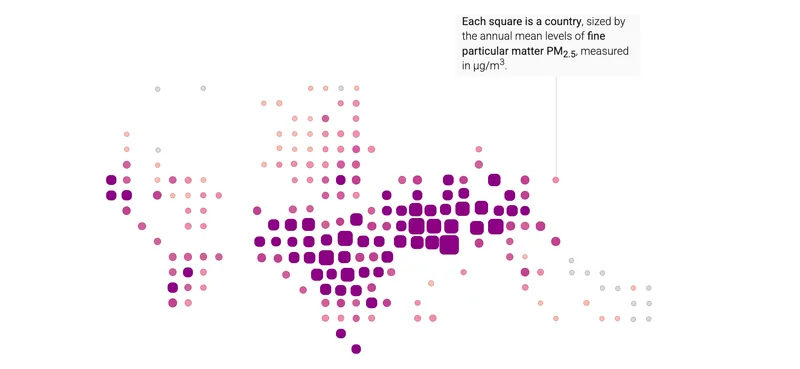
The EPIC Air Quality Fund is one of the most exciting initiatives in the air quality space right now. Its goal is simple. Support local governments and organizations that want to install air quality monitors, publish fully open data, and use that evidence to push for meaningful national policy change. The fund focuses on places where reliable monitoring data is still limited, with the long-term goal of expanding access to air quality data to one billion people by 2030.
Projects supported through the fund receive either 50,000 or 75,000 USD for an 18-month period. Awardees install monitors, publish open PM2.5 data, and use that information to drive a clear policy outcome at the national level. Monitoring itself is only the starting point, and the real aim is to turn the data into action.
The current 2026 call for proposals is now open, and applications must be submitted before 30 April 2026 at 11:59 PM Central European Time (CET). If you are considering applying, you can find the official application guidelines here. If you would first like to learn more about how the fund works and what kinds of projects it supports, you can visit our EPIC Air Quality Fund overview page here, or read more on the official Air Quality Fund page.
At AirGradient, we have been fortunate to support many of these projects from past funding rounds. Our monitors meet EPIC’s open data requirements, and so far we have supplied equipment, capacity building, and technical and scientific support to more than ten EPIC Air Quality Fund awardees. Because of this, we know how successful EPIC AQ Fund proposals are often framed, and some clear patterns have started to appear.
In this guide, we share some of the ideas that tend to make applications stand out, many of which were also discussed during EPIC’s recent Application Information Webinar. If you are planning to apply, I also recommend watching the webinar when you have time, as it provides helpful context directly from the EPIC team.
When teams work with us on EPIC projects, we genuinely want to help them succeed. Our goal is to make air quality data accessible and useful, and that means doing what we reasonably can to support teams as they build monitoring networks that can create real impact.
EPIC Air Quality Fund Application Criteria
Before applying, it is also important to make sure that your project meets the fund’s eligibility requirements. Applications must be submitted through an eligible organization such as a university, government body, non-profit, or company that can legally receive funds from a U.S. institution. Projects must also be able to generate and openly share PM2.5 monitoring data according to EPIC’s open data requirements while working toward a clear national-level policy impact. EPIC also notes that some applications may receive additional priority during review. In the current round, this includes projects from a set of priority countries, proposals led by government entities, and applications where women serve as the lead investigator or primary applicant. You can learn more about the eligibility criteria here.
1. A clear policy “north star”
One of the clearest differences between strong and weak applications is what the project is actually trying to achieve, and the strongest proposals start with a clear policy goal. Monitoring is part of the plan, of course, but the primary focus is on changing how air pollution is addressed at the national level.
EPIC emphasizes this point often. The overall goal is not simply to deploy an air quality monitor network, but to create the conditions needed for policy change. That means strong applications usually define a very concrete outcome. For example, the project might aim to support the drafting of new air quality standards, help enforce an existing regulation that currently lacks monitoring data, build a formal partnership with a government ministry, or provide the evidence a national agency needs to act.
Vague goals like raising awareness, filling data gaps, or supporting research are usually not enough on their own. Rather, the EPIC team wants to see how the monitoring will actually lead to a decision or action.
One helpful way to approach this is to start with the national impact you want to achieve and then work backwards. What policy change or institutional action are you trying to enable? Who needs the evidence to make that decision? And what kind of monitoring data would help move that process forward? Thinking about the project in this order often makes the proposal much clearer.
2. Defined path from PM2.5 data to policy change
Tied to the first point, another thing that stands out in strong applications is how they clearly explain the path from data to policy. EPIC wants to see how PM2.5 measurements will move beyond monitoring and actually influence decisions.
Proposals that simply promise to collect open data and engage stakeholders often feel incomplete. Stronger applications go a step further and explain the full chain of events. They describe who needs to act, what kind of evidence that person or institution needs to see, and what decision or policy process could realistically move forward during the grant period.
EPIC has highlighted examples from projects in places like the Democratic Republic of Congo and The Gambia where monitoring data was directly connected to government action. In those cases the data supported new decrees, standards, or ministry-led initiatives.
In the Democratic Republic of Congo, the non-profit WASARU launched the country’s first long-term PM2.5 monitoring network through the Kinshasa Air Quality Project (KINAQ). Working with partners such as the Ministry of Public Health and the University of Kinshasa, the project is generating open air quality data while building the relationships needed to support future national air quality policy development.
In The Gambia, the Permian Health Lung Institute helped establish the country’s first real-time air quality monitoring network. The project installed the country’s first reference-grade air quality monitor and is deploying a wider network of sensors, while working with the National Environment Agency and Ministry of Health to develop air quality standards, issue pollution alerts, and integrate air pollution into national policy planning.
3. A carefully chosen project scale
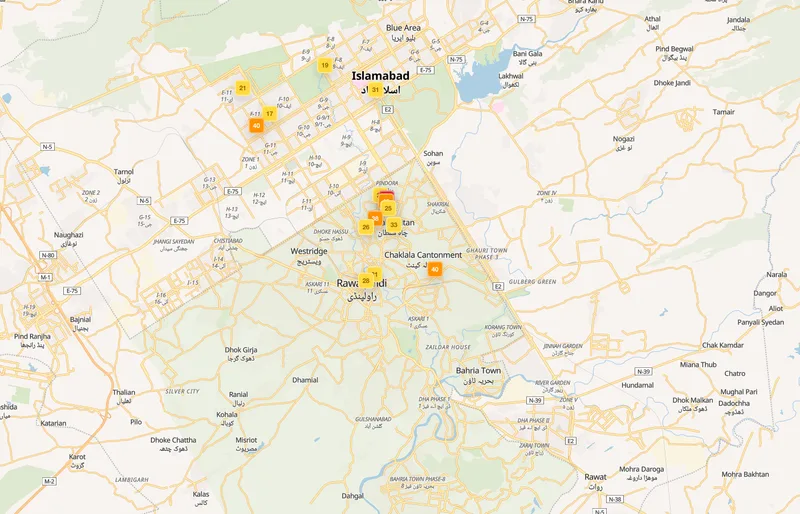
One question that came up in the webinar was scale. It is easy to assume that national impact requires a large monitoring network, but EPIC made it clear that this is not necessarily the case. In some situations, a single monitor placed in the right location can be more useful than a large but scattered network.
What matters more is whether the monitoring supports a real policy process. For example, a monitor in a capital city, near a known pollution hotspot, or in a location tied to an active regulatory discussion could produce evidence that decision makers actually need. In those situations the placement itself is strategic, because the data is more likely to feed directly into national conversations.
That said, data credibility is still important. Smaller networks can make it harder to detect sensor errors or confirm trends, so in some cases adding a reference-grade monitor may strengthen the project. In other cases, a larger number of lower-cost sensors may help build confidence in the data through redundancy and broader coverage.
The key point is that the number of monitors should follow the policy goal, not the other way around. Strong applications start by identifying the national impact they want to achieve, and then design a monitoring network that produces credible evidence to support that outcome.
4. Leadership from a local actor
A very important aspect that was highlighted is the importance of local leadership. EPIC places a lot of weight on projects that are led by people who are genuinely embedded in the country where the work will take place. This means understanding the local language, having professional or community relationships, and having a long term stake in the issue. As EPIC put it, if an applicant does not see themselves as a local actor, EPIC will not see them that way either.
Good proposals usually show why the team is trusted and well positioned in the country. They explain how the group can navigate ministries, government agencies, universities, civil society organizations, or the media. They also make it clear that the work will continue to matter to the team after the eighteen month grant period ends. In the end, EPIC is looking to back local actors who can create lasting institutional change.
5. Monitoring equipment that fits the advocacy goal
Reviewers also look closely at whether the monitoring equipment fits the goal of the project. EPIC does not require specific sensors or technical standards, but they do expect applicants to explain why the equipment they chose makes sense in their context.
As such, strong proposals usually go beyond merely listing the devices they plan to use. Instead, they explain why that setup works for the type of impact they are trying to achieve. For example, the level of credibility needed with government stakeholders may influence the type of monitor used. Local regulatory expectations can matter as well, as can the geographic design of the project and the kind of evidence needed to support a policy discussion.
In some cases, a small network of low cost monitors may be enough to fill a major data gap and start a national conversation. In other situations, adding a reference grade component might be important if the goal is to convince a ministry, regulator, or standards body to act. Strong applications tend to show that this choice has been thought through carefully.
6. A team capable of both technical and policy engagement
A common feature of strong applications is a team that clearly has the ability to turn monitoring into impact. While it might seem like it on the surface, EPIC is not only funding technical monitoring work. They are looking for teams that can collect reliable data and then use it to influence decisions.
That usually means showing a mix of capabilities. The team might include people responsible for operating the monitors and managing the data, alongside others who handle stakeholder engagement, communication, and interaction with policy makers. The exact structure will differ from project to project, but the proposal should make it clear that both sides of the work are covered.
At the same time, not every team will already have all of these skills. Strong applications address this honestly. If a team lacks experience on either the technical or policy side, they can strengthen the proposal by partnering with another organization or bringing in collaborators who fill that gap. In the end, reviewers want to see that the project can both generate credible data and connect that evidence to the people who have the authority to act on it.
7. A realistic stakeholder strategy
Another thing reviewers pay close attention to is the stakeholder engagement strategy. EPIC has made it clear that activities like workshops or general engagement are not enough on their own. A workshop only matters if it supports a specific policy task. Publishing a report or paper only matters if it helps move a real decision forward.
Because of that, strong applications tend to avoid vague language about engaging stakeholders or sharing findings. Instead, they describe the process much more clearly. The proposal identifies the ministry, department, or national body that actually matters for the policy goal. In other words, the stakeholders involved should have a real connection to national policy or decision-making. The proposal then explains what that institution needs to see in order to act and how the project will bring the evidence to them.
The engagement itself is also described in practical terms. That might involve direct briefings with a ministry, collaboration with a regulatory working group, or presenting findings during a policy consultation. The key point is that each interaction has a clear purpose and a defined outcome. When this level of detail is present, the proposal feels realistic and actionable rather than aspirational.
8. A budget aligned with the project strategy
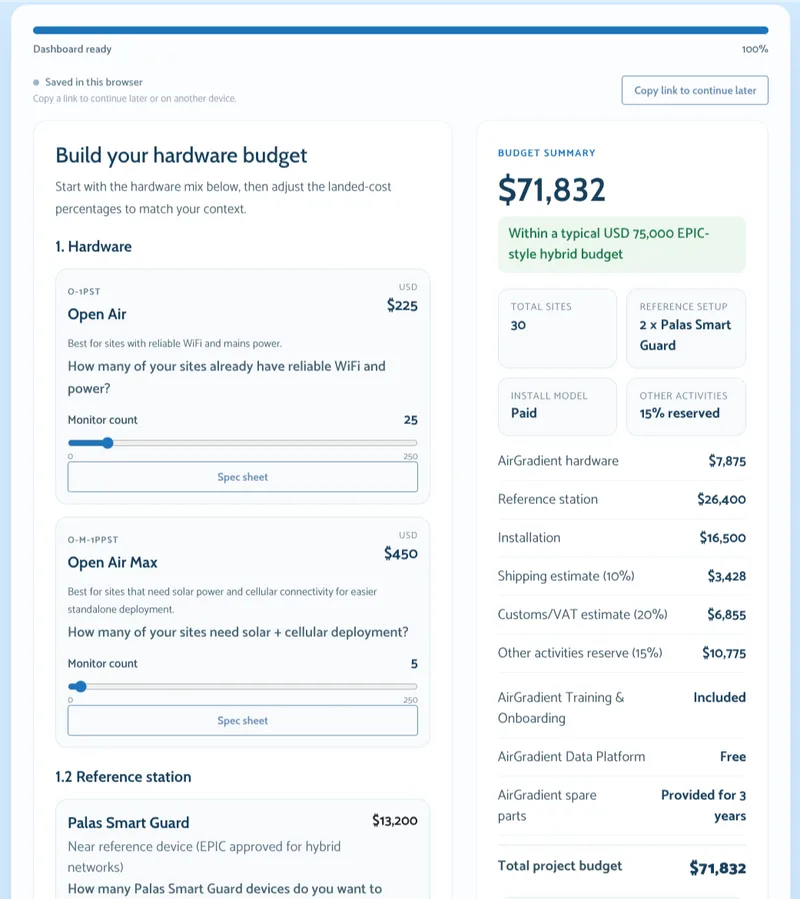
The budget is another place where strong applications stand out. EPIC gives applicants a fair amount of flexibility in how funds are used, as long as the spending supports the national level goal of the project. At the same time, the budget quietly reveals whether the team understands what it actually takes to create impact.
In good proposals, the budget reflects the full scope of the work. Monitoring equipment is part of it, but the plan usually includes other essential costs as well. Staff time, coordination, data management, communication, and stakeholder engagement often play a large role in turning measurements into action.
This is something EPIC also touched on during the webinar when they discussed typical cost areas such as equipment, personnel, and engagement activities. When the budget lines up with the project’s overall plan, the proposal feels grounded and realistic. On the other hand, if an application promises major policy impact while spending almost everything on hardware, reviewers will likely notice the mismatch.
Writing a strong EPIC Air Quality Fund application
As you work through an application, it helps to think about the questions a reviewer is likely to have. Strong proposals tend to answer these concerns before they are even asked. Why this country or location? Why this team? Why this number of monitors and this type of equipment? How will the data stay open and accessible? Is the timeline realistic? When these details are explained clearly, the proposal feels solid and reviewers do not have to guess how the project will actually work.
It also helps to stay focused on what the fund is really trying to support. Applications become weaker when they revolve mainly around raising awareness, publishing research as the final outcome, running workshops without a clear policy goal, or focusing on a single city without any national connection. The same applies to projects centered on interventions like filtration or masking that do not address the root causes of air pollution through policy change. The most compelling applications are the ones that clearly show how the data will contribute to meaningful national impact.
If you are considering applying to the EPIC Air Quality Fund and want to discuss ideas, we are always happy to help where we can. We have worked with a number of EPIC awardees and have supported many of the monitoring deployments behind these projects. If you would like to talk further, you can reach out to us here.
And if you are planning to apply, we wish you the very best of luck. The work being supported through this fund has the potential to make a real difference, and we are excited to see what new projects and ideas emerge in the next round.