Clean air is an essential requirement for human health. It is a global human right. Around the world, countries are moving toward stricter rules to protect people from the deadly effects of pollution. Today, global air management relies on the World Health Organization (WHO) framework, which holds governments accountable for the air we breathe.
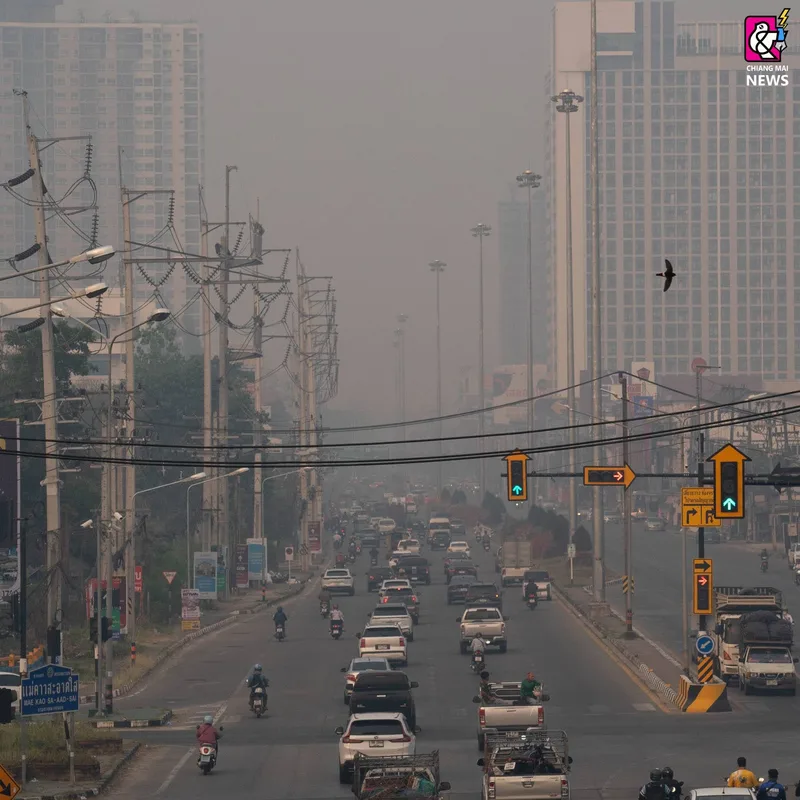
Thailand has faced a critical air pollution crisis for decades. Every year, the “haze season" becomes a daily emergency. Nowadays, this ongoing situation has led to an increase in illnesses, with hospitals reporting a rise in the number of patients with cardiovascular and respiratory diseases. Thailand had set up a Thailand Air Quality standard by the Pollution Control Department (PCD) since October 2018 which included PM2.5 into its five-level, color-coded Air Quality Index (AQI) to provide clearer health warnings. Most recently, on June 1, 2023, the criteria were updated to align with stricter safety standards, reflecting a more proactive approach to public health. PCD has set the New Thailand air quality guideline (Thai AQI-24h average) (Fig 1), which was updated to better align with World Health Organization (WHO) guidelines, focusing on stricter PM2.5 monitoring and tighter safety thresholds. This guideline reflects a more proactive approach to raising awareness and protecting public health.
Please note: Thailand's Air Quality Index (AQI) is calculated based on six major pollutants: PM2.5, PM10, O3, CO, NO2, and SO2. Among these, PM2.5 (fine particles) poses the most significant health risk. For this blog, we will focus specifically on the importance of stricter monitoring of PM2.5 levels.
| AQI Category | AQI Value | PM2.5 Range (µg/m³) | Health Implications |
|---|---|---|---|
| 🔵 Excellent | 0 – 25 | 0 – 15 | No risk. |
| 🟢 Satisfactory | 26 – 50 | 15.1 – 25 | Little to no risk. |
| 🟡 Moderate | 51 – 100 | 25.1 – 37.5 | Generally safe; sensitive individuals should monitor health. |
| 🟠 Unhealthy | 101 – 200 | 37.6 – 75 | Sensitive groups should limit outdoor activities. |
| 🔴 Very Unhealthy | 201+ | 75.1+ | Everyone should avoid outdoor activities. |
Table 1: New Thailand air quality guideline for PM2.5 (Thai AQI-24h average), updated in June 2023
However, Thailand is not alone in this upward shift toward safety. As we push for local change, the European Union (EU) has just set a new “Gold Standard" with Directive 2024/2881. This law shows us what a safe environment actually looks like and sets a clear objective to achieve a zero-pollution environment by 2050.
Global Standards Comparison: Closing the Gap
The EU is mandating much stricter limits and enhanced transparency to be reached by 2030. The following table 1 compares current and future EU standards (ANNEX I) with the recently updated US EPA standards (2024), the WHO Global Air Quality Guidelines (2021) and the Thai AQI (2024). This comparison shows how we can close the gap of framework to reach the stricter PM2.5 monitoring and tighter safety thresholds for Thailand.
| Pollutant | Averaging Period | Thai AQI (2023) | Current EU Limit | New EU Limit (by 2030) | US EPA Standard (2024) | WHO Guideline (2021) |
|---|---|---|---|---|---|---|
| PM₂.₅ (Fine particulate matter) | Annual | 15 µg/m³ | 25 µg/m³ | 10 µg/m³ | 9 µg/m³ | 5 µg/m³ |
| PM₂.₅ (Fine particulate matter) | 24-hour | 37.5 µg/m³ | None | 25 µg/m³ | 35 µg/m³ | 15 µg/m³ |
Table 2: PM2.5 (Annual and 24-hour) showing how Thailand's current levels compare to the stricter targets of the EU (2030), US EPA, and WHO.
Moreover, to these limits, the Directive introduces:
- Tighter Emission Standards: These new levels align more closely with WHO guidelines to prevent both long-term health issues and dangerous short-term spikes.
- Enhanced Monitoring: Mandates the creation of “supersites" in both urban and rural areas. These advanced stations will monitor not just standard particles, but also black carbon, ammonia, and ultrafine particles.
- Your Right to Know and Be Paid: This rule makes it easier for people to get clear information about their air. Most importantly, it gives you the legal right to get money back if the government fails to keep the air safe and it makes you sick.
Why this matters for Thailand
Even though this is a European law, it serves as a roadmap for Thailand’s future for two main reasons:
1. Our Own "Clean Air Act"
Thailand reached a historic milestone on October 21, 2025, when the House of Representatives approved the Thailand Clean Air Act in its third reading. As of 2026, the legislation is currently under review by the Senate, with official enactment and enforcement expected within this year.
The Thailand Clean Air Act introduces a new way to manage air quality in Thailand:
- Clean Air as a Right: For the first time, breathing clean air is officially a human right. If the government fails to protect it, citizens can now take legal action.
- Making Polluters Pay: A “Clean Air Fund" will be created. Companies that cause pollution must pay into it and this money will help affected communities and support farmers in using cleaner methods.
- Managing All Sources: The law gives the government power to control pollution from all areas such as forests, agriculture, industrial, traffic, residential and even air pollution coming from neighboring countries.
- Proactive Planning: Instead of waiting for the pollution to arrive, the law requires officials to start planning and tracking air data eight months before the haze season begins.
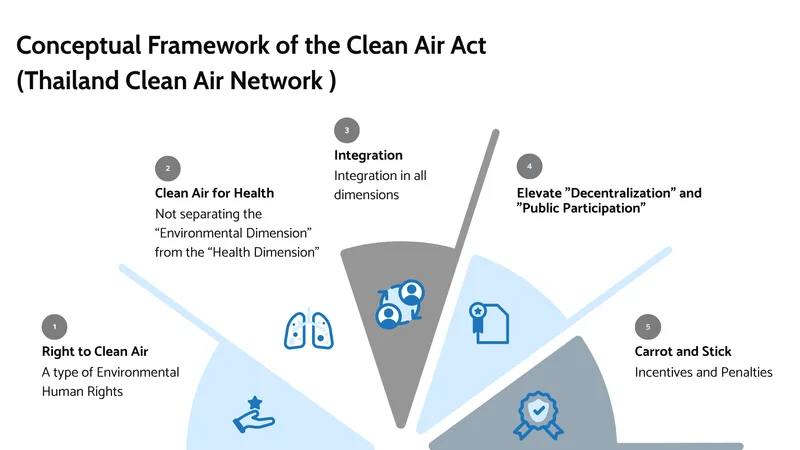
In expectation, this law will move Thailand from just reacting to smoke to a system where clean air is a legal right. By making polluters pay and forcing different sectors to work together, it aims to finally solve the root causes of the air pollution crisis.
2. A National Health Emergency
The move toward new legislation was driven by growing evidence of a public health crisis:
- Long-term Sickness: Millions of Thais have sought treatment for pollution-related diseases, including cardiopulmonary and respiratory diseases.
- Hidden Danger: Experts warn that PM2.5 is so small; it can enter the blood and cause damage throughout the body. Data indicates a significant correlation between regions with high PM2.5 levels and a high number of new lung cancer cases in affected areas.
- High Costs: Estimates show that patients with severe pollution-linked illnesses face massive costs for treatment.
Our Health, Our Right
The EU rules and Thailand’s Clean Air Act are the foundation for our future. We are moving away from just “enduring" the air pollution and toward a future where clean air is a right. While the EU sets the goal, our own law gives us the tools to fight for it here at home.
We all share the same sky. When global standards rise, it gives us the power to demand a future where we can all breathe freely.