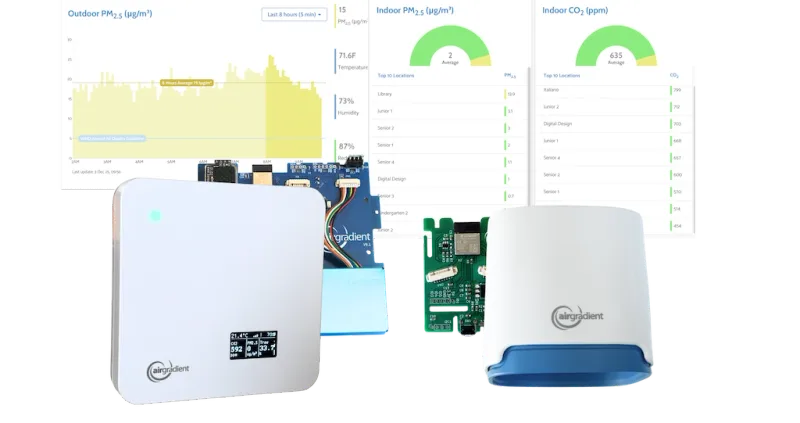
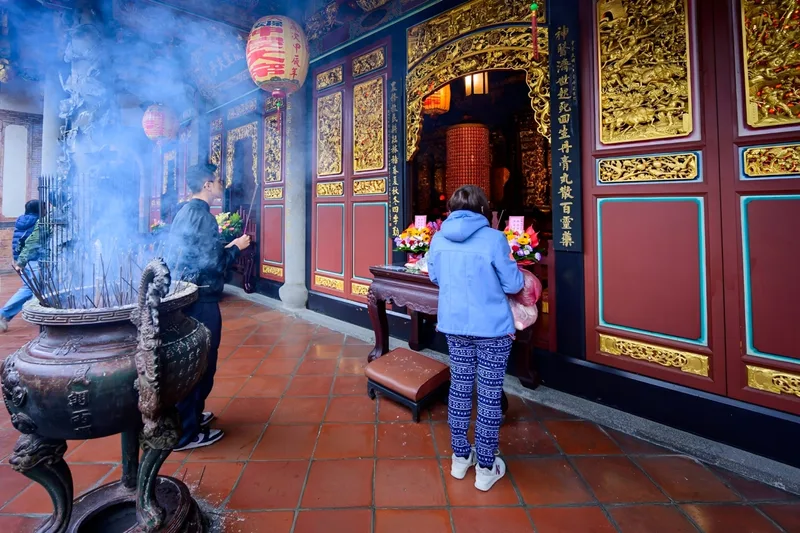
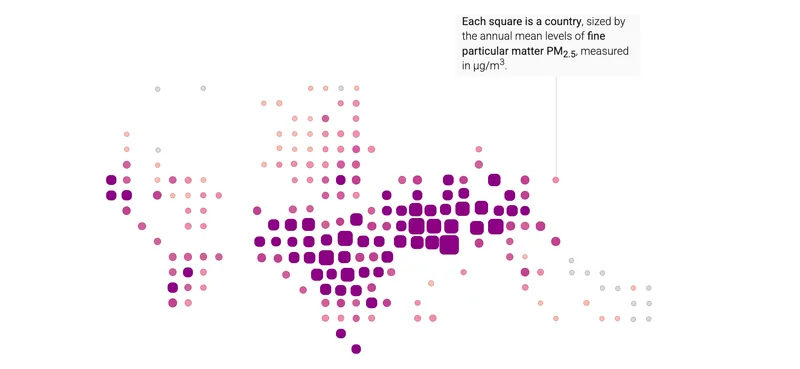
For years, we have been working to make the invisible visible: the air pollution that millions of people breathe every day, often without local data, public awareness or practical tools to respond. At AirGradient, this has never been only about sensors. It has been about making air pollution understandable, measurable and actionable - especially in places where the people most affected have the least access to data.
UNICEF’s new Children’s Climate Risk Report 2026 strongly reinforces this mission. The report calls air pollution a “silent yet pervasive threat” and estimates that almost all children globally - around 2.3 billion - live in areas with unhealthy air.
That number is difficult to process. It means polluted air is not a marginal issue, a megacity issue, nor an isolated problem for places with visible smog, but rather a part of the daily reality of childhood across nearly every country.
For me, the most important part of the UNICEF report is not that it says air pollution is dangerous. We know this already. The important part is that it puts air pollution into a broader child climate risk framework. It shows how polluted air interacts with heat, drought, fires, storms, poverty, weak health systems and disrupted education. In other words, it illustrates that air pollution is a multifaceted issue that extends across children’s health, climate, and equity.
Children are not small adults
UNICEF makes a point that should guide much more of our thinking around air pollution: “Children are not just small adults.”
Children’s lungs, airways and immune systems are still developing. They breathe more rapidly than adults and take in more air relative to their body weight, while their narrower airways can be more easily inflamed or obstructed by pollutants. This makes them especially vulnerable to PM2.5 and other air pollutants.
The report also highlights that air pollution was the second leading risk factor for death among children under five in 2023, after malnutrition. That is a devastating fact.
This means that air pollution is not simply an issue that may affect children later in life, but one that is already affecting their survival especially for the youngest children.
And for those who survive, the impact can still be long lasting. Poor air quality can worsen asthma and respiratory infections, affect cognitive development, and contribute to learning loss. A child who is repeatedly missing school, sleeping poorly or struggling to concentrate because of polluted air loses part of their childhood and future potential.
What I saw in Lagos
This became very personal to me during a visit to a slum in Lagos, Nigeria, last year. The community was flooded, with water up to my knees in some places. But what stayed with me most, however, were the children.
Many of them were exposed every day to thick smoke from traditional fish-smoking pits. I saw children playing in polluted water while breathing smoke from the fish-smoking activities around them. Some had red, irritated eyes and constant sniffles. After only about an hour there, I could already feel the pollution affecting me. For the children living there, this was daily life.
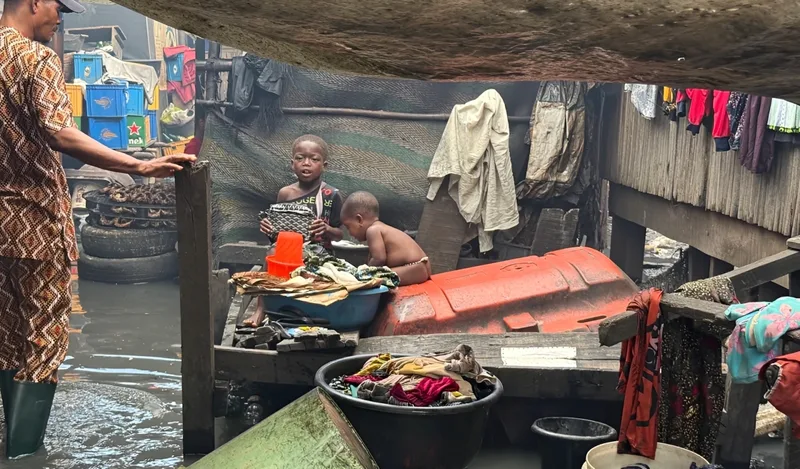
The women smoking fish were not doing anything wrong, as this was their livelihood. But without measurement, the scale of the exposure had remained largely invisible. One air quality monitor helped document the problem, and over time, that data contributed to action. Through the partnership between the University of Lagos and the Lagos Environmental Protection Agency, improved fish-smoking incinerators were installed that are expected to reduce pollution by around 70%.
That story has stayed with me because it shows both sides of the problem. Air pollution often affects those with the fewest protections, but even a single monitor can help start a chain of awareness, evidence and practical change.
Climate change is making air pollution worse
The UNICEF report classifies air pollution as a climate-sensitive hazard. That distinction matters.
Many activities that produce greenhouse gases also emit air pollutants: transport, coal power, industrial activity, residential fuel use, waste burning and agricultural burning. At the same time, climate change can worsen air quality in many ways: drought can increase fire risk, fires release toxic smoke and fine particles, and heat can worsen ozone formation. Sand and dust storms can carry particles over long distances, while floods can damage homes and lead to mould, creating another respiratory risk. These hazards rarely happen in isolation, as UNICEF estimates that 1.1 billion children are exposed to at least three overlapping climate hazards.
This is why air pollution needs to be part of climate resilience planning. A smoke episode is not a one-off air quality event. It may also be a school disruption, a health system burden, and an economic burden on families.
The data gap is still too large
UNICEF also makes a very practical point: to protect children, we need to know who is exposed, where they live, and which services they rely on.
This is still one of the biggest challenges in air quality. In many countries, ground-level monitoring networks are sparse. While satellite models are useful, they cannot show the full local picture. Pollution can change dramatically from one neighbourhood to another, from one school to another, and between indoor and outdoor environments.
Annual averages also hide lived reality. A child may experience weeks of very high exposure during burning season, wildfire smoke, traffic peaks or local industrial events. If we only look at broad regional estimates, these experiences can disappear in the data.
That is why I believe dense, low-cost and open monitoring networks are essential. Reference stations are important, but they are too expensive to deploy in the places where children are most exposed. Low-cost monitors are not a replacement for reference instruments, but they can reveal local patterns, identify hotspots, and help communities ask better questions.
Where does the pollution come from? Which schools are most affected? Are interventions working?
Without local data, many of these questions remain guesses.
Our work with UNICEF in Lao PDR
This is also why our work with UNICEF in Lao PDR is so important to us. Together with UNICEF and local partners, AirGradient has supported an open-source school air quality monitoring network to make local PM2.5 pollution more visible and create strong machine learning based forecasting models.
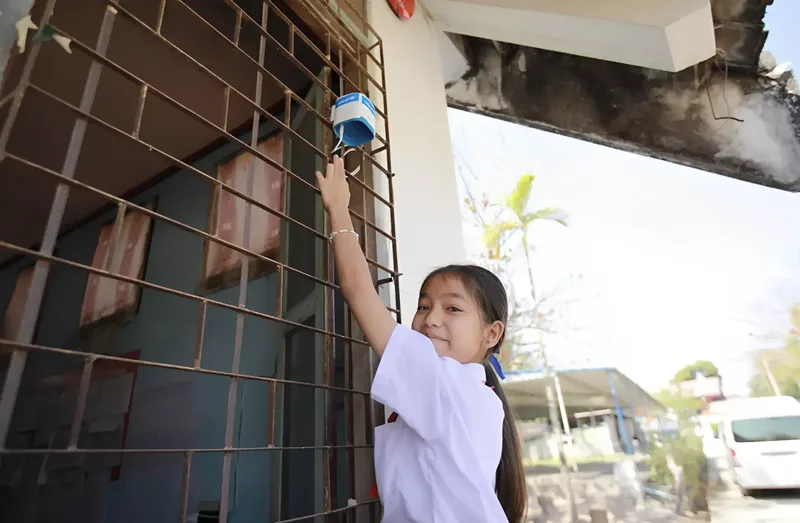
Along with the installation of devices, the goal is to build capacity and support better decision-making. In a country affected by seasonal air pollution, regional haze and agricultural burning, local monitoring helps schools and communities understand what children are breathing.
A monitor at a school can also become an education tool, allowing teachers and students to connect air pollution, climate and health in a very concrete way. Children often understand this quickly and ask direct questions such as: Why is the air worse today? Where does the smoke come from? What can we do?
These are exactly the questions more adults should be asking as well.
From measurement to protection
The UNICEF report is a reminder that protecting children from climate risk must include the air they breathe. Reducing exposure will require action across many sectors, and will also require a better understanding of where children are most exposed and how those exposures change over time.
When pollution is measured openly and locally, it becomes harder to ignore. Communities can use data to advocate for change, governments can target interventions, and children can see that the air around them is something that can be improved.
Air pollution may often be invisible, but its impact on children is not.
Every child deserves to grow up breathing clean air, and that starts with making the problem visible enough to address.