Every so often, a conference comes along that feels well worth the trip (even if it requires a couple of flights totalling 19 hours!). ASIC, the Air Sensors International Conference, is one of them, and in the first week of May, we headed to Los Angeles to attend the latest edition.
What sets ASIC apart from most other air quality gatherings is how narrow its focus is. For example, we attended BAQ (Better Air Quality) earlier this year, which is a broader event covering air quality from policy to public health to monitoring networks. ASIC is very different, as the focus stays locked in on the sensors themselves. If you overhear a conversation at ASIC, the topic is likely accuracy, testing methodology, calibration, or how these devices actually perform under real-world conditions. It's a much more niche crowd, but that's exactly what makes it so interesting.
The conference runs on a two-year cycle, alternating between a U.S.-based event and an international one, all organized by UC Davis. Last year we attended the international edition in Bangkok as a large team. The year before that, Achim made the trip to the previous LA conference on his own. This time we showed up with a small team of four and a booth.
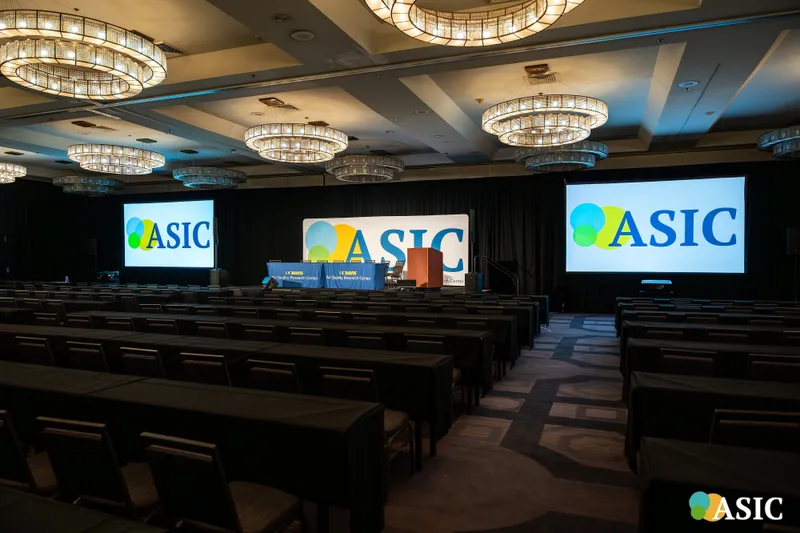
I was personally very excited about this conference. The international conferences draw a global mix of attendees, which is great, but the U.S. edition pulls in a very different crowd of people working in and around the country’s air quality ecosystem. These are people, companies and organisations who don't necessarily make it to Bangkok or wherever else the overseas edition lands. For this reason, despite being the same conference in name, the international and U.S. ASIC editions feel like entirely different conferences. It was my first time going to a U.S.-based air quality conference, so I had high hopes.
In total, we spent seven days in Los Angeles (five at the conference), learning about the current state of low-cost sensor technology with a focus on California and the surrounding region, introducing our devices to new people, and catching up with familiar faces. We also had a booth (which, I must say, was probably the nicest-looking one there).
A Few Things the Conference Made Clear
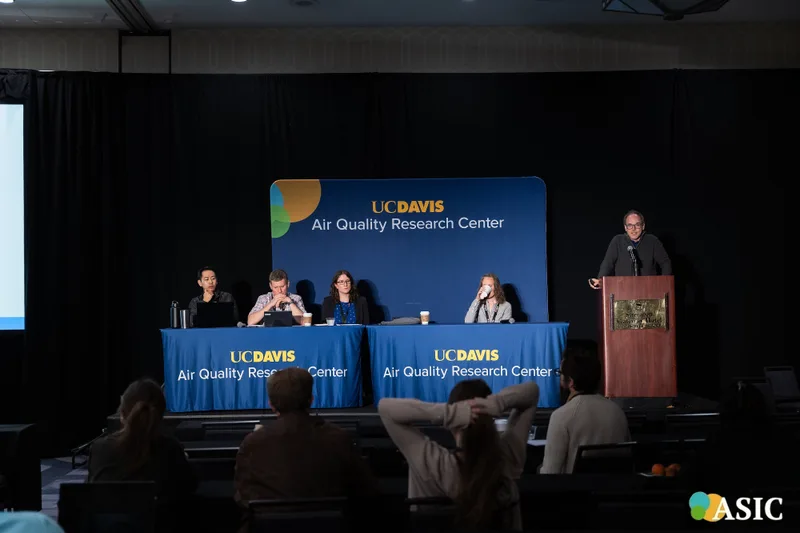
Every conference has an overall theme, a sense of where the field's collective head is at. At ASIC 2026, a few themes kept resurfacing across talks, poster sessions, and hallway conversations.
The first was something of a consensus among participants: PM monitoring, at least for PM1 and PM2.5, is largely figured out. We have capable low-cost sensors, we understand how they perform, and interestingly, that performance hasn't improved much over the past decade. In this case, that's not really a complaint so much as a sign of maturity. It just means attention is shifting, and two areas in particular kept coming up.
One is gas sensing. NO2, O3, SO2 and other gases are increasingly the focus of attention, and for good reason. Unlike their PM counterparts, low-cost gas sensors still have significant problems, ranging from poor accuracy to cross-sensitivity issues, and some are misleading enough that acting on their data could do more harm than good. When asked, more than a few people at the conference suggested that VOCs and other toxic gases will be the dominant topic at ASIC 2030. I would hazard a guess and say that they’re largely right - but in combination with the next point.

The other emerging focus is ultrafine particles, or UFPs. UFPs are particles with an aerodynamic diameter of 0.1 microns (100 nm) or less, and despite their tiny size, they dominate in terms of sheer particle count in ambient air. There were a few talks on UFPs at this year's conference, and some brands had devices capable of monitoring them. Part of what makes UFPs so concerning is that since UFPs are smaller than 2.5 micrometers, they're technically included in the PM2.5 metric (and PM1), but given their extremely low mass, it's very likely that there is a large population of ultrafine particles present while the PM2.5 reading is still showing 0. In other words, your standard air quality monitor won't catch them. There's also a growing body of concern around their ability to reach the most distal regions of the lungs and circumvent primary airway defenses. UFPs are not a new concept, but the monitoring capability and the research interest are both clearly accelerating.
The last thing I noticed was less a single theme and more something I felt in the background throughout the week. That is that low-cost sensors are being taken seriously. They're no longer just talked about, but are actually widely used: almost half of the talks used LCS data for real studies, and there were ongoing conversations about their role in informing policy. There's always been a gap between what low-cost sensors can do and how much trust people are willing to put in them and it feels like that gap is finally closing. Their strengths and limitations are well enough understood now that researchers and policymakers are starting to work with them rather than around them. Perspectives on LCS have been gradually changing over the past decade, but it finally feels like they’re being trusted by decision-makers. Of course, we've known this for a while but it's great to see academia and even governments recognising the value of LCS!
Probably the Best Booth There (Seriously!)
Getting the booth to Los Angeles was its own adventure. Between the display monitors, brochures, posters, and everything else we wanted to show, we were hauling over 50kg of gear in our suitcases, which made the hotel shuttle transfer a workout in and of itself. In the end, though, it was worth every kilogram.
For most of the five days, Altair and I held down the booth while Achim and Nick rotated back between talks, other sessions, and booth duty. It gave the booth a consistent presence, and we could ensure that there was always someone there to answer questions and introduce people.
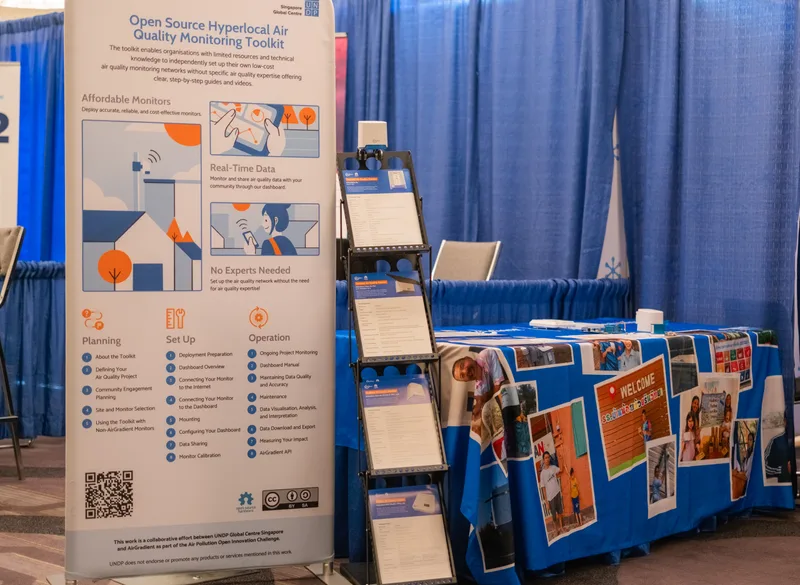
What struck me early on was the type of questions we were getting. People would approach with a "if you don't mind me asking..." or "if I may ask..." before asking something they clearly expected to be sensitive. Pricing, data access, how our sensors actually perform against reference instruments. We were able to answer everything openly, and more than once I could see that surprised them. I think a lot of booths, understandably, have a marketing layer to them - something that we don't. There are no marketers on the team, so nobody was trying to steer conversations or deflect questions. Based on my experience, people seemed to genuinely appreciate our unique approach.
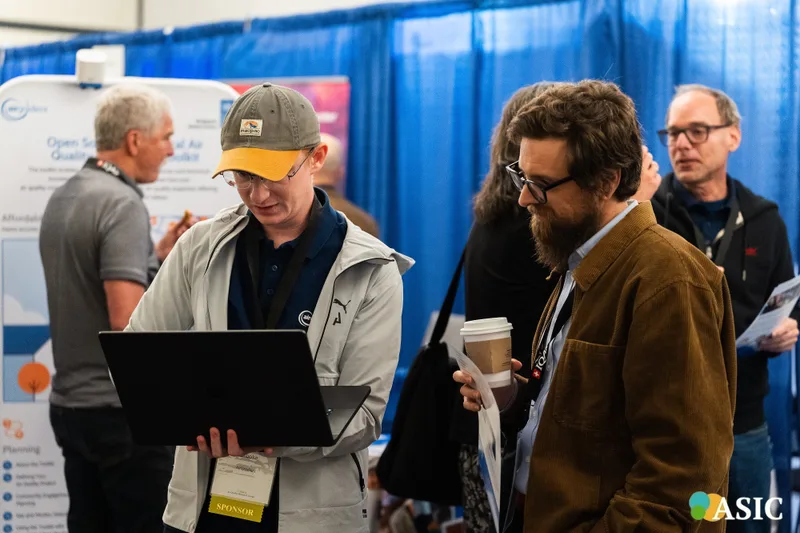
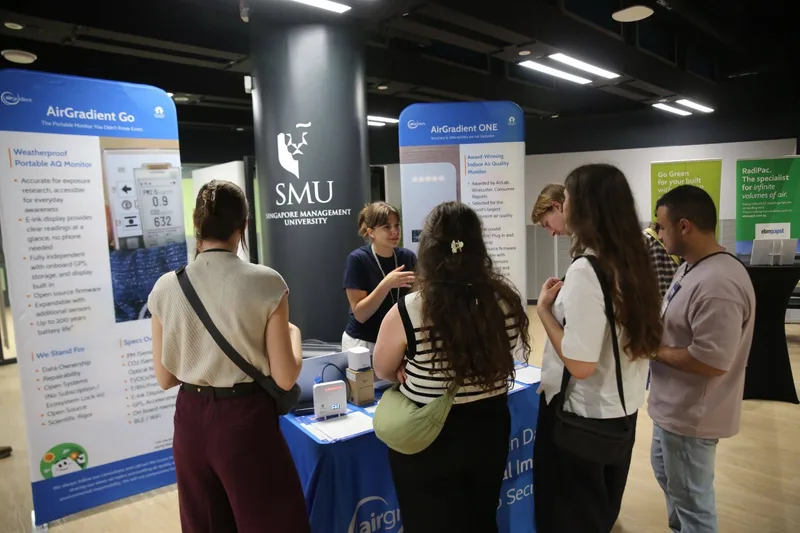
Researchers in particular gravitated toward us, a lot of them interested in our open data approach at a time when data from other platforms is becoming increasingly locked down. However, the AirGradient Go was the runaway star of the booth. By a significant margin. Everyone wanted to know about it: when it's releasing, what it measures, battery life. Everyone wanted to know when they can get their hands on one!
We even had a couple of other people mention to us that the AirGradient booth always seemed to have people around it. Obviously I’m a bit biased, but I felt the same way. Regardless, if ASIC ever introduces a best booth award (which they totally should), I think we’ll perform quite well!
We did come away with some ideas for how to do it better next time too. Our Indoor Air 2026 booth in Singapore is already taking shape, and let's just say it might be a bit of a surprise.
A Few Things That Stayed With Me
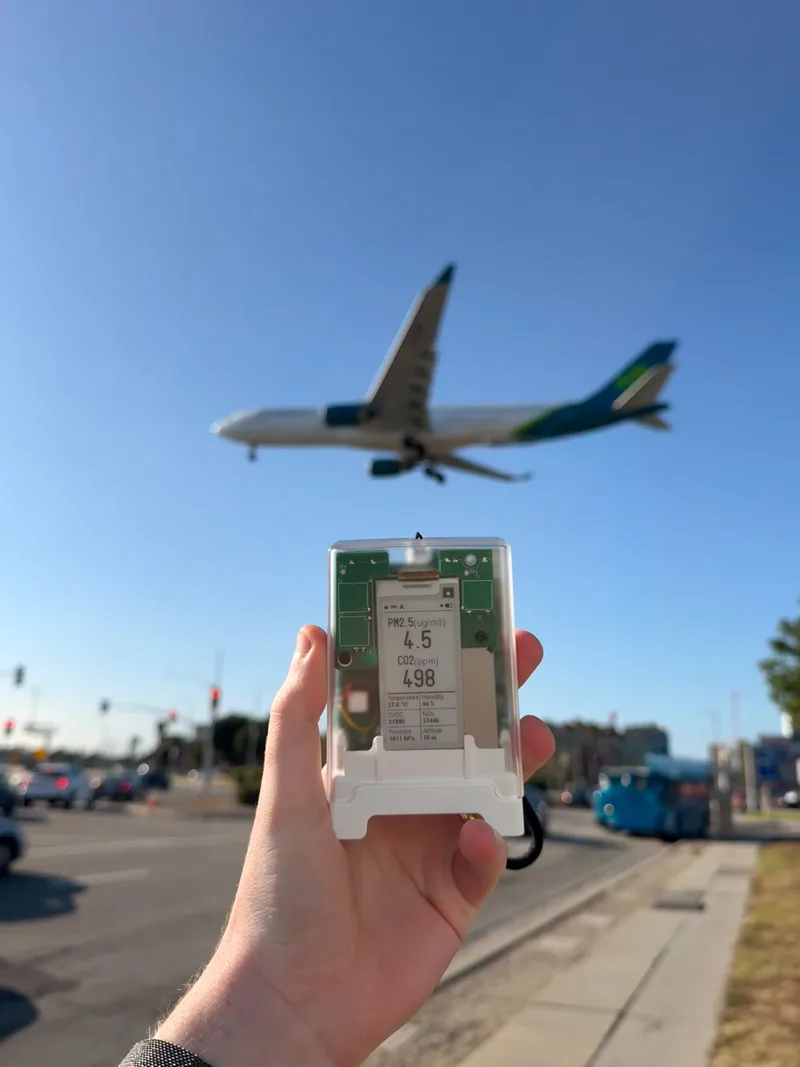
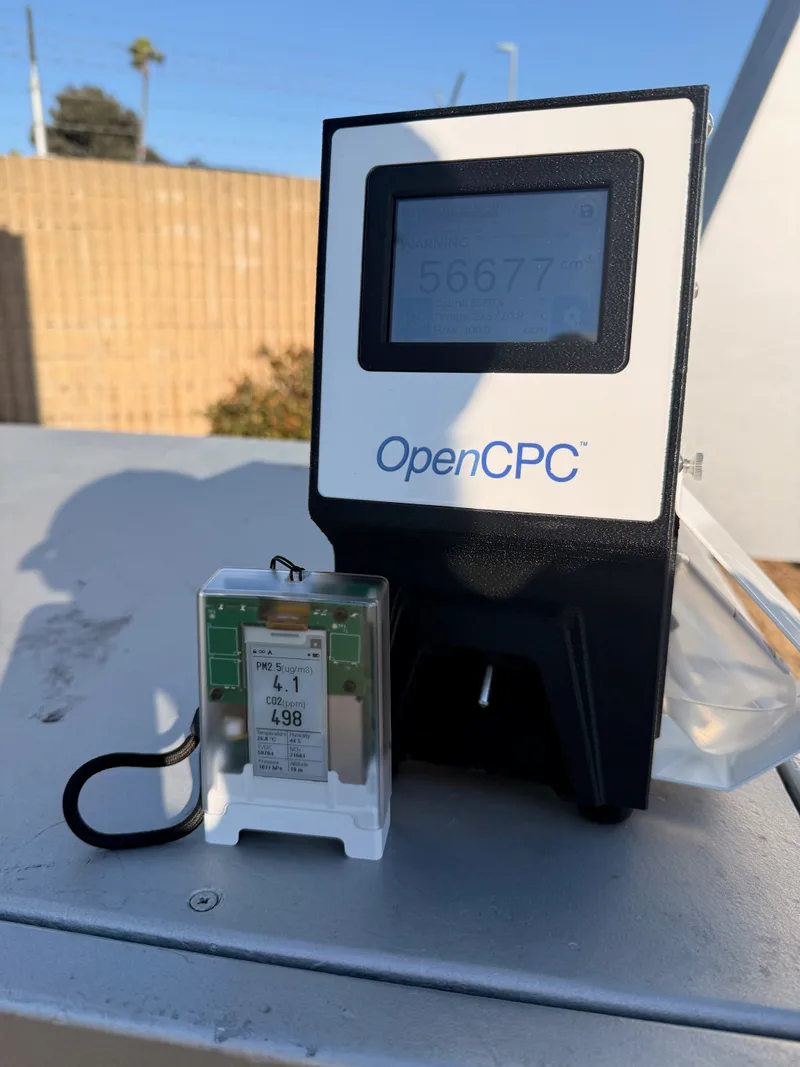
One of the highlights of the conference for me personally was meeting Aaron from OpenAeros. They share our open source philosophy, which alone made them stand out, but what they're building is also fascinating. OpenAeros has an open source CPC (condensation particle counter) capable of monitoring UFPs, and they're also working on an open source quantitative respirator fit testing tool. Aaron had both a booth and a poster at the conference, and we ended up spending some time together after one of the days concluded, taking the LAX sign as a backdrop to do some impromptu UFP monitoring. Seeing another team pushing the open source approach in this space was very exciting for us.
The AQ-SPEC talks were also worth the time. I've had my critiques of their testing methodologies in the past (and as it turns out, they're well aware of them), but there aren't many testing databases as extensive as theirs. One talk looked at how devices tested by AQ-SPEC hold up against standards like ASHRAE and the EU equivalents. For PM, a solid double-digit number of monitors passed. For gases, it collapsed. Most pollutants came in under 10% pass rates, and for some gases the number was zero. It was a stark illustration of the same conversation happening everywhere else at the conference: PM sensing is in reasonable shape, gas sensing is not.
Achim also gave a talk on sensor black boxes, covering the concern that so much of what happens inside commercial air quality devices is opaque. Data processing, calibration algorithms, correction factors: manufacturers rarely disclose any of it, which makes it genuinely difficult for researchers to know what they're actually working with. It's something we've written about at length on the blog, and if you want the full picture on where we stand on that, this post covers it better than I can summarise here. The fact that it landed the way it did at ASIC suggests the research community is starting to take this seriously.
Looking Forward to ASIC 2027
A big thank you to UC Davis for hosting, and to Jenna and Rhanee specifically for organising everything. Putting on a conference like this is no small task, but the whole week went smoothly and we're very thankful to be able to attend the conference.
ASIC is one of our favourite conferences, and not just because of the content. There's something about a room full of people who really care about getting sensor data right that makes it worth showing up for. We're already looking forward to ASIC 2027.