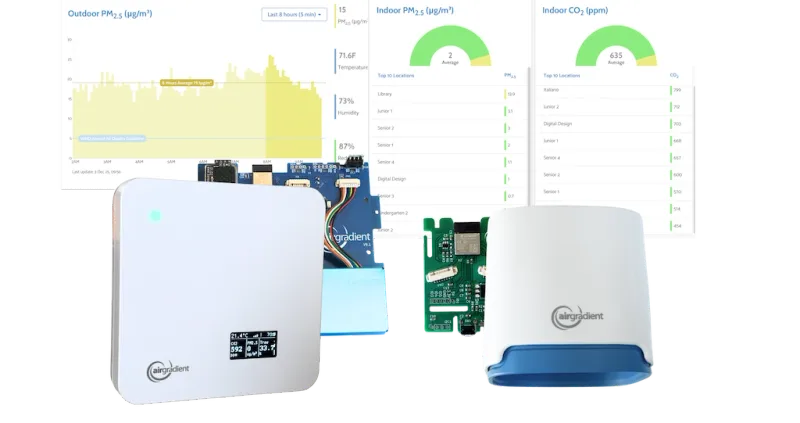
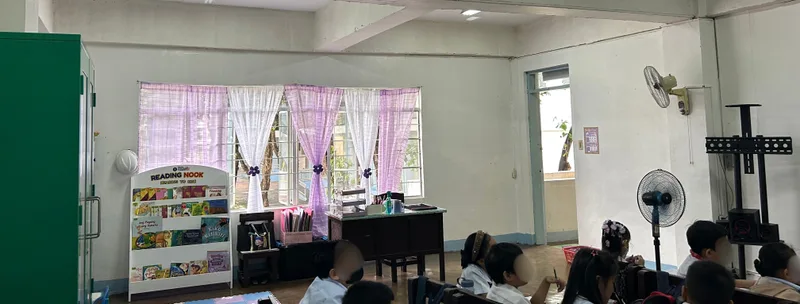
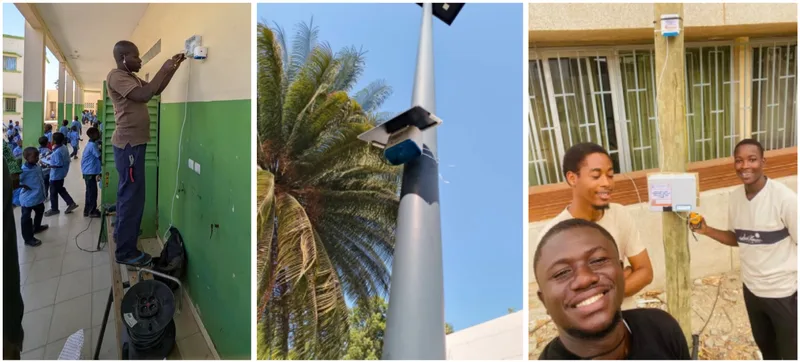
In a schoolyard in Dakar, Senegal, a low-cost air quality monitor mounted on a wall now sends an alert to the principal when pollution levels spike. This has become especially important during sandstorms or pollution episodes, when the school can warn families of children with asthma or other breathing difficulties to wear a mask or to stay at home. It’s a simple step that helps to protect children who are most vulnerable. But this kind of response is still rare. Across Senegal, many people lack access to clear, understandable air quality data, making it difficult to anticipate pollution spikes and protect themselves. This is where Kaikai steps in.
Starting from the ground up
Based in Dakar, Kaikai works at the intersection of digital development, data, and social impact. In its air quality work, this has taken shape through an effort to bring monitoring closer to the people living with pollution every day – especially students, teachers, and school communities.
Rather than treating air pollution as a purely technical issue, Kaikai’s approach begins with places familiar to all: schools, public institutions, and neighborhoods where air quality can change noticeably from one location to another. The aim is not only to measure pollution, but to help communities better understand what is happening around them and make that information useful in everyday decisions.
The importance of schools
Schools offer bountiful opportunities for both real-time impact of the monitors through spike warnings and prevention, as well as taking advantage of the classroom environment for awareness and education on the risks surrounding air pollution. At one of the schools where a pilot project took place, which received media coverage by the French international broadcast channel RFI, the principal describes tangible changes since the monitor was installed, including lower absenteeism among children with asthma, fewer illnesses, and reduced concern among parents.
Raising awareness about air quality in schools means having a positive impact on the community today and preparing the citizens of tomorrow to build healthier and less polluted cities.
Kaikai’s broader air quality initiative is built around that same idea: placing monitors in schools and other sites while creating ways for the data to be understood, discussed, and used locally. The project has already expanded across multiple regions, with more than 40 microsensors deployed in six regions of Senegal across schools, administrative buildings, and hospitals.
Turning monitoring into awareness
What stands out in Kaikai’s work is that monitoring is only one part of the story. The larger effort, capturing the second phase of their project, is about raising awareness and making air quality easier to understand and to talk about.
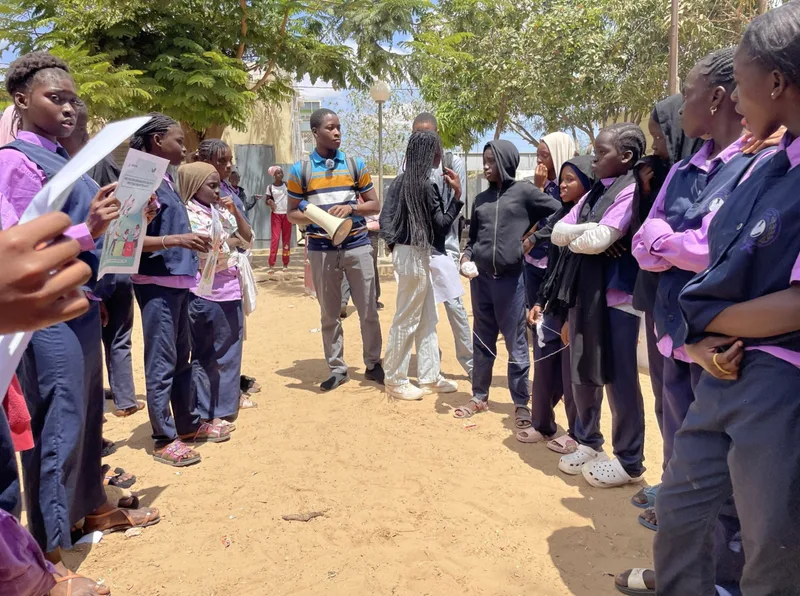
This comes through clearly in their school outreach activities. At another school in Dakar, students took part in a session teaching them about the health impacts of air pollution, the role of the monitor installed at the school, and the importance of youth engagement. The activity also included debate, discussion, and the appointment of two student Air Quality Ambassadors, giving the issue a hands-on participatory element.
This emphasis on awareness is a major part of the project as a whole. Kaikai’s teams have organized awareness activities in schools, high schools, and universities, reaching more than 1,500 students and teachers, and helping establish and strengthen environmental clubs within schools.
Building local ownership
Kaikai has also created ways for young people to become more directly involved in air quality work, reflecting the capacity-building component of their project. An important event linked to this is an air quality hackathon they organised in August 2025, which helped bring student teams and young innovators into the project.
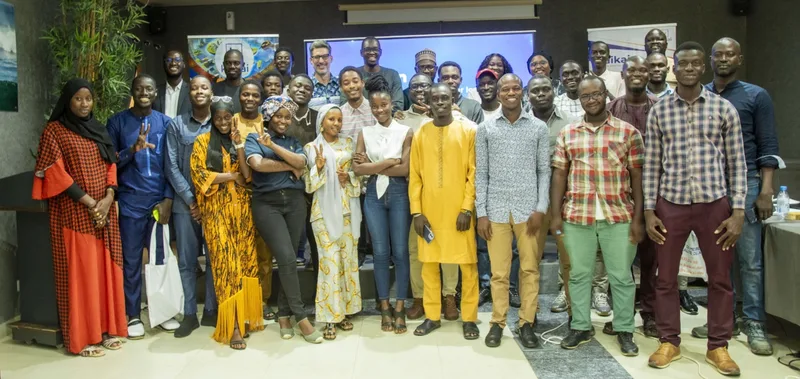
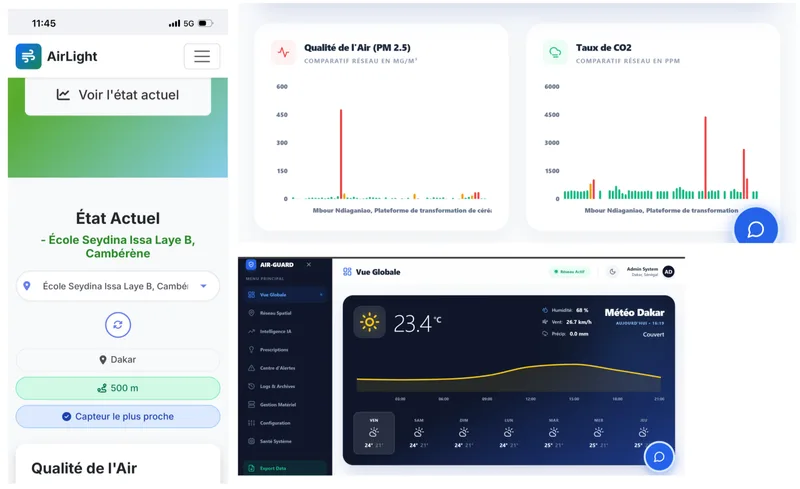
The hackathon was designed as a way to identify motivated teams, extend geographical reach, support site identification and maintenance, and build skills through training. Out of more than forty projects initially proposed, eight teams were selected to present their innovations. These teams received training from experts in the field, and Kaikai provided each team with technical equipment including sensors, microcontrollers, and 3D printers. The teams presented a variety of solutions, such as mobile applications, web-based monitoring platforms, pollution mapping tools, connected watches that alert users to pollution, and LED panels connected to sensors that display air quality levels in real time.
Capturing major dust episodes
Another way that Kaikai’s network has generated meaningful insight is through data tracking of meteorological phenomena. In February 2026, Senegal experienced a severe Harmattan-related dust episode. Because monitors were already deployed across different parts of the country, the network was able to capture how the event unfolded over time and across locations. Kaikai’s analysis describes a clear pattern: after a relatively moderate start to the month, pollution levels began to rise from February 14th, peaked across the country on February 16th and 17th, and then gradually declined.
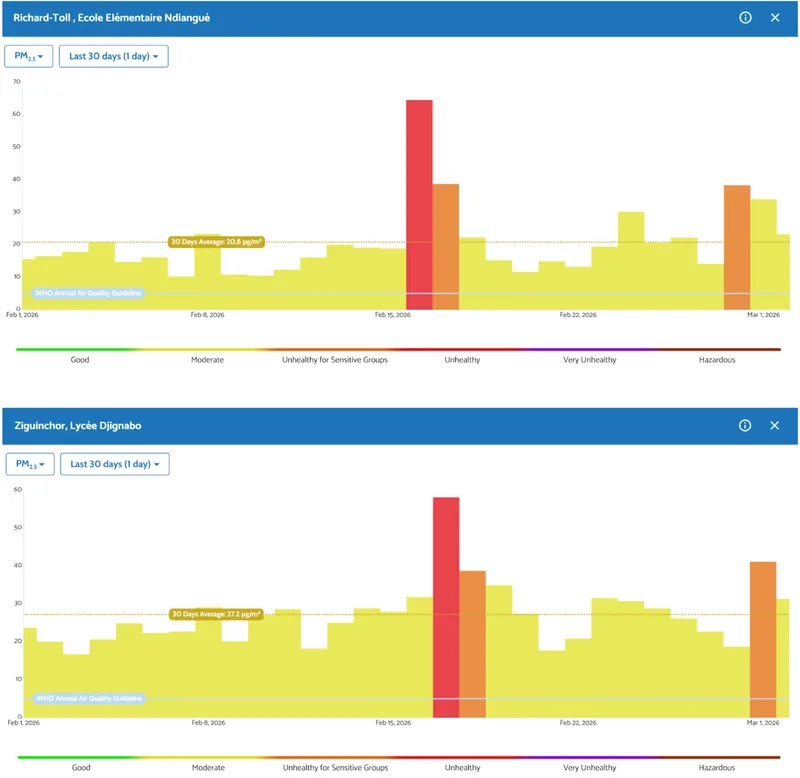
The shared timing of the peaks across places that are far apart showed that this was not just a local spike, but a nationwide dust event. This shows how a relatively small number of monitors can still create a successful network capable not only of routine monitoring in neighbourhoods and schools, but also of showing the scale and pattern of a large-scale pollution event across the country. This has important implications on identifying and enacting the best response: knowing it was nation-wide points towards a wider atmospheric event, rather than something hyperlocal like nearby traffic or a construction site.
Looking ahead
What started as a community-based monitoring effort is gradually expanding into a broader interconnected air quality ecosystem in Senegal. The next step will take place on June 24-25 2026 in Dakar, where Kaikai will host an air quality event bringing together various stakeholders. Through strategic partnerships with the Ministry of Environment’s Air Quality Management Center, the Ministry of Education, university researchers, and civil society organizations, the initiative also aims to broaden the dialogue with public institutions on how air quality data can inform national policies on pollution prevention and air quality management. Beyond this, Kaikai is also looking to explore work in other countries, expand its sensor network in Senegal, and build deeper regional collaboration around air quality monitoring in Africa.