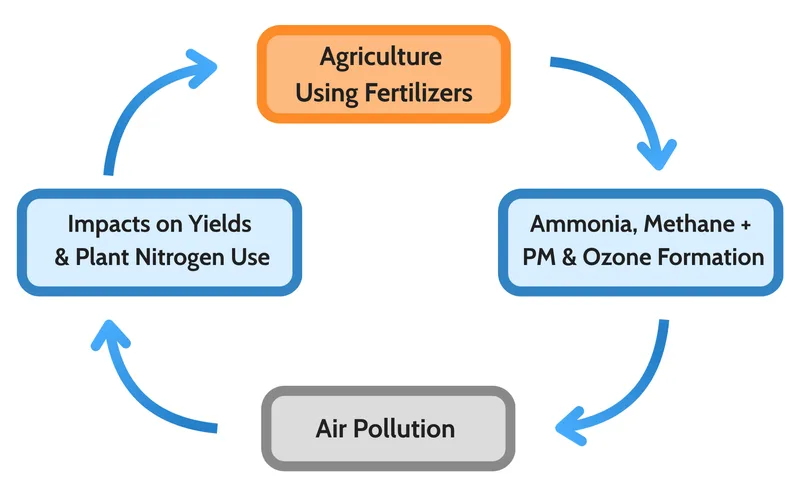
That air pollution affects crops might not be as surprising, but what if agriculture also releases pollutants into the air we breathe? And those in turn negatively affect our health, crops and soil, triggering further fertilizer use — creating a reinforcing positive feedback loop. This blog post will explore how this effect continues to contribute to further air pollution and how it can impact our health.
Air Pollution Footprint of Agriculture
The link between agricultural production and air pollution might not seem very straightforward, however released pollutants can have more negative impact than we think. For example, livestock farming, use of fertilizers and pesticides release ammonia, which contributes to rising PM2.5 levels, along with methane and nitrous oxide.
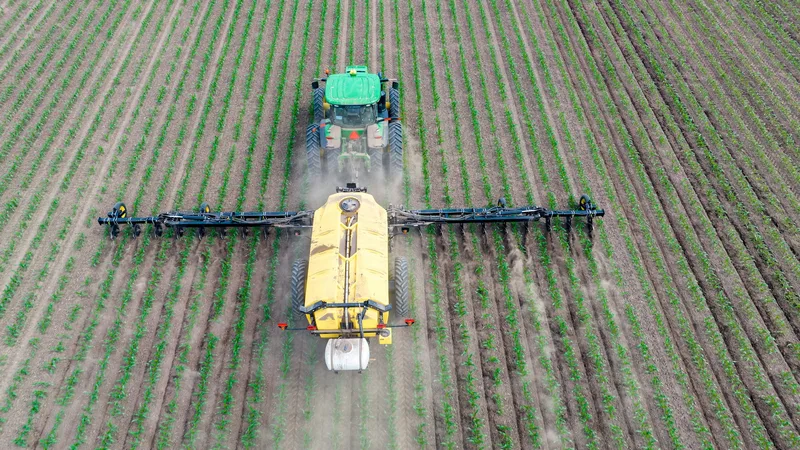
Pesticides and fertilizers themselves can volatilize, turning from a solid to a gas. Once in the air, these react with gases in the atmosphere, forming new compounds that condense into PM2.5 particles. In 2021, agriculture was the cause of 94% of ammonia emissions and 56% of anthropogenic methane emissions within the EU. Ammonia is among the main pollutants coming from agriculture. When released, it reacts with other pollutants and contributes to secondary PM2.5 formation. Despite efforts to reduce pollutants, emissions of ammonia in the EU declined only by 8% between 2005 and 2020.
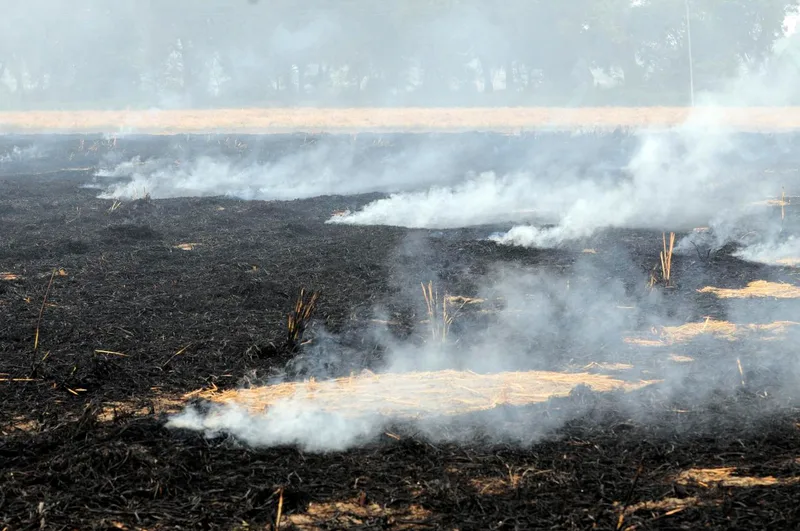
Burning of crop residues is another common source of air pollutants. And further mechanization has only aggravated this problem. With mechanized harvesting, more crop residues remain in the fields, resulting in larger volumes of biomass burned and more air pollution. Additionally, tractors and other machinery also act as direct sources of particulate matter or nitrogen oxides. A study in the United States has found that farm-driven air pollution was the largest source of damages from PM2.5-related emissions.
How Does This Affect Our Health?
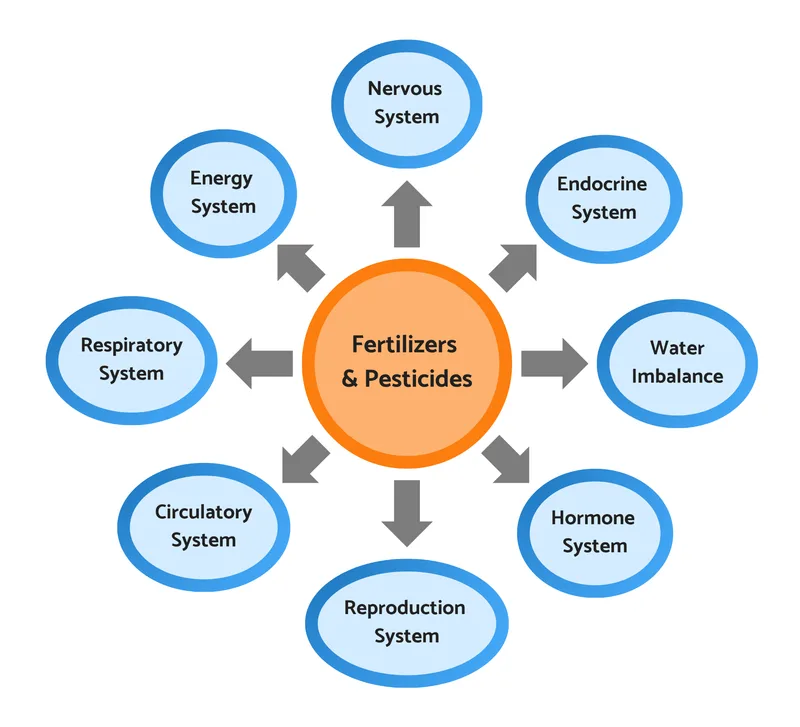
Exposure to ammonia can lead to symptoms such as eye, nose, and throat irritation, headaches, nausea or shortness of breath, and possibly contribute to the onset of asthma among children. With continuous global warming, the amount of ammonia released and its volatilization into the atmosphere is likely to increase, posing a growing burden on air quality and human health. Beyond air quality, the growing use of fertilizers and pesticides in agriculture has also been linked to broader human health risks, directly affecting farmworkers, soil and causing water contamination. The figure below summarizes the diverse effects on health.
Pollution from farms or crop burning can travel long distances, affecting even urban communities far from the source. Northern Thailand is a great example of this: every year, during the so-called “burning season”, agricultural residue burning and wildfires combine and create hazardous air quality conditions with PM2.5 levels far exceeding WHO guidelines.
In situations like these, local air quality monitoring can supply the data necessary for residents to know when to protect their health. Read more on what this looks like on the ground here.
Now that we have covered the health risks associated with pollutants originating from agriculture, what about the effects of pollution on farming itself?
How Pollution Impacts Farming
This side of the feedback loop feels slightly more intuitive, so let’s dive right in. Higher concentrations of nitrogen oxides, ozone and PM2.5 cause disruptions in photosynthesis, plant growth, negatively impact the health of animals, and can reduce agricultural yields. Based on a study simulating the effects of reducing 50% of NO₂ emissions, it could result in around 25% higher winter crop yields in China, 15% increase in summer crops in China, and ~10% improvement in Europe and a smaller but positive impact also in other regions. Polluted air also adversely affects the quality of soil, and the beneficial microorganisms it contains.
Looking at ozone and how it impacts plants and their use of nitrogen can help us see how the loop closes. Ozone at ground level is not emitted directly, it forms when nitrogen oxides and volatile organic compounds, including methane, react in sunlight. Agriculture is a major source of both nitrogen oxides and methane, yet farming does not just contribute to ozone formation, it is also impacted by it.
Ozone can interfere with nitrogen remobilization in the plants, meaning how plants use and redistribute the nitrogen they contain, causing reduced efficiency of this redistribution and faster dying of the plant's older leaves. In other words, ozone does not prevent plants from taking up nitrogen, but impairs their capacities in recycling it and distributing where it is needed. However, within a study of impact on wheat, application of extra nitrogen fertilizer during flowering time helped offset this, implying that this might lead farmers to apply more fertilizer to keep the yields steady. This additional fertilizer then releases more ammonia and reinforces the cycle of contribution to air pollution and negative impact on yields again.
Closing the Loop
Putting everything together, it becomes clear that agriculture and air pollution are not separate but engage in a sort of feedback loop. Farming releases ammonia, methane and particulate matter into the air, and that same pollution then negatively affects crops, soil and livestock, triggering more use of fertilizer. Treating these as unrelated issues would implicate missing the bigger picture, and the WHO itself frames it as a bidirectional relationship with health, food security, and air quality tangled together and requiring an integrated approach.
Yet despite the scale of the problem, one of the main obstacles remains a lack of data in rural areas. Their air quality is significantly under-monitored compared to cities, meaning that emissions driving this loop, and their effects on people living closest to them, often go unnoticed.
To conclude, industrial agriculture might remain being seen as being negatively affected by air pollution. However, we should also recognize its role as a source of pollution too, through fertilizers, livestock, residue burning and machinery. Recognizing this integrated bigger picture can help us point to where mitigation efforts — like better rural air monitoring and reduced fertilizer use — could help break the cycle.