In our article titled Air Pollution is Costing Students More than Marks, we highlighted how exposure to air pollution in class can compromise the cognitive performance of students. A classroom with natural ventilation can easily let unhealthy outside air in, while those that have the option to shut their windows still risk exposing students to CO₂ build-up. As these designs are not specific to one community or country, what changes from place to place is what a school actually has to work with once the air outside turns bad.
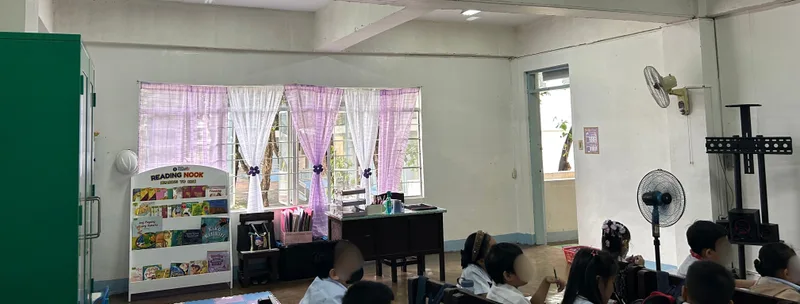
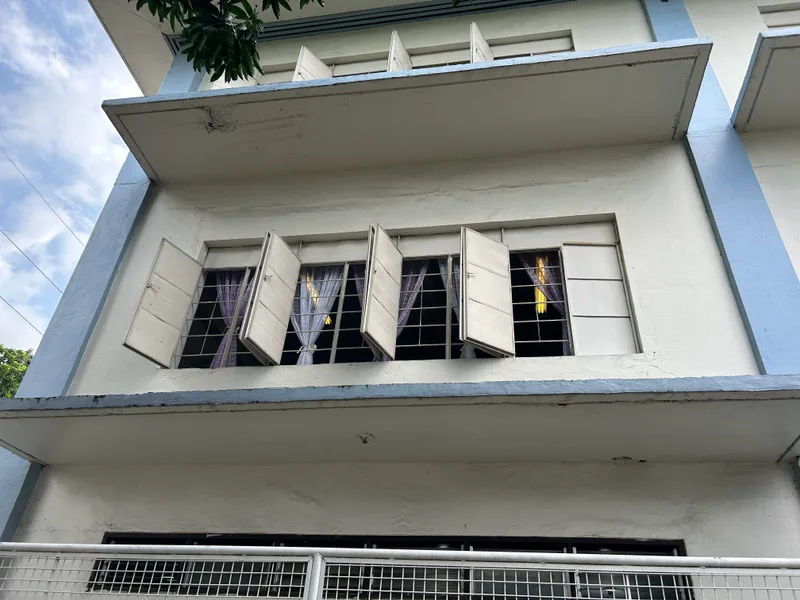
My curiosity about the exposure of students to air pollution in classrooms brought me to Parang Elementary School in Marikina, Philippines. The classrooms had open windows and a couple of standing fans, with no mechanical ventilation and nothing filtering the air.
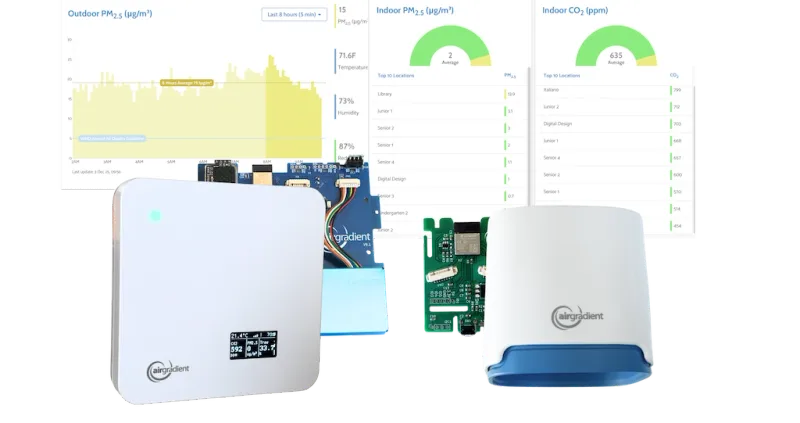
I took the AirGradient Go on my visit, and it measured CO₂ levels close to 700ppm, while PM2.5 concentrations sat at 16 µg/m³. Both readings were nearly identical to what I measured just outside the building. The windows weren't really bringing in fresh air so much as letting the outdoor air straight through, unfiltered and unchanged.
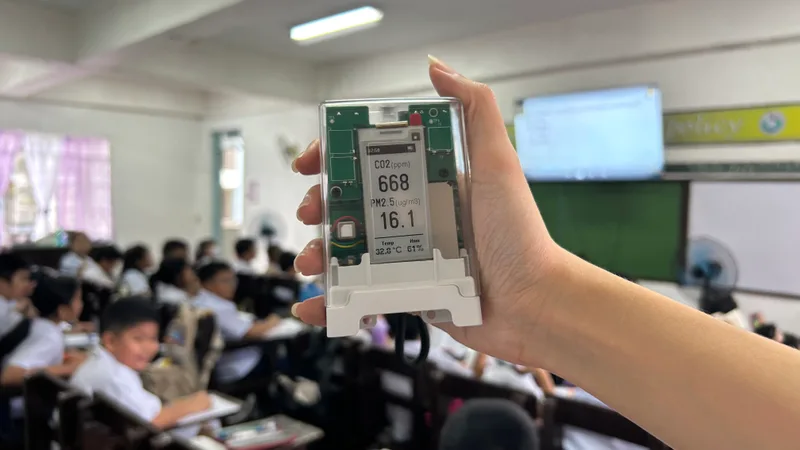
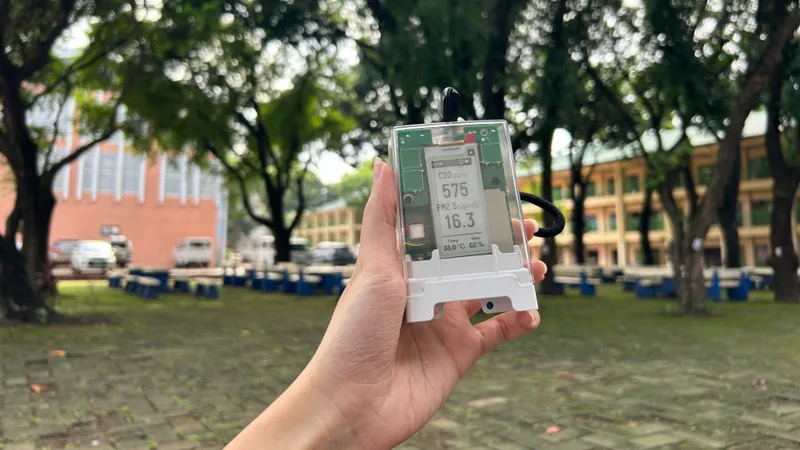
When Outdoor Air Becomes Classroom Air
Most public schools in the Philippines share the same basic design: open-air classrooms that rely on natural airflow instead of mechanical ventilation. There are no clean national statistics on exactly how many classrooms fit this description, but it’s a fair assumption about the common set up, since the Department of Education (DepEd) opening fully air-conditioned public school classrooms is still novel enough to make news.
A classroom that depends entirely on open windows doesn't really have an indoor air quality of its own, and my own readings at Parang Elementary School confirmed this. Good outside air meant good air inside, and on a worse day, bad outside air would have meant just as bad inside, with nothing in between to change this condition.
The risk exposure is high in the Philippines because about 16.6 million out of nearly 19 million students enrolled in the school year 2024-2025 attend public school, yet these schools remain under-resourced.
About 87% of Filipino students attend public schools. The common design of these schools uses natural ventilation and puts students at a high risk of exposure to air pollution.
For most of these schools, having a proper ventilation system is competing with a backlog of basic needs. A 2022 study from the Philippine Institute for Development Studies found more than 39,000 schools nationwide need electrical rewiring to function safely. Without this fundamental infrastructure, even running fans seem unreliable, let alone anything more advanced. When schools must prioritize preventing electrical fires over air quality, it’s not done out of neglect. Clean air safeguards never make the list because there's no budget left after the more urgent needs are covered.
This reality in under-resourced schools stops being a question of maintenance and becomes a question of equity. Students in these schools have almost no control over the building they learn in, what's polluting the air around it, or what the school can actually afford to change. They are just expected to show up, sit in their assigned room, and breathe whatever that room lets in.
Which raises the real question: If basic operational needs aren't even covered yet, what can an under-resourced school like Parang Elementary School do about the air their students breathe?
What can be Achievable for Under-resourced Schools
A school still waiting on basic electrical work isn't positioned yet to take any drastic infrastructure overhauls on its own. But there are a few low-barrier interventions that are worth considering to protect students from air pollution.
We have explored how a positive pressure system (PPS) can help protect classrooms from outdoor air pollution. In a reasonably enclosed room, a PPS pulls outdoor air through a high-performance filter and supplies the filtered air into the classroom. This raises the indoor pressure slightly above the pressure outside, causing air to leak outward through gaps and cracks rather than allowing polluted outdoor air to leak in. Because the system also supplies fresh outdoor air, it can help keep CO₂ levels low while reducing indoor PM2.5. This addresses the ventilation and filtration problem together – a genuine leap in how much control a school has over its own air quality.
A single clean air room applies the same principle but at a smaller, more accessible scale, such as sealing a library or an office for the worst pollution days. Researchers at Chiang Mai University developed Thailand’s own version of this and implemented it during the region's haze crisis. It costs around 3,600 baht per room, roughly US$100, demonstrating how locally sourced filtration can be just as effective as expensive commercial equipment. This is a much cheaper ask than a full classroom retrofit.
Another approach is to create a localized early warning system using sensors that help identify pollution spikes. Kaikai, a digital development start-up, implemented this same initiative in Dakar, Senegal, where the school uses real-time data collected to alert parents so their children can wear masks to school or stay home if there’s a health risk. This system has successfully decreased student illnesses, lowered absenteeism of children with asthma, and eased the concerns of parents.
Air Quality is No Marginal Issue
By now, we know how quickly air quality can change. It changes by the hour, by the season, and even by which direction the wind happens to blow that day. But while a classroom’s air quality can be fleeting, its effect on a student’s ability to learn can last longer than the years they spend attending school.
Improving classroom air quality only has a real chance once it stops competing with the fulfillment of basic operations in schools.
Proper air ventilation should not be treated as a marginal issue, something waiting its turn to be addressed behind wiring upgrades. It should not remain as a problem addressed school by school. It should be prioritized and funded as part of the same standards to make a classroom safe and conducive to learning.
Education is a fundamental right, and it’s supposed to add value to a child’s life, not put it at risk. That means providing a classroom that isn't quietly costing students something in return.